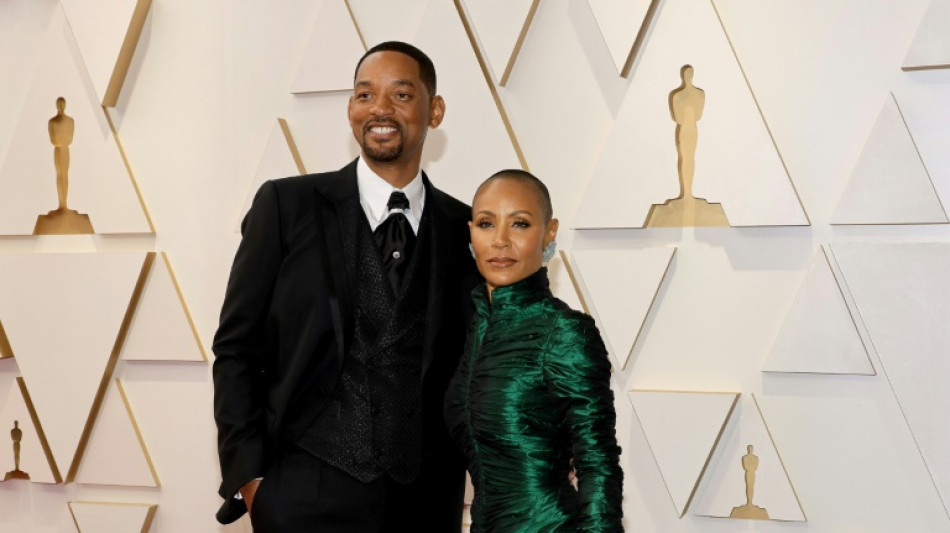
US approves first pill for treatment of alopecia / Photo: © GETTY IMAGES NORTH AMERICA/AFP/File

 #IAmJaneDoe: online support campaign in US university rape case

 Brazil shine on Selecao's first visit to India

 Zverev sets up Djokovic quarter-final at China Open, Rybakina out

 Happier at home, Bordeaux hammer Lyon in Top 14

 Lula, Bolsonaro in final push for votes ahead of knife-edge election

 Boisterous fashion week barnstorms 'sleepy' Nigerian capital

 UAE investigators say flydubai co-pilot was planning 'terrorist act'

 Rahul smacks century in India v Windies ODI

 Daryz seeks to join exclusive club of dual Arc winners
 Russia warns diplomats to leave Kyiv over new strikes threat

 Olympic champ Zheng rebukes rowdy home crowd at China Open
 World No.1 Sinner pulls out of Shanghai Masters to delay return
 Red Bull's Verstappen grabs pole position for Bahrain GP

 India beat Pakistan in blockbuster as golfer Kim wins 'crazy' gold

 India beat arch-rivals Pakistan to win Asian Games cricket gold

 Ethiopia's Tigray rebels abandon regional capital as govt advances: journalist

 Tom Kim powers to Games gold and exemption from military service

 Split loyalties for Indian football fans at Brazil friendly

 India-Pakistan blockbuster brings cricket fever to Japan baseball field

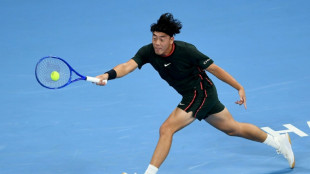 Wong waiting on Rafa after winning Asian Games tennis gold

 With Russia next door and rising costs, Latvia goes to the polls

 Penalty hero rues empty seats as Games hosts Japan win football gold

 North Korea fires ballistic missile after Seoul's apology demand

 US regulator finds Boeing 737 MAX software bug 'not a safety concern'

 Ohtani 'managing' injuries as Dodgers launch MLB post-season
The Food and Drug Administration on Monday approved a drug called baricitinib as the first oral tablet for treating severe alopecia areata, an autoimmune disorder affecting more than 300,000 people in the United States every year.
Alopecia causes either temporary or permanent patchy hair loss that can affect any hair-bearing site of the body, leading to emotional distress. The condition has come to the fore recently through high-profile cases including Hollywood actress Jada Pinkett Smith and congresswoman Ayanna Pressley.
"Access to safe and effective treatment options is crucial for the significant number of Americans affected by severe alopecia," said FDA official Kendall Marcus in a statement.
"Today's approval will help fulfill a significant unmet need for patients with severe alopecia areata."
Baricitinib, which is made by US pharmaceutical company Eli Lilly and known by the trade name Olumiant, belongs to a class of drugs called Janus kinase inhibitors. It works by interfering with the cellular pathway that leads to inflammation.
Its approval for use against alopecia was based on the results of two randomized, controlled clinical trials involving a total 1,200 adults with severe alopecia.
Each trial split participants into three groups: a placebo group, a group that received a two-milligram dose every day, and a group that received a four-milligram dose every day.
After 36 weeks, almost 40 percent of those on the higher dose grew back 80 percent of their scalp hair, compared to around 23 percent of the lower dose group, and five percent of the placebo group.
Around 45 percent of people in the higher dose group also saw significant eyebrow and eyelash regrowth.
The most common side effects included upper respiratory tract infections, headaches, acne, high cholesterol, and increase of an enzyme called creatinine phosphokinase.
Prior treatments for alopecia included topical or oral drugs, but these have been considered experimental and none was approved.
Baricitinib was previously approved for treatment of rheumatoid arthritis, and during the Covid pandemic its license was extended to the treatment of hospitalized Covid patients.
M.Odermatt--BTB



