US limits Covid boosters to over-65s or those at high risk / Photo: © GETTY IMAGES NORTH AMERICA/AFP/File

 Zverev thrashes Shang to set up Djokovic quarter-final at China Open

 Turkey football ref chief jailed pending trial for graft

 North Korea says test of intermediate-range strategic missile included use of AI

 Rampant Sayers leads Hong Kong to third men's rugby gold in a row

 Ethiopia's Tigray rebels abandon regional capital as govt advances

 Bulgaria's Tsar Samuel returns 'home' after 1,000 years

 'Glad it's over': Kim powers to Games gold and military exemption

 After 11 World Cups, football finally comes home for one Indian fan

 Marc Marquez wins sprint at Japan MotoGP, Martin grabs pole
 Alcaraz fends off Arnaldi to reach Japan Open quarters

 Antonelli tops times in final practice at Bahrain GP

 Gauff digs deep to beat Osorio in China Open second round

 Fresh protests to hit Spain after housing measures defeated

 'He's here with me': Japan cycle queen dedicates gold to late brother

 Japan Olympic chief says 'lot more' athletes at Games than expected

 Asian carmakers besting US rivals at home, China poised to strike

 Widgets & Web Offers All-Inclusive Investor Relations Websites for Public Companies, IPOs and SPACs

 Adams named new US captain to 2030 World Cup
 China a better influence in Latin America than US: poll

 Judge pauses construction of border project in Texas national park

 Belgium's De Bruyne fires double to sink Turkey, France held by Italy

 US jobs data boosts stocks as oil prices dip

 US Supreme Court to hear high-stakes climate case

 Trump expected to name intel chief Clayton as AI czar: reports

 Argentina unveils passports-for-investment scheme

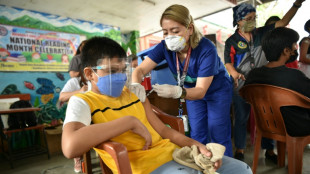
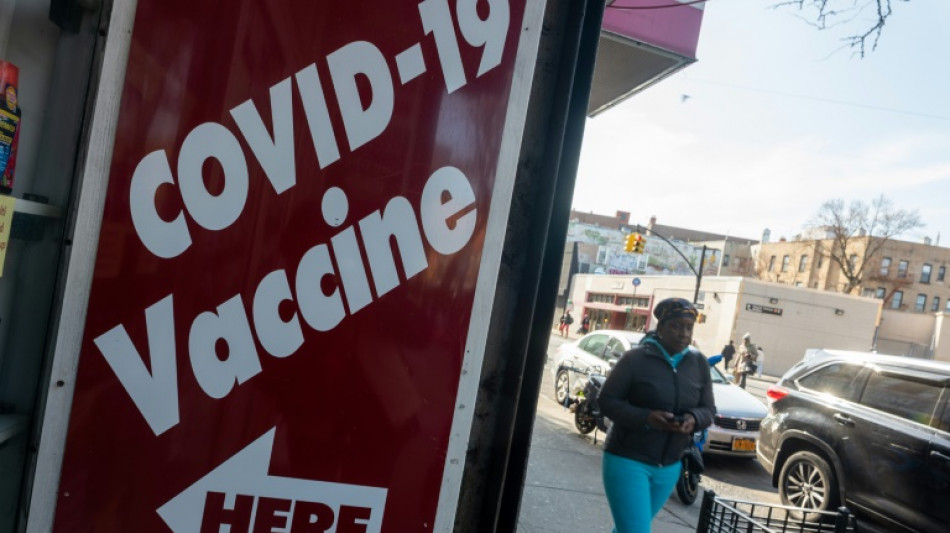
The United States will limit Covid-19 boosters to people over 65 or those at risk of serious illness, while requiring vaccine makers to run fresh clinical trials before offering shots to younger and healthier individuals, officials said Tuesday.
Writing in the New England Journal of Medicine, the Food and Drug Administration's Vinayak Prasad and Commissioner Martin Makary framed the policy shift as "evidence-based" and would align the United States more closely with guidance in Europe.
But it comes as Health Secretary Robert F. Kennedy Jr., a longtime vaccine skeptic, pushes to remake federal public health policy.
Kennedy previously led a nonprofit that was critical of immunization programs, and during the pandemic petitioned the FDA to revoke Covid vaccine authorizations, citing rare side effects including heart inflammation.
Prasad and Makary praised the initial Covid-19 vaccine rollout as "a major scientific, medical, and regulatory accomplishment," but argued that the benefits of repeated boosters for low-risk individuals are uncertain.
They criticized the US approach of recommending boosters for all adults regardless of age or health status, calling it a "one-size-fits-all" model based on the mistaken belief that Americans couldn't handle more nuanced, risk-based advice.
Rather than building public trust, they wrote, it had backfired -- fueling vaccine hesitancy that has spilled over into skepticism toward childhood shots, including those for measles.
The FDA said it would rely on lab test results to approve boosters for people who are over 65, or over six months old with at least one underlying condition.
But for healthy individuals between six months and 64 years, regulators will now require data from randomized trials.
"We simply don't know whether a healthy 52-year-old woman with a normal BMI (body mass index) who has had Covid-19 three times and has received six previous doses of a Covid-19 vaccine will benefit from the seventh dose," they wrote.
Some infectious disease experts welcomed the shift.
Amesh Adalja of Johns Hopkins University said it matched with the approach taken by other countries in a population that already carries significant immunity.
"For lower-risk individuals, the goal has always been less clear, as protection against infection is transient and they don't have a high risk of severe disease," he told AFP.
But others voiced concern about the practical consequences. Paul Offit, a leading vaccine expert at the Children's Hospital of Philadelphia, said it could limit access for people who still want boosters.
"Any use, say in a healthy 35-year-old, would be considered off-label, and you wonder whether an insurance company would pay for it," he told AFP.
- Not like annual flu shot -
Under the revised framework, companies like Pfizer and Moderna will be encouraged to test updated boosters in adults aged 50 to 64.
These studies should measure whether the vaccines reduce symptomatic infections, hospitalizations and deaths.
Rather than comparing new shots to earlier formulations, Prasad and Makary suggested placebo-controlled trials -- with saline as the comparator -- to better evaluate both benefit and potential side effects.
The proposal, first floated by Kennedy earlier this month, has proved divisive. Critics argue that using a placebo -- when authorized vaccines already exist -- could expose participants to unnecessary harm.
"Imagine if there was a death or two in the placebo group," said Offit. "I don't see how you conscience that."
Supporters of continued Covid-19 boosters often draw parallels to annual flu shots.
But Makary and Prasad pushed back on that comparison, arguing the genetic changes in Covid variants haven’t been significant enough to justify automatically updating the vaccine each year.
The FDA officials also sought to reassure Americans concerned they might lose access to boosters under the new framework.
The Centers for Disease Control and Prevention's (CDC) definition of risk factors is "vast, including obesity and even mental health conditions such as depression," they wrote, noting that between 100 million and 200 million Americans would likely still qualify.
I.Meyer--BTB