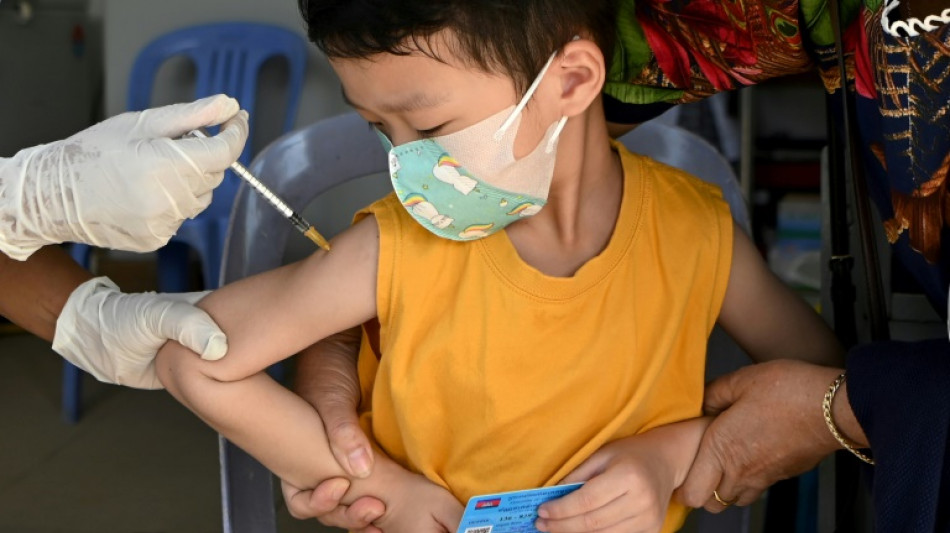
Covid vaccines saved 20 million lives in first year: study / Photo: © AFP

 #IAmJaneDoe: online support campaign in US university rape case

 Brazil shine on Selecao's first visit to India

 Zverev sets up Djokovic quarter-final at China Open, Rybakina out
 Happier at home, Bordeaux hammer Lyon in Top 14

 Lula, Bolsonaro in final push for votes ahead of knife-edge election

 Boisterous fashion week barnstorms 'sleepy' Nigerian capital

 UAE investigators say flydubai co-pilot was planning 'terrorist act'

 Rahul smacks century in India v Windies ODI

 Daryz seeks to join exclusive club of dual Arc winners

 Russia warns diplomats to leave Kyiv over new strikes threat
 Olympic champ Zheng rebukes rowdy home crowd at China Open

 World No.1 Sinner pulls out of Shanghai Masters to delay return

 Red Bull's Verstappen grabs pole position for Bahrain GP

 India beat Pakistan in blockbuster as golfer Kim wins 'crazy' gold

 India beat arch-rivals Pakistan to win Asian Games cricket gold

 Ethiopia's Tigray rebels abandon regional capital as govt advances: journalist

 Tom Kim powers to Games gold and exemption from military service

 Split loyalties for Indian football fans at Brazil friendly

 India-Pakistan blockbuster brings cricket fever to Japan baseball field

 Wong waiting on Rafa after winning Asian Games tennis gold

 With Russia next door and rising costs, Latvia goes to the polls

 Penalty hero rues empty seats as Games hosts Japan win football gold

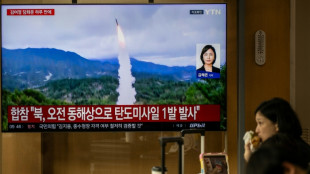 North Korea fires ballistic missile after Seoul's apology demand

 US regulator finds Boeing 737 MAX software bug 'not a safety concern'

 Ohtani 'managing' injuries as Dodgers launch MLB post-season

Covid vaccines prevented nearly 20 million deaths in the first year after they were introduced, according to the first large modelling study on the topic released Friday.
The study, published in The Lancet Infectious Diseases, is based on data from 185 countries and territories collected from December 8, 2020 to December 8, 2021.
It is the first attempt to estimate the number of deaths prevented directly and indirectly as a result of Covid-19 vaccinations.
It found that 19.8 million deaths were prevented out of a potential 31.4 million deaths that would have occurred if no vaccines were available.
It was a 63 percent reduction, the study found.
The study used official figures -- or estimates when official data was not available -- for deaths from Covid, as well as total excess deaths from each country.
Excess mortality is the difference between the total number of people who died from all causes and the number of deaths expected based on past data.
These analyses were compared with a hypothetical alternative scenario in which no vaccine was administered.
The model accounted for variation in vaccination rates across countries, as well as differences in vaccine effectiveness based on the types of vaccines known to have been primarily used in each country.
China was not included in the study because of its large population and strict containment measures, which would have skewed the results, it said.
The study found that high- and middle-income countries accounted for the largest number of deaths averted, 12.2 million out of 19.8 million, reflecting inequalities in access to vaccines worldwide.
Nearly 600,000 additional deaths could have been prevented if the World Health Organization's (WHO) goal of vaccinating 40 percent of each country's population by the end of 2021 had been met, it concluded.
"Millions of lives have probably been saved by making vaccines available to people around the world," said lead study author Oliver Watson of Imperial College London.
"We could have done more," he said.
Covid has officially killed more than 6.3 million people globally, according to the WHO.
But the organisation said last month the real number could be as high as 15 million, when all direct and indirect causes are accounted for.
The figures are extremely sensitive due to how they reflect on the handling of the crisis by authorities around the world.
The virus is on the rise again in some places, including in Europe, which is seeing a warm-weather resurgence blamed in part on Omicron subvariants.
P.Anderson--BTB



