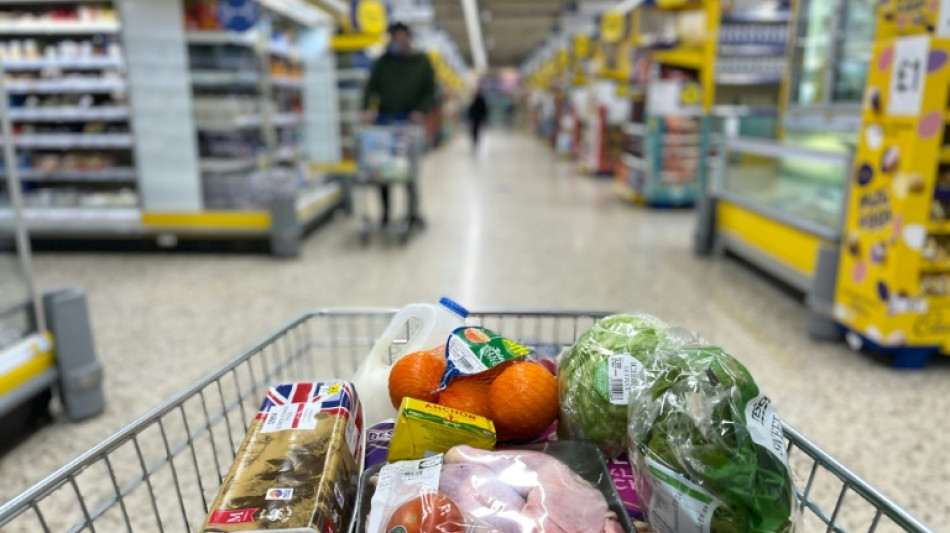
Kellogg's loses court challenge against UK obesity strategy / Photo: © AFP/File

 Prague’s Concert for the Future Kicks Off on Wenceslas Square

 Prince William and Princess of Wales to Announce Earthshot Prize Winners in Mumbai

 Indonesia Forest Fires: Health Crisis, Diplomatic Strains and the Search for Solutions

 BYD Dolphin G Leasing Deal: Plug-in Hybrid Supermini Available from £174 a Month

 JUEL Group Expands from Real Estate to Hospitality with Hyatt Centric Malta Opening

 French Economy Shrinks 0.1% as Consumer Confidence Slumps

 Wall Street Ends Turbulent Week Higher Despite Inflation and AI Jitters
Cereals giant Kellogg's on Monday lost a High Court challenge against new UK rules limiting the prominence of sugary foods in English shops to tackle child obesity.
At a hearing in April, the Frosties and Rice Krispies maker argued against the government's strategy to calculate fat, salt and sugar content of cereals when eaten dry, not when taken with milk.
But in a ruling on Monday, the court noted that no breakfast cereal manufacturer raised objections to the methodology during the consultation period about the rules.
The judge, Thomas Linden, said there was "no dispute" that breakfast cereals could be part of a healthy diet.
"But the argument that there are nutritional benefits to the consumption of a given breakfast cereal does not affect the point that if it contains excess fat, sugar or salt, that feature of the product is adverse to a child's health," he said.
Linden said 54.7 percent of Kellogg's cereals would be classed as less healthy under the new regulations that take effect from October.
Kellogg's claimed the change would hit annual profits by about £5 million ($6.1 million).
Welcoming the ruling, the government said it was "committed to tackling obesity, which is the second biggest cause of cancer in the UK" and costs the state-funded National Health Service "billions of pounds a year".
Kellogg's said it did not intend to appeal but urged the government to rethink its strategy, especially amid soaring inflation.
"By restricting the placement of items in supermarkets, people face less choice and potentially higher prices," said the group's UK managing director, Chris Silcock.
"That's why, in the midst of a cost-of-living crisis, we would strongly urge the government to rethink these regulations and put the consumer first."
L.Dubois--BTB



