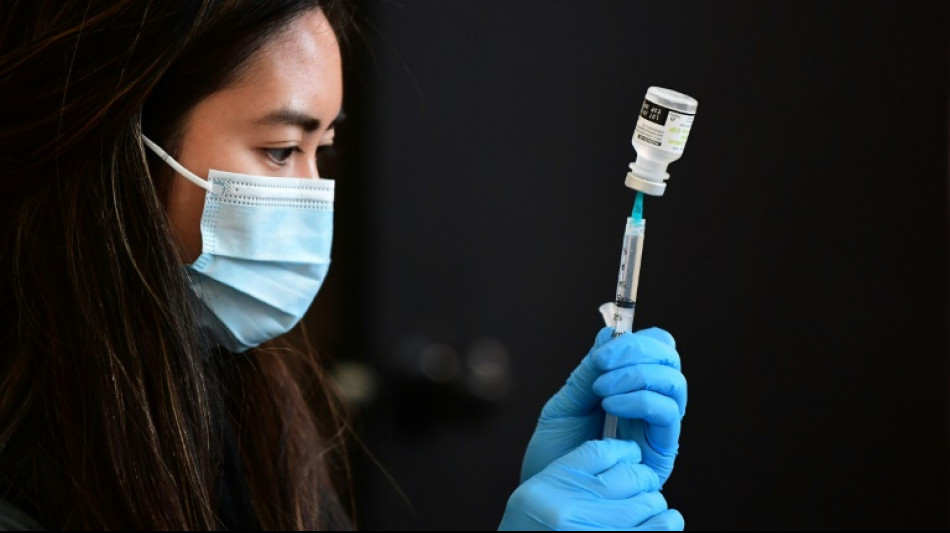
New US study helps de-mystify Covid brain fog / Photo: © AFP/File

 AI needs safety layers like nuclear plants: ex-OpenAI engineer

 MVP Judge will miss Yankees' MLB playoff series against Rays

 New lizard species discovered in Peru

 Fernandes hails Portugal's 'greatest symbol' Ronaldo, calls for unity

 Grandidier-Nkanang double takes Pau to Top 14 summit despite Vannes fightback
 Trainer Scott gets perfect Arc boost with top notch double

 Ex-PM says Putin cannot admit 'mistake' over Ukraine

 Houthis say Saudi Arabia launches dozens of strikes on Yemen capital

 Qatar and Abu Dhabi F1 Grand Prix to go ahead - F1 boss

 South Korea lift gloom with smash-and-grab Games football gold
 Ireland news conference before Israel game cut short amid tensions
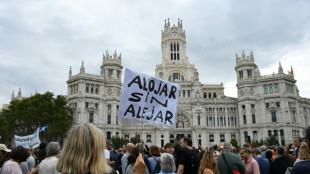 Protests over housing flare in Spain after relief measures rejected

 Zverev thrashes Shang to set up Djokovic quarter-final at China Open

 Turkey football ref chief jailed pending trial for graft
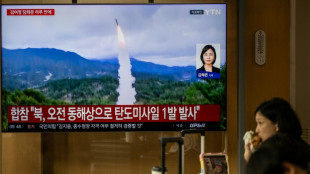 North Korea says test of intermediate-range strategic missile included use of AI

 Rampant Sayers leads Hong Kong to third men's rugby gold in a row

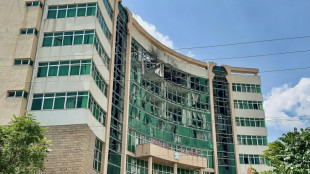 Ethiopia's Tigray rebels abandon regional capital as govt advances
 Bulgaria's Tsar Samuel returns 'home' after 1,000 years

 'Glad it's over': Kim powers to Games gold and military exemption

 After 11 World Cups, football finally comes home for one Indian fan
 Marc Marquez wins sprint at Japan MotoGP, Martin grabs pole

 Alcaraz fends off Arnaldi to reach Japan Open quarters

 Antonelli tops times in final practice at Bahrain GP

 Gauff digs deep to beat Osorio in China Open second round

 Fresh protests to hit Spain after housing measures defeated

A small new study published Tuesday by scientists at the US National Institutes of Health suggests that the immune response triggered by coronavirus infections damages the brain's blood vessels and could be responsible for long Covid symptoms.
The paper, published in the journal Brain, was based on brain autopsies from nine people who died suddenly after contracting the virus.
Rather than detecting evidence of Covid in the brain, the team found it was the people's own antibodies that attacked the cells lining the brain's blood vessels, causing inflammation and damage.
This discovery could explain why some people have lingering effects from infection including headache, fatigue, loss of taste and smell, and inability to sleep as well as "brain fog" -- and may also help devise new treatments for long Covid.
NIH scientist Avindra Nath, the paper's senior author, said in a statement: "Patients often develop neurological complications with COVID-19, but the underlying pathophysiological process is not well understood."
"We had previously shown blood vessel damage and inflammation in patients' brains at autopsy, but we didn't understand the cause of the damage. I think in this paper we've gained important insight into the cascade of events."
The nine individuals, aged 24 to 73, were selected from the team's prior study because they showed evidence of blood vessel damage in their brains based on scans.
Their brains were compared to those from 10 controls, with the team examining neuroinflammation and immune responses using a technique called immunohistochemistry.
The scientists discovered that antibodies produced against Covid-19 mistakenly targeted cells that form the "blood-brain barrier" -- a structure designed to keep harmful invaders out of the brain while allowing necessary substances to pass.
Damage to these cells can cause leakage of proteins, bleeding and clots, which elevates the risk of stroke.
The leaks also trigger immune cells called macrophages to rush to the site to repair damage, causing inflammation.
The team found that normal cellular processes in the areas targeted by the attack were severely disrupted, which had implications for things such as their ability to de-toxify and to regulate metabolism.
The findings offer clues about the biology at play in patients with long-term neurological symptoms, and can inform new treatments -- for example, a drug that targets the build-up of antibodies on the blood-brain barrier.
"It is quite possible that this same immune response persists in Long COVID patients resulting in neuronal injury," said Nath.
This would mean that a drug that dials down that immune response could help those patients, he added. "So these findings have very important therapeutic implications."
C.Kovalenko--BTB