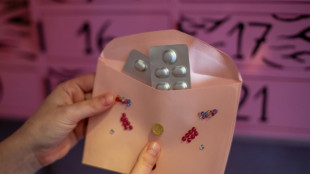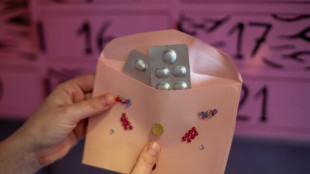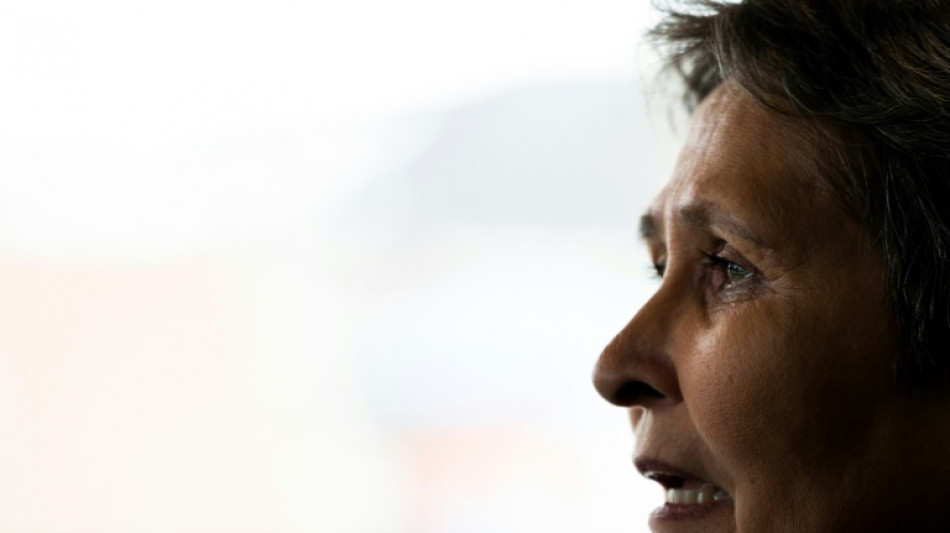
Trauma of Greenland's forced contraception / Photo: © AFP

 AI needs safety layers like nuclear plants: ex-OpenAI engineer

 MVP Judge will miss Yankees' MLB playoff series against Rays

 New lizard species discovered in Peru

 Fernandes hails Portugal's 'greatest symbol' Ronaldo, calls for unity
 Grandidier-Nkanang double takes Pau to Top 14 summit despite Vannes fightback
 Trainer Scott gets perfect Arc boost with top notch double
 Ex-PM says Putin cannot admit 'mistake' over Ukraine

 Houthis say Saudi Arabia launches dozens of strikes on Yemen capital

 Qatar and Abu Dhabi F1 Grand Prix to go ahead - F1 boss

 South Korea lift gloom with smash-and-grab Games football gold
 Ireland news conference before Israel game cut short amid tensions
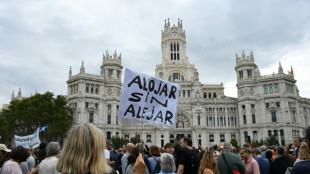 Protests over housing flare in Spain after relief measures rejected

 Zverev thrashes Shang to set up Djokovic quarter-final at China Open

 Turkey football ref chief jailed pending trial for graft
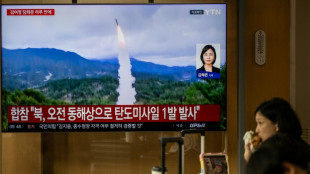 North Korea says test of intermediate-range strategic missile included use of AI

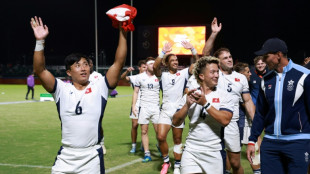 Rampant Sayers leads Hong Kong to third men's rugby gold in a row

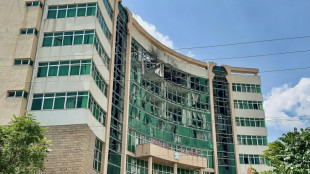 Ethiopia's Tigray rebels abandon regional capital as govt advances

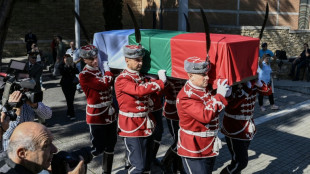 Bulgaria's Tsar Samuel returns 'home' after 1,000 years
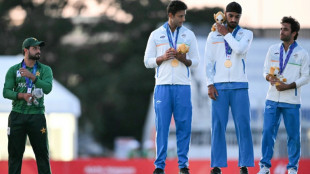
 'Glad it's over': Kim powers to Games gold and military exemption

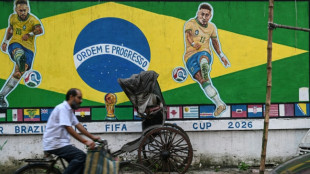 After 11 World Cups, football finally comes home for one Indian fan
 Marc Marquez wins sprint at Japan MotoGP, Martin grabs pole

 Alcaraz fends off Arnaldi to reach Japan Open quarters
 Antonelli tops times in final practice at Bahrain GP
 Gauff digs deep to beat Osorio in China Open second round
 Fresh protests to hit Spain after housing measures defeated
"I had to spread my legs, and when it was put in it hurt terribly," said Britta Mortensen, who was 15 she when was forced to have a coil, or intrauterine device (IUD), fitted.
Like thousands of young Greenland Inuit, she was the victim of a policy to limit the birth rate in the Arctic territory, which was no longer a colony at the time but still under Danish control.
According to an investigation by Denmark's public broadcaster DR, some 4,500 women were subjected to the procedure.
It was 1974 and Mortensen had just left her family for the first time.
There was no high school in the fishing village of Ilulissat where she lived on the island's western edge, so continuing her studies in Denmark was an opportunity for her.
"I went... to a boarding school and there the headmistress told me: 'You have to get an IUD.' I said no," she recalled, standing in front of the white house where she was born.
The headmistress said: "'Yes, you will get an IUD, even if you say no,'" Mortensen added, the hurt still clear.
Her parents, who were thousands of miles away, were never asked for consent and never informed.
One autumn day, the teenager found herself in front of a doctor ready to have the contraceptive device inserted.
"It was an IUD for women who had already had children, not for young girls the age I was," the now 63-year-old told AFP.
- 'Ashamed' -
After the "violation", Mortensen took refuge in silence, unaware that her fate was shared by other Greenlandic girls in her boarding school in Jutland in western Denmark.
"I was ashamed. I haven't told anyone about it until now."
But Mortensen is now taking part in a debate about what about happened -- albeit timidly and mostly on Facebook, where a group set up by a psychologist who was also a victim, has brought together more than 70 women.
It's a "mutual support group as co-sisters so no one feels alone, especially with the reactivation in the trauma that was repressed for many years," said its creator Naja Lyberth.
It is particularly trying for women who had not been able to have children, she said.
Many women were unaware that they were wearing a contraceptive device, she added, only finding out when Greenlandic gynaecologists started discovering them.
"Typically, it was placed during an abortion, without women being informed about it," Lyberth told AFP.
Historian Soren Rud said the Danish campaign in the late 1960s was part of a lingering colonial mentality that continued even after formal decolonisation in 1953.
This attitude "was marked by ideas of the Greenlander's lack of cultural competences. In contrast to many forms of birth control, IUD did not require any effort from the Greenlandic women in order to be effective," said the associate professor at the University of Copenhagen.
The women's testimonies come at a time when Denmark and Greenland, which became an autonomous territory in 2009, are re-examining their past relationship.
In March, Denmark apologised and paid compensation to six Inuit who were taken from their families in the 1950s to take part in an experiment to build a Danish-speaking elite in the Arctic territory.
Britta Mortensen believes that women who were forced to use contraception also deserve an apology and should also be compensated.
"They should compensate for the harm done to us, the many girls who were forced to wear the IUD," she said.
M.Odermatt--BTB