Conjoined twins separated with help of virtual reality in Brazil / Photo: © Fitamarela/AFP

 AI needs safety layers like nuclear plants: ex-OpenAI engineer

 MVP Judge will miss Yankees' MLB playoff series against Rays

 New lizard species discovered in Peru

 Fernandes hails Portugal's 'greatest symbol' Ronaldo, calls for unity

 Grandidier-Nkanang double takes Pau to Top 14 summit despite Vannes fightback

 Trainer Scott gets perfect Arc boost with top notch double

 Ex-PM says Putin cannot admit 'mistake' over Ukraine

 Houthis say Saudi Arabia launches dozens of strikes on Yemen capital

 Qatar and Abu Dhabi F1 Grand Prix to go ahead - F1 boss

 South Korea lift gloom with smash-and-grab Games football gold
 Ireland news conference before Israel game cut short amid tensions

 Protests over housing flare in Spain after relief measures rejected

 Zverev thrashes Shang to set up Djokovic quarter-final at China Open

 Turkey football ref chief jailed pending trial for graft

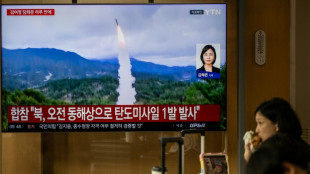 North Korea says test of intermediate-range strategic missile included use of AI
 Rampant Sayers leads Hong Kong to third men's rugby gold in a row

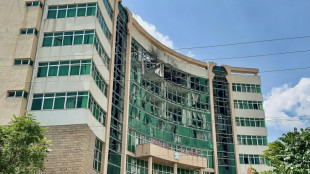 Ethiopia's Tigray rebels abandon regional capital as govt advances
 Bulgaria's Tsar Samuel returns 'home' after 1,000 years

 'Glad it's over': Kim powers to Games gold and military exemption

 After 11 World Cups, football finally comes home for one Indian fan
 Marc Marquez wins sprint at Japan MotoGP, Martin grabs pole
 Alcaraz fends off Arnaldi to reach Japan Open quarters

 Antonelli tops times in final practice at Bahrain GP

 Gauff digs deep to beat Osorio in China Open second round
 Fresh protests to hit Spain after housing measures defeated

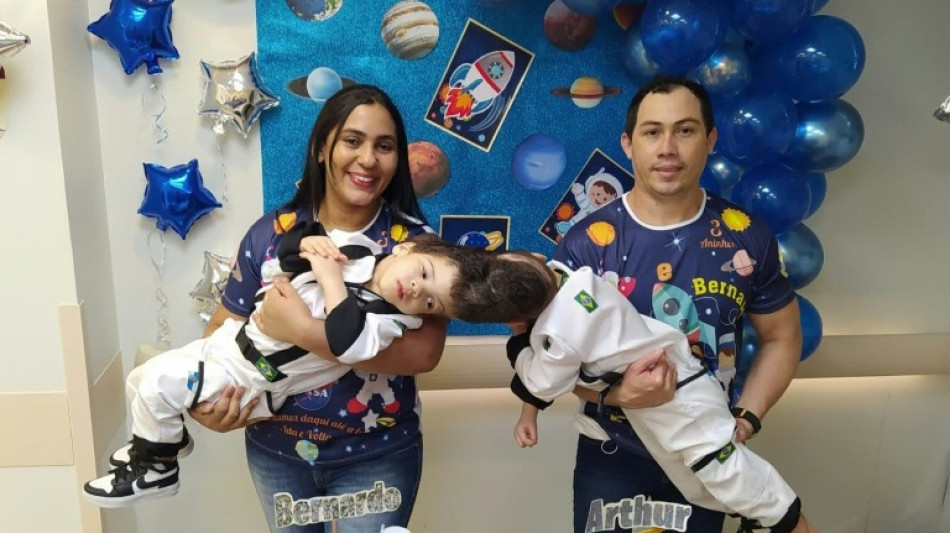
Conjoined twins born in Brazil with a fused head and brain have been separated in what doctors described Monday as the most complex surgery of its kind, which they prepared for using virtual reality.
Arthur and Bernardo Lima were born in 2018 in the state of Roraima in northern Brazil as craniopagus twins, an extremely rare condition in which the siblings are fused at the cranium.
Joined at the top of the head for nearly four years -- most of that spent in a Rio de Janeiro hospital outfitted with a custom bed -- the brothers are now able to look each other in the face for the first time, after a series of nine operations culminating in a marathon 27-hour surgery to separate them.
London-based medical charity Gemini Untwined, which helped carry out the procedure, described it as the "most challenging and complex separation to date," given that the boys shared several vital veins.
"The twins had the most serious and difficult version of the condition, with the highest risk of death for both," said neurosurgeon Gabriel Mufarrej of the Paulo Niemeyer State Brain Institute (IECPN) in Rio, where the procedure was performed.
"We're very satisfied with the outcome, because no one else believed in this surgery at first, but we always believed there was a chance," he said in a statement.
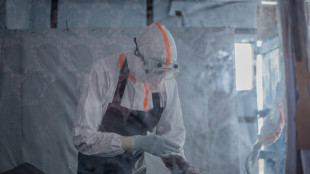
Members of the medical team, which included nearly 100 staff, prepared for the delicate final stages of the surgery on June 7 and 9 with the help of virtual reality, said Gemini Untwined.
Using brain scans to create a digital map of the boys' shared cranium, surgeons practiced for the procedure in a trans-Atlantic virtual-reality trial surgery.
British neurosurgeon Noor ul Owase Jeelani, the lead surgeon for Gemini Untwined, called the virtual reality prep session "space-age stuff."
"It's just wonderful, it's really great to see the anatomy and do the surgery before you actually put the children at any risk," he told British news agency PA.
"You can imagine how reassuring that is for the surgeons... To do it in virtual reality was just really man-on-Mars stuff."
Pictures and videos released by medical staff showed the boys lying side-by-side on a hospital bed post-surgery, little Arthur reaching out to touch his brother's hand.
In tears, the boys' mother, Adriely Lima, described the family's relief.
"We've been living in the hospital for nearly four years," she said.
M.Ouellet--BTB