Hubble-bubble trouble: Hookah ban leaves Malians divided / Photo: © AFP

 Yamal on target as Spain hold off Czech Republic

 Latvian exit polls suggest pro-European choice
 Lula, Bolsonaro wrap up campaigns ahead of knife-edge election
 Tuchel hails 'complete' England after Croatia demolition

 Fury to invite Trump to lead ring walk before Joshua showdown
 Fashion industry in 'precarious moment', says Vivienne Westwood supremo
 Seventh heaven for England in Nations League rout of Croatia
 Storms, flooding cause chaos on Greek holiday island of Crete

 #IAmJaneDoe: online support campaign in US university rape case

 Brazil shine on Selecao's first visit to India
 Zverev sets up Djokovic quarter-final at China Open, Rybakina out
 Happier at home, Bordeaux hammer Lyon in Top 14
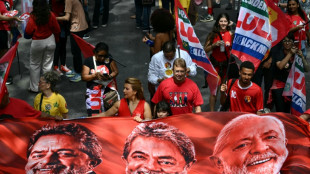 Lula, Bolsonaro in final push for votes ahead of knife-edge election

 Boisterous fashion week barnstorms 'sleepy' Nigerian capital
 UAE investigators say flydubai co-pilot was planning 'terrorist act'
 Rahul smacks century in India v Windies ODI
 Daryz seeks to join exclusive club of dual Arc winners
 Russia warns diplomats to leave Kyiv over new strikes threat
 Olympic champ Zheng rebukes rowdy home crowd at China Open

 World No.1 Sinner pulls out of Shanghai Masters to delay return
 Red Bull's Verstappen grabs pole position for Bahrain GP

 India beat Pakistan in blockbuster as golfer Kim wins 'crazy' gold
 India beat arch-rivals Pakistan to win Asian Games cricket gold
 Ethiopia's Tigray rebels abandon regional capital as govt advances: journalist
 Tom Kim powers to Games gold and exemption from military service

"Shisha-abana," exclaims Bilal, a grocer in Mali's capital Bamako, in the national language Bambara: "Shisha is finished."
His is a common reaction.
An unexpected ban on hookah smoking in this West African country has stirred surprise as well as division, leaving devotees dismayed but health advocates delighted.
Bars where small groups of smokers -- primarily young men -- hang out to chat and puff on water pipes have flourished in Bamako in recent years.
Mali is an overwhelmingly Muslim country, and interpretations of Islam are generally unfavourable to cigarettes and to shisha.
But it is also a secular nation that tolerates alcohol, even if consumption is limited to certain public places and most shops and restaurants do not serve it.
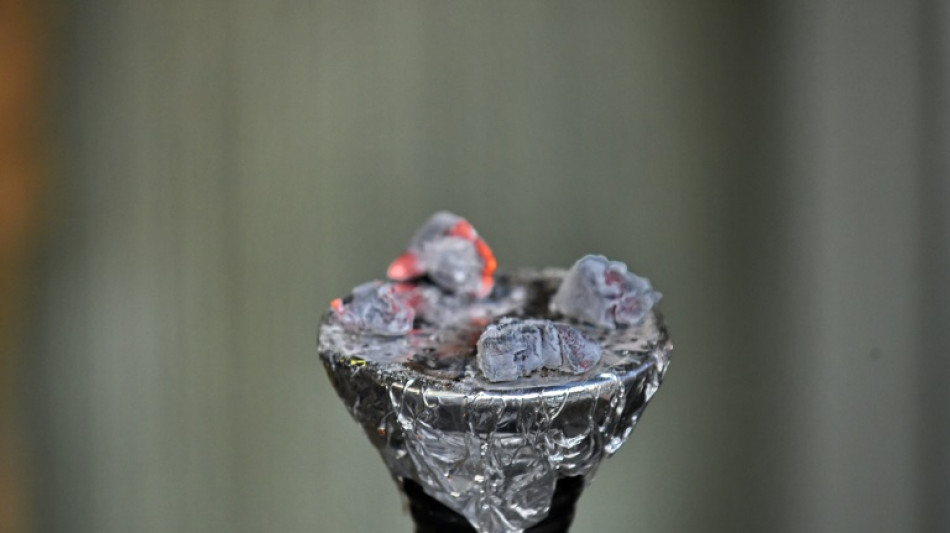
Shishas, or hookahs, typically burn a tobacco flavoured with fruit to provide a sweetened taste. The smoke is inhaled in through a long rubber tube, passing through water to cool it down. "Shisha" is also the term sometimes used for the tobacco product.
The government's sudden decision on August 15 to ban shishas took many by surprise -- the ruling junta, in power since 2020, had not been particularly known for its concerns about tobacco.
The law, co-signed by six ministries, including the ministry of security, health and youth, "prohibits the importation, distribution, sale and use of shishas (water pipes) or any similar device throughout the national territory".
Any shisha smoker will be punished with a prison sentence of one to 10 days and a fine of 300 to 10,000 CFA francs ($0.45 to $15.00).
Shisha bars have six months to close.
The authorities did not provide any reason for the ban.
But in his shop in the centre of Bamako, Abdramane Daff is fuming as he shows off his pile of stock.
"We can't sell all this in six months, it's impossible", he said.
"We beg (the authorities) to look for another solution -- maybe they could limit themselves to banning consumption in the streets and spare shisha sales".
- 'Thank you' -
On the consumer side, there are questions about the authorities' ability to enforce the decree.
"Is it possible to stop smoking shisha for good?" asked one occasional smoker on condition of anonymity.
Measures such as the closure of restaurants during the Covid-19 pandemic had little effect in a country where many businesses are informal and law enforcement resources are limited.
On social networks or in conversations in street hangouts in Bamako, the news was rather well received.
"Thank you for the ban on shisha in Mali, I think we should now ban cigarettes as they are also a drug!" posted Abdoul Karim Maiga on Twitter.
"I think the decree is very important," Ousmane Toure, a representative of the association of tobacco victims, told AFP.
"In terms of mortality and disease, if we took into account shisha and tobacco, we would see that frankly it is better to stop," he said.
Salif Kone, a tobacco specialist, points to a study conducted in schools in Bamako showing that "about 70 percent of young people use shisha".
- Health risk -
A working group of the World Health Organization (WHO) warned in 2017 about the danger of shisha smoking.
The practice is up to 10 times more harmful than cigarettes but is not targeted by the same awareness campaigns as with tobacco, it said.
It is "up to us, the doctors, the parents of these children, to combine our efforts with those of the government to (make them) stop using shisha", Kone said.
Countries such as Saudi Arabia and Lebanon have taxed shisha consumption. Others, including Jordan and Cameroon, have banned it.
In Mali, where free speech has been increasingly threatened since 2020, few critical voices have been raised apart from shisha bar managers.
"Was this the most urgent thing, when our country is in the grip of a multi-pronged crisis?" asked one social scientist on condition of anonymity.
C.Meier--BTB