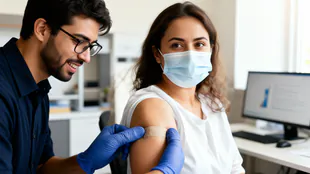
British Couple Spends £3,500 on Gender-Selective IVF in Egypt to Ensure Daughter

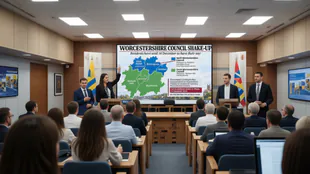 Worcestershire Residents Invited to Submit Evidence on Unitary Council Plans

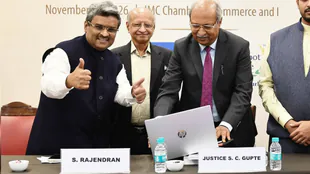 NSEL Ends 14-Year Payment Default with ₹1,950 Crore Settlement

 Marilyn Monroe’s Handwritten Thanksgiving Recipe Sells for $16,000 at Auction

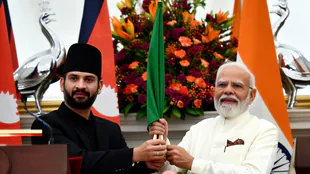 India Pledges $1.6bn for Nepal Flood Recovery Amid Geopolitical Shift

 NSO Data Confirms Food Inflation Subsides in October

A British couple has revealed they spent £3,500 traveling to Egypt for gender-selective in vitro fertilization (IVF) to ensure their first child would be a girl. Mary and George Stewart, who have no history of infertility, defended their decision against online criticism, stating the procedure allowed them to secure a specific family dynamic and freeze embryos for future use.
Mary Grace Stewart sat in her hotel room in Egypt, reflecting on the journey that had brought her thousands of miles from her home in Reading to undergo a controversial medical procedure. She was there for gender-selective in vitro fertilization (IVF), a treatment designed to allow prospective parents to choose the sex of their embryo before implantation.
"I’ve always wanted a girl," Stewart, 31, told Metro. "Growing up, I had three sisters and no brothers, and I really appreciated the sisterhood we had and still have to this day. I want that for my child."
In the United Kingdom, selecting an embryo’s sex for non-medical reasons is illegal. The restrictions are designed to prevent sex discrimination and the selection of children for non-medical characteristics. However, British law does not prohibit citizens from traveling abroad to clinics in jurisdictions where such services are legal.
Stewart and her husband, George, traveled more than 2,000 miles to Egypt specifically because the country permits gender selection under local regulations. The couple, who have been together for three years and married for one, do not have a history of infertility. Their decision was driven by personal preference rather than medical necessity.
"I think I need the mother and daughter bond too much to leave it to chance," Stewart said. "I want my firstborn to be a girl. My husband loves the idea of being a girl dad and has been supportive of gender selection from the start."
The couple initially considered Northern Cyprus for the procedure but abandoned the idea due to communication concerns and fears of hidden fees. They ultimately selected a clinic in Egypt that offered a free online consultation and assistance with flights and accommodation, which helped alleviate Stewart’s initial anxiety about traveling abroad for medical treatment.
The total cost for the IVF cycle was £3,500. This fee covered medications, consultations, scans, egg retrieval, the gender selection process itself, and the embryo transfer. For comparison, similar procedures in countries like the United States can cost tens of thousands of pounds. The couple also spent an additional $700 (£530) on three weeks of accommodation, a figure Stewart noted was significantly cheaper than alternatives in other permitted jurisdictions.
A key factor in their choice of Egypt was the availability of a "no-needle" IVF stimulation option. Standard IVF cycles typically require patients to administer daily hormone injections via syringe for one to two weeks. The device used by the Egyptian clinic replaces these injections with a small, wearable catheter port placed on the abdomen.
"The no-needle IVF device was a game changer for me, since I could’ve almost let go of the whole IVF idea if it wasn’t there," Stewart admitted. While patients still require blood tests and an intravenous line for egg retrieval, the device eliminates the need for daily self-injections at home.
Before traveling, Stewart underwent preliminary blood tests in the UK, including assessments for anti-Müllerian hormone (AMH), thyroid-stimulating hormone (TSH), and prolactin. These results were sent to the clinic prior to her consultation. The treatment phase began on October 28 with ovarian stimulation using the wearable catheter port. Stewart described this stage as manageable, though she experienced side effects including bloating and tiredness.
Following egg retrieval under sedation, the embryos underwent preimplantation genetic testing for aneuploidy (PGT-A). This testing screens for chromosomal normality and predicts chromosomal sex with over 98% accuracy. Stewart noted that while the test identifies genetics accurately, it cannot guarantee that an IVF cycle will produce a viable embryo of the desired sex, as embryo health is primarily determined by egg and sperm quality, maternal age, genetics, and lifestyle.
The results for the couple were seven viable embryos, four of which Stewart described as "lovely girls." She is now awaiting the embryo transfer, scheduled to take place before the end of the year. The couple plans to freeze the remaining embryos, providing them with security for future children.
"Doing it now also means I can freeze embryos to use when I’m older, which gave us peace of mind for the future too," Stewart said. "The whole point in freezing them was to give us extra security and peace of mind."
While the couple’s family and friends were initially surprised by the decision, Stewart reported that they became "super supportive" once she explained the reasoning behind it, rather than letting it appear as a "random whim." However, Stewart’s decision to document her journey on TikTok attracted significant public attention, much of it negative.
One video detailing her experience garnered over 230,000 views in 48 hours. The graphic designer received comments from strangers calling her a "bad mother" and stating she did not deserve to have a child. Some commenters even expressed hope that she would have a boy instead.
"It’s hard when strangers judge you from a 30-second clip. People online only see a tiny snapshot of your life and judge it," Stewart said. "I’m always happy to reply kindly and explain our side, but if someone is outright rude, I don’t give it my energy."
Despite the criticism, Stewart emphasized that the supportive messages she received from other women outweighed the negativity. She noted receiving numerous messages from women who had been quietly researching gender selection or had undergone similar procedures abroad without telling anyone.
"The amount of kind, supportive messages I’ve gotten from women who get it completely outweighs any judgment," she said.
Stewart also expressed a desire to use her social media account as a time capsule for her future daughter. "I’m documenting my journey to let [my daughter] feel how she was wanted by us and how deeply wanted, planned and loved she was before she even arrived," she explained. "We literally travelled across the world to bring her into our family. There’s nothing to hide; it’s such a special part of her story."
Regarding the legal landscape, Stewart acknowledged the ethical complexities surrounding gender selection. "I completely respect why those safeguards exist on a broad scale," she said. "At the same time, for families like ours who simply want to balance their family and experience a specific bond, our decision came from a place of pure love."
She added that if regulations were to change, she would prefer the process to remain "really well-regulated." Her broader hope is that society recognizes diverse paths to parenthood. "More than anything, I just hope people realise that there’s no ‘one right way’ to build a family. Our decision came from pure love and wanting that mother-daughter bond."
IVF has helped millions of people worldwide become parents, with more than 21,400 babies born in the UK annually through the treatment. While roughly 28% of IVF cycles are funded by the National Health Service (NHS), the majority of prospective parents pay for private treatments, often incurring substantial costs.
Countries that permit non-medical gender selection include Northern Cyprus, the United States, Mexico, the United Arab Emirates, Egypt, and Iran. Each nation maintains its own local regulations and eligibility rules regarding age, clinic accreditation, and relationship status.
K.Brown--BTB