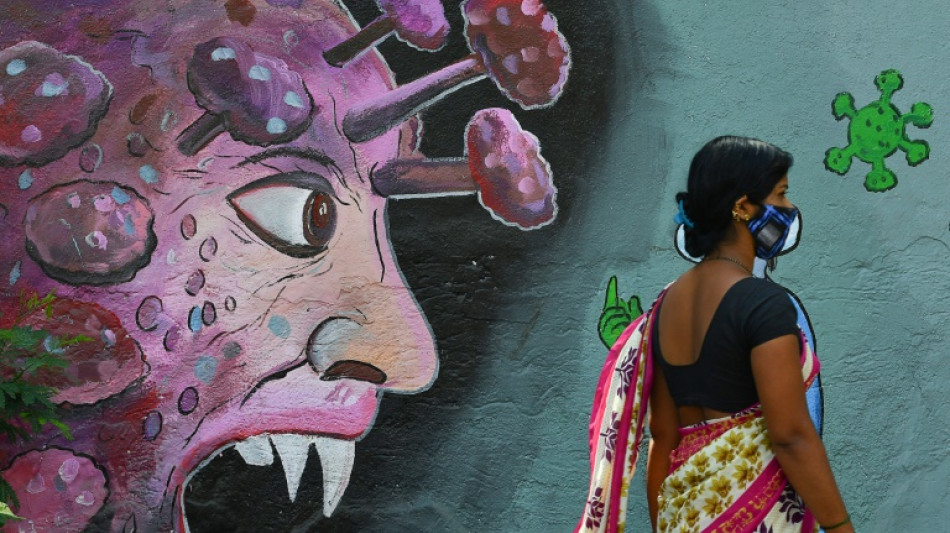
Long Covid remains a mystery, though theories are emerging / Photo: © AFP/File

 Lula, Bolsonaro wrap up campaigns ahead of Brazil's knife-edge vote

 Toulouse edge Castres in Top 14 derby

 Murakami homer propels White Sox to MLB playoff win over Guardians

 Israel targets top Hamas leader in deadly Gaza strike on anniversary

 Houthis say struck oil facility near Riyadh, as Saudis hit Sanaa

 AI needs safety layers like nuclear plants: ex-OpenAI engineer

 MVP Judge will miss Yankees' MLB playoff series against Rays

 New lizard species discovered in Peru

 Fernandes hails Portugal's 'greatest symbol' Ronaldo, calls for unity

 Grandidier-Nkanang double takes Pau to Top 14 summit despite Vannes fightback
 Trainer Scott gets perfect Arc boost with top notch double

 Ex-PM says Putin cannot admit 'mistake' over Ukraine

 Houthis say Saudi Arabia launches dozens of strikes on Yemen capital

 Qatar and Abu Dhabi F1 Grand Prix to go ahead - F1 boss
 South Korea lift gloom with smash-and-grab Games football gold
 Ireland news conference before Israel game cut short amid tensions
 Protests over housing flare in Spain after relief measures rejected

 Zverev thrashes Shang to set up Djokovic quarter-final at China Open

 Turkey football ref chief jailed pending trial for graft
 North Korea says test of intermediate-range strategic missile included use of AI

 Rampant Sayers leads Hong Kong to third men's rugby gold in a row

 Ethiopia's Tigray rebels abandon regional capital as govt advances
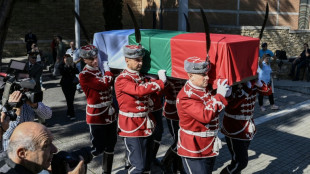 Bulgaria's Tsar Samuel returns 'home' after 1,000 years

 'Glad it's over': Kim powers to Games gold and military exemption

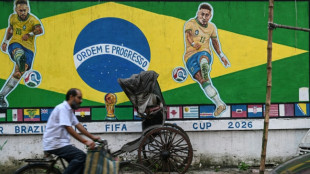 After 11 World Cups, football finally comes home for one Indian fan
Millions of people around the world are believed to suffer from long Covid yet little remains known about the condition -- though research has recently proposed several theories for its cause.
Between 10 to 20 percent of people who contract coronavirus are estimated to have long Covid symptoms -- most commonly fatigue, breathlessness and a lack of mental clarity dubbed brain fog -- months after recovering from the disease.
The US-based Institute for Health Metrics and Evaluation (IHME) estimates that nearly 145 million people worldwide had at least one of those symptoms in 2020 and 2021.
In Europe alone, 17 million people had a long Covid symptom at least three months after infection during that time, according to IHME modelling for the World Health Organization (WHO) published earlier this month.
These millions "cannot continue to suffer in silence", WHO Europe director Hans Kluge said, calling for the world to act quickly to learn more about the condition.
Researchers have been racing to catch up but the vast array -- and inconsistency -- of symptoms has complicated matters.
More than 200 different symptoms have been ascribed to long Covid so far, according to a University College London study.
- 'Fatigue in the background' -
"There are no symptoms that are truly specific to long Covid but it does have certain characteristics that fluctuate," said Olivier Robineau, the long Covid coordinator at France's Emerging Infectious Diseases research agency.
"Fatigue remains in the background," he told AFP, while the symptoms "seem to be exacerbated after intellectual or physical effort -- and they become less frequent over time".
One thing we do know is that people who had more severe initial cases, including needing to be hospitalised, are more likely to get long Covid, according to the IHME.
Researchers have been pursuing several leads into exactly what could be behind the condition.
A study published in the journal Clinical Infectious Diseases in September found that Covid's infamous spike protein --- the key that lets the virus into the body's cells -- was still present in patients a full year after infection.
This suggests that viral reservoirs may persist in some people, potentially causing inflammation that could lead to long Covid-like symptoms, the researchers said.
If they are right, a test could be developed to identify the spike, potentially leading to one of the great and elusive goals of long Covid research -- a clear way to diagnose the condition.
However, their findings have not been confirmed by other research, and several other causes have been proposed.
- 'Data not very solid yet' -
One leading theory is that tissue damage from severe Covid cases triggers lasting disruption to the immune system.
Another suggests that the initial infection causes tiny blood clots, which could be related to long Covid symptoms.
However "for each of these hypotheses, the data is not very solid yet", Robineau said.
It is most likely that "we are not going to find a single cause to explain long Covid", he added.
"The causes may not be exclusive. They could be linked or even succeed each other in the same individual, or be different in different individuals."
A way to treat the condition also remains elusive.
For the last year, the Hotel-Dieu hospital in Paris has been offering long Covid patients a half-day treatment course.
"They meet an infectious disease specialist, a psychiatrist, then a doctor specialising in sports rehabilitation," said Brigitte Ranque, who runs the protocol dubbed CASPER.
"In the team's experience, a majority of the symptoms can be attributed to functional somatic syndromes," she said. These are a group of chronic disorders such as chronic fatigue and fibromyalgia that have no known cause.
Cognitive behavioural therapy, a psychological approach often used for those syndromes, is used to treat long Covid alongside supervised physical activity, Ranque said.
"The patients are brought back in three months later. The majority of them are better. More than half say they are cured," she told AFP.
"But about 15 percent did not improve at all."
E.Schubert--BTB