World funds own destruction with $1.8 tn subsidies: study / Photo: ©

 Assefa seeks 'better than my best' at Berlin marathon

 US court refuses to overturn Pentagon ban on Anthropic

 Verstappen and Norris blame slow cars as Mercedes tops qualifying

 Crowds cheer pope in Paris after AI 'paradise of machines' warning

 Teen swimmer makes Games history as Thai, Chinese sprinters win gold

 Man City found guilty of 114 Premier League charges - reports

 Concerns over 'missing' UK explorer Ranulph Fiennes

 Suspected Paris killer of Argentine rugby star begs forgiveness

 Oil prices fall on cautious hopes for US-Iran progress

 Noskova, Muchova take Czech Republic into BJK Cup final

 Thai sprinter Puripol breaks own Asian Games record to win 100m gold
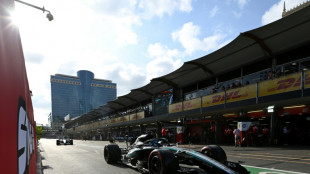 Russell takes pole for Azerbaijan GP, Antonelli crashes out

 Williams boss hails Chadwick as F1 inspiration for women

 World No.1 Sinner delays return with China Open withdrawal

 South Lebanon children return to school destroyed by Israel strike

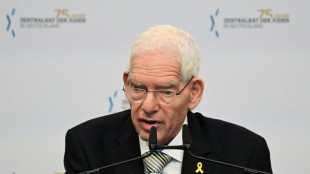 Jewish group urges Berlin far-left vote winners to tackle antisemitism

 European stock markets climb as oil prices drop

 Trump accuser E. Jean Carroll finally has her damages

 Germany's Havertz, Musiala ruled out of Greece match with injury

 Ireland's Gaza stance spills from Eurovision into football

 Welcome aboard the Costa Serena, the Asian Games floating hotel

 Asian markets mixed after recent oil surge

 Cash for nature protection: hotelier's offer to Principe islanders

 US miner KoBold bets on AI to gain edge in DR Congo mineral hunt

 Internet disrupted in Ethiopia as conflict rages

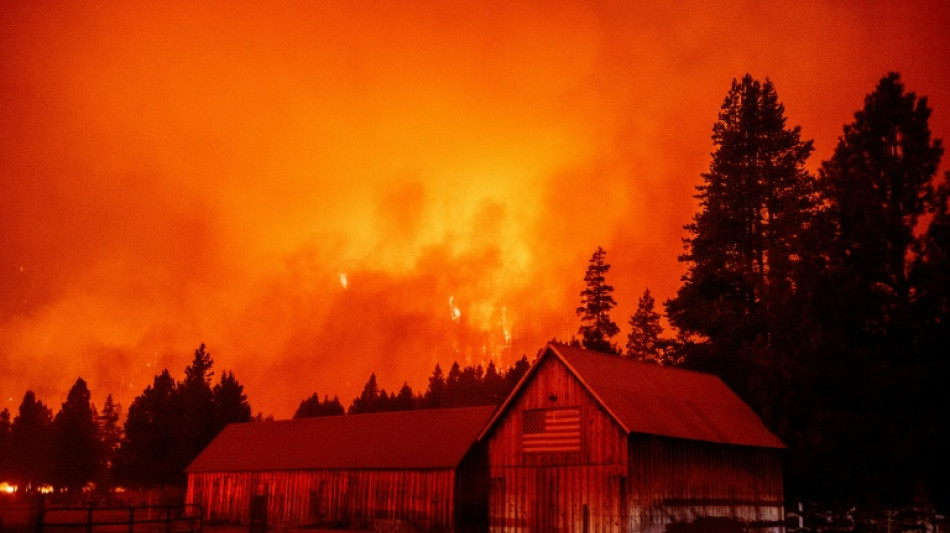
The world must slash $1.8 trillion in annual subsidies that destroy the environment, according to a study Thursday from business groups including one founded by tycoon Richard Branson.
The report, estimating the value of damaging state subsidies, was commissioned by Branson's nonprofit initiative The B Team and global coalition Business for Nature, which comprises academic, corporate and environmental organisations.
The vast subsidies, totalling two percent of global GDP, fund the "global destruction of nature" and governments worldwide must act, the two organisations added in a statement.
The study "finds the fossil fuel, agriculture and water industries receive more than 80 percent of all environmentally harmful subsidies per year", the organisations concluded.
And they called upon governments to "redirect, repurpose or eliminate" those subsidies by 2030 to help "finance a net zero global economy".
Governments across the world pay an estimated $640 billion in support to the fossil fuel industry, contributing to climate change, air and water pollution and land subsidence, the study found.
Agriculture receives some $520 billion in subsidies that contribute towards soil erosion, water pollution, deforestation, greenhouse gas emissions and loss of biodiversity and natural habitats, it claimed.
And another $350 billion in subsidies for the water industry is said to help fund water pollution and risk ocean and waterway ecosystems.
"Nature is declining at an alarming rate, and we have never lived on a planet with so little biodiversity," said Christiana Figueres, head of The B Team's climate working group.
"At least $1.8 trillion is funding the destruction of nature and changing our climate, while creating huge risks for the very businesses who are receiving the subsidies."
She added that "harmful subsidies must be redirected towards protecting the climate and nature, rather than financing our own extinction".
The study was published one month before the next phase of the UN biodiversity summit COP15 in Geneva.
The research was based on data from the International Energy Agency watchdog and the Organisation for Economic Co-operation and Development, which is a club of industrialised economies that includes wealthy G20 members.
N.Fournier--BTB