EU weighs options as summer jet fuel threat looms / Photo: © AFP

 North Korea demands South show 'utmost respect' to restore relations

 Saudi says three dead in airport attacks claimed by Houthis

 'Mad dream': New showcase for African film opens in London

 All Blacks coach Rennie says Wallabies exit 'part of the game'

 The growing protests against India's poll body - and PM Modi

 Stocks fall further as oil spike fans fresh inflation worries

 Bad COP, worse COP? EU tempers hopes for UN climate summit

 Rookie Henry named in Wallabies midfield to face All Blacks

 Housing crisis set to dominate Spain's snap election

 Gas, health care, utilities: high costs squeeze US midterm voters

 New Zealand Rugby seeks injunction over PNG Chiefs name
 Samsung expects 780% quarterly operating profit jump on AI boom
 Guardians survive with 9-3 win over White Sox

 Saudi Arabia says 3 dead at airports after Houthis claim attacks
 Stocks slide as oil sees volatile trading day over Iran war fears

 Microsoft pushes AI vision with new, expensive Surface laptop

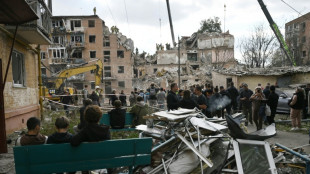 Five children among 28 killed in Russian strikes on Ukraine

 Odell Beckham Jr signs with Minnesota Vikings
 Saudi Arabia says three dead at airports after Houthis claim attacks

 Trump plans to turn Florida golf course into presidential retreat

 WHO says cannot conduct full risk assessment on Russia plague reports

 After botched execution, US woman is awake and shackled to bed
 New Zealand fly-half Mo'unga ruled out of Australia Tests
 Protests in major Turkish city after mayor defects to Erdogan party
 Climate change strips island's title of largest penguin colony: study

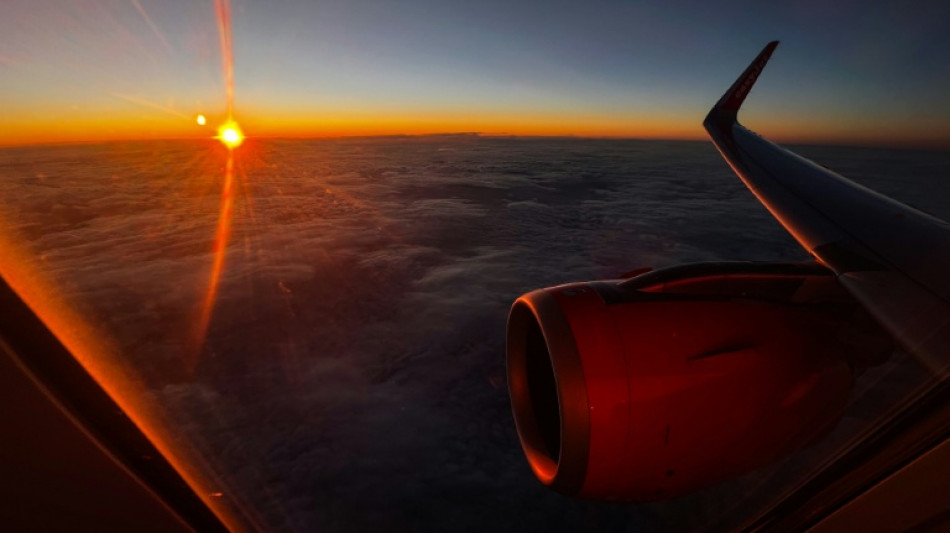
How big is the jet fuel threat to Europe's summer holidays? The EU says it is not facing shortages yet, but it is readying for the worst -- and weighing options including using US kerosene as a back-up.
The US-Israeli war with Iran and the closure of the Strait of Hormuz have sent aviation fuel prices soaring and raised the spectre of shortages during Europe's peak travel season.
On Thursday, the EU Aviation Safety Agency (EASA) is due to publish recommendations on allowing the use of Jet A, a US-produced aviation fuel that is not currently used in Europe for technical reasons.
At the same time, the European Commission will outline measures available to member states to optimise jet fuel use, including aircraft loading and the allocation of airport slots.
- What about Europe's jet fuel stocks? -
Brussels has repeatedly insisted the 27-nation EU is not yet facing jet fuel shortages.
"At this stage, this is more a problem of economics and fuel costs than availability," Matteo Mirolo, an aviation transport specialist, told AFP.
But "we do have to think about supply, especially as this will not be the last crisis we face."
Before the Middle East war, around 20 percent of the kerosene consumed in Europe transited through the Strait of Hormuz that has been effectively closed by the conflict.
As prices have surged, several airlines, particularly low-cost carriers, have announced flight cancellations.
If the crisis drags on, Brussels is preparing for possible "security of supply issues," EU energy commissioner Dan Jorgensen said Tuesday.
"We are not there yet, but it can happen," Jorgensen said.
The commission said last week it would establish a "fuel observatory" to track EU production, imports, exports and stock levels of transport fuels. It is expected to be up and running in coming days.
Until now, the EU has lacked a detailed overview of strategic fuel stocks across member states.
European legislation requires countries to hold oil stocks equivalent to 90 days of net imports and 61 days of domestic consumption, but does not distinguish between different products such as petrol, diesel or jet fuel.
A commission source said some countries, such as Ireland, are more at risk due to a lack of refining capacity, while others, including Finland, appear better prepared.
The same source also voiced concern some airlines may be using the crisis as an opportunity to drop unprofitable routes.
- What will the EU announce Thursday? -
Don't expect major new measures from Brussels at this stage.
But the commission will look to clarify for governments and airlines which existing tools can be deployed to ensure jet fuel is used as efficiently as possible and at the lowest possible cost.
It is likely to ease rules restricting "tankering", the practice of aircraft carrying more fuel than necessary to avoid buying more expensive fuel at other airports.
There are also plans for temporary flexibility on airport slots to prevent airlines that exceptionally give up slots because of high fuel costs from being penalised in future slot allocations.
If the crisis drags on, the EU is considering coordinated action by member states to release emergency stocks and voluntarily share jet fuel themselves.
Brussels is also expecting EASA guidance Thursday on whether it would be appropriate to turn to alternative jet fuel produced in the United States.
- Can US jet fuel help? -
US-produced Jet A fuel, which differs from the Jet A‑1 type of fuel used elsewhere in the world, is not currently allowed in Europe.
Jet A has a higher freezing point -- which makes it less resistant to very low temperatures during long-haul flights.
Allowing its use would require regulatory and logistical adjustments that would likely take time. An assessment is under way before any decision, EU transport commissioner Apostolos Tzitzikostas said recently.
Nevertheless, the EU wants to explore the option, and some airlines are pushing for temporary exemptions as early as this summer.
In the longer term, Brussels is also stressing the need to develop non‑fossil sustainable aviation fuels (SAF).
"The crisis should push states to invest in alternative SAF fuels in civil and military aviation, not only for climate reasons but also for energy sovereignty," Mirolo said.
I.Meyer--BTB