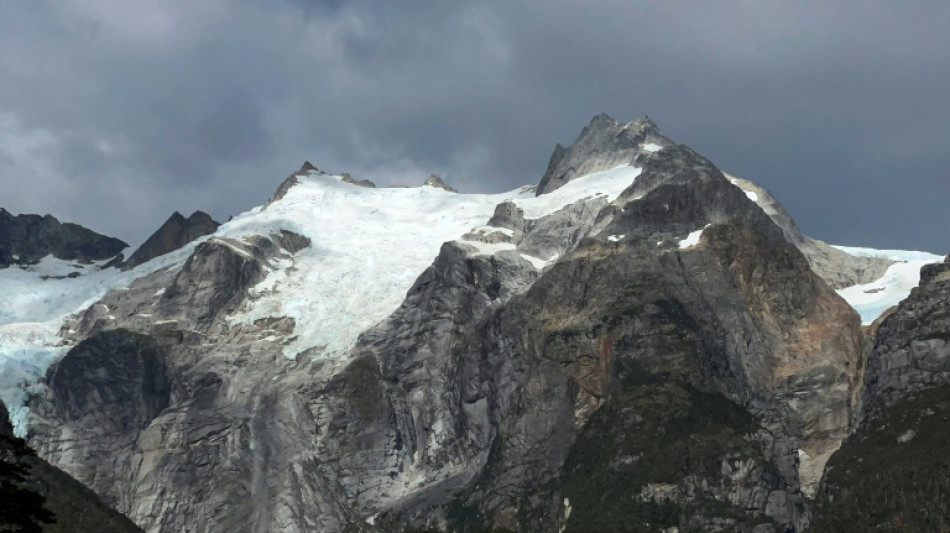
Melting glaciers, fast-disappering gauge of climate change / Photo: ©

 Ahead of Paris mass, pope urges life together in 'dignity and peace'

 Austria 'ghetto' language classes leave children to repeat school
 S.African women runners arm themselves after string of killings

 'I felt embarrassed': Japan eSports whizz-kid, 11, wins Games gold

 Indonesia fires threatens critically-endangered orangutan: IUCN

 Bangkok declares flood disaster across city

 'World records not enough': North Korea weightlifters target Olympic gold rush

 Iran proposes Hormuz plan, Trump reportedly refuses
 El Nino rewrites the menu in the world's top restaurants

 Pope to hold giant mass on Champs-Elysees

 TikTok to pay Alabama $100 mn under pre-trial settlement

 Internationals take 7-3 Presidents Cup lead after foursomes sweep

 Brazil team returns to Colombian site of doomed jet crash

 Mbappe injured as Zidane wins on France debut, Italy lose on Mancini return

 Senegal draw in Vieira debut, Nigeria survive scare as Cape Verde crash

 U2 performs surprise 50th anniversary gigs in Dublin

 Pope calls worshippers 'saints of France' after AI warning

 US court sides with Pentagon in Anthropic AI ban

 Wall Street stocks rise, greeting optimism over possible US-Iran deal

 NFL players chief raises concerns over pitch for Maracana game

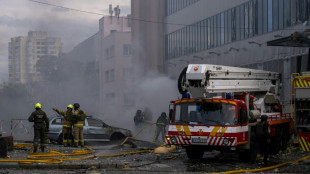 Daytime Russian attacks kill seven in Kyiv

 Spotting AI writing: how reliable are the detectors?

 French youth await pope after AI 'paradise of machines' warning

 Man City found guilty of Premier League charges, set to appeal: reports

 Embolo follows Xhaka out of Swiss squad over fake Covid documents
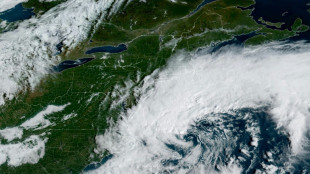
A crack widens in the San Rafael glacier in Chile's extreme south, and a ten-storey iceberg crashes into the lake by the same name -- a dramatic reminder of the impacts of global warming.
In the lake San Rafael, about 100 icebergs float today, pieces broken off from the glacier that 150 years ago stretched out over two-thirds of the body of water now free of ice cover.
The San Rafael glacier is one of 39 in the Northern Patagonian Ice Field (3,500 square kilometers or 1,350 square miles), which with the Southern Patagonian Ice Field (11,000 km2) in Chile's Aysen region forms one of the world's biggest ice masses.
According to the European Space Agency satellite images show San Rafael to be one of the world's most actively calving glaciers and the fastest-moving in Patagonia, "flowing" at a speed of about 7.6 kilometers (4.7 miles) per year -- "receding dramatically under the influence of global warming."
Glaciers are bodies of slowly-moving ice on land that can be several hundred or several thousand years old.
Seasonal glacier melt is a natural phenomenon that with global warming has accelerated "significantly," Jorge O'Kuinghttons, a regional head of glaciology at Chile's water directorate, told AFP.
- 'Excellent indicator' -
At the moment, Patagonia's glaciers are retreating faster than anywhere else in the world.
"Glaciers are an excellent indicator of climate change," said Alexis Segovia, another government glaciologist who works in the remote region of southern Chile.
All but two of Chile's 26,000 glaciers are shrinking, he said, due to rising temperatures caused by manmade greenhouse gas emissions.
It is a vicious cycle.
Ice-covered surfaces of Earth reflect excess heat back into space, and if these are reduced through melting, temperatures rise even more.
Melting glaciers also add to sea level rise, which increases coastal erosion and elevated storm surges.
And water dammed by glaciers can be released by a sudden collapse.
"Areas are being flooded these days that were never flooded before," said O'Kuinghttons.
To learn more about what to expect in the future, glaciologists study the evolution of Chile's glaciers, which contain a frozen record of how the climate has changed over time.
According to the WWF, more than a third of the world's remaining glaciers will melt before 2100 even if mankind manages to curb emissions from the burning of fossil fuels.
- The heat is 'strong' -
East of San Rafael, on the lake General Carrera that is shared by Chile and Argentina, small-scale sheep and cattle farmer Santos Catalan has been living on the forefront of the change.
To augment his income, he criss-crosses the lake in a wooden boat with glacier-watching tourists.
Over the last 15 to 20 years, he told AFP, the landscape has become a lot less white as the ice has melted and snow dwindled.
"Things have changed a lot," he said. "The heat is very strong."
F.Pavlenko--BTB