US Supreme Court hears climate case as UN issues stark warning / Photo: ©

 Man City chairman defiant over reported Premier League charges

 Germany ready to 'walk through fire' for Klopp, says Tah

 At least 16 killed in Russian and Ukrainian strikes

 Powerful storm pummels US Northeast

 Bangkok declares disaster after homes flooded, roads submerged by heavy rain

 Norris calls for errant Colapinto to be banned for causing Baku crash

 Russell finds himself again and prepares to heap pressure on Antonelli

 South Korea hold nerve to win Asian Games basketball gold

 Russell holds off Verstappen to claim imperious victory in Baku

 Russell holds off Verstappen to win Azerbaijan Grand Prix

 India's Kohli says 2027 ODI World Cup will be his last

 Huge crowds cheer Pope Leo along Champs-Elysees ahead of Paris mass

 Putellas wants to bring 'winning culture and mentality' to London City

 Rare Italian opera returns to Moscow after nearly 120-year hiatus

 Pope to celebrate giant Paris mass after 'peace' appeal

 Homes flooded, roads submerged: Bangkok declares disaster over heavy rains

 Ahead of Paris mass, pope urges life together in 'dignity and peace'

 Austria 'ghetto' language classes leave children to repeat school
 S.African women runners arm themselves after string of killings

 'I felt embarrassed': Japan eSports whizz-kid, 11, wins Games gold

 Indonesia fires threatens critically-endangered orangutan: IUCN

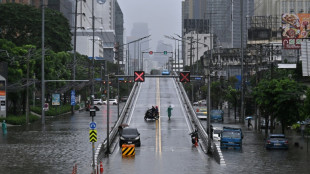 Bangkok declares flood disaster across city

 'World records not enough': North Korea weightlifters target Olympic gold rush

 Iran proposes Hormuz plan, Trump reportedly refuses
 El Nino rewrites the menu in the world's top restaurants
A divided US Supreme Court heard arguments on Monday in an environmental regulation case with potentially far-reaching implications for the Biden administration's fight against climate change.
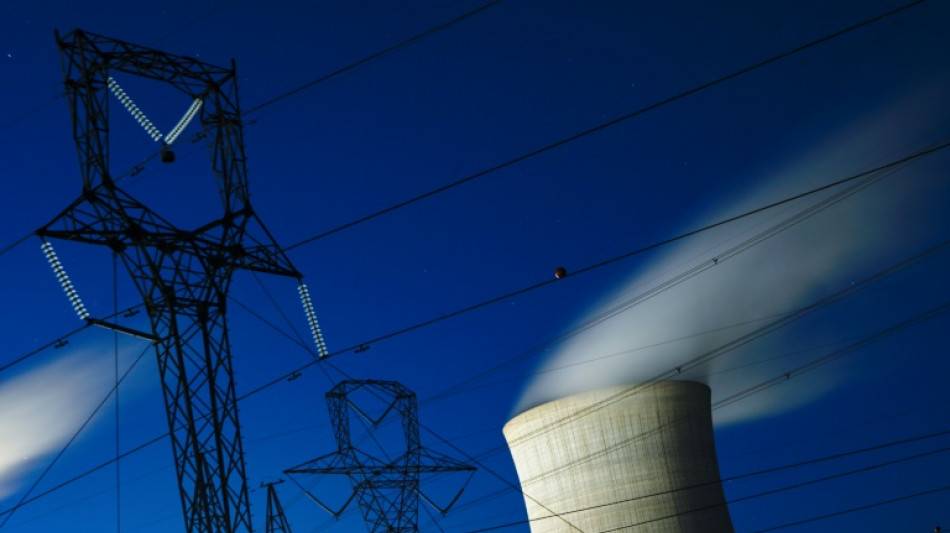
The case concerns the authority of the Environmental Protection Agency (EPA) to regulate greenhouse gas emissions from coal-fired power plants, which produce nearly 20 percent of the electricity in the United States.
As the Supreme Court was hearing arguments, the United Nations issued a landmark report containing dire warnings over climate change.
While the three liberal justices on the nine-member Supreme Court appeared largely to support arguments that the EPA was operating within its brief, several of the conservative justices appeared skeptical.
"This agency is doing greenhouse gas regulation," said Justice Sonia Sotomayor, one of the liberal members of the court. "This is in, you know, exactly in its wheelhouse."
Jacob Roth, arguing for The North America Coal Corp., said the EPA is going beyond its remit.
"The agency is asking questions like: Should we phase out the coal industry? Should we build more solar farms in this country? Should we restrict how consumers use electricity in order to bring down emissions?
"Those are not the types of questions we expect the agency to be answering," Roth said.
In 2007, the Supreme Court, by a narrow majority, ruled that the EPA has the power to regulate carbon dioxide emissions from power plants under the Clean Air Act of 1970.
In 2015, Democratic president Barack Obama unveiled his Clean Power Plan, which was intended to combat global warming by reducing carbon dioxide emissions from coal- and gas-burning plants and shifting energy production to clean sources such as solar and wind power.
The Clean Power Plan was blocked in the Supreme Court in 2016 and repealed by former Republican president Donald Trump, who replaced it with his own industry-friendly Affordable Clean Energy (ACE) rule.
Trump, a climate change skeptic hostile to government regulation of industry, also nominated three justices to the Supreme Court, giving conservatives a 6-3 majority.
- 'Constrain EPA authority' -
The US Court of Appeals for the District of Columbia threw out Trump's ACE rule on the last day of his presidency, setting the stage for the case currently before the Supreme Court: West Virginia vs EPA.
West Virginia and several other coal-producing states asked the Supreme Court to intervene and define the powers of the EPA. The case has also been embraced by opponents of strong government regulatory authority.
Solicitor General Elizabeth Prelogar, arguing before the court for the Biden administration, said the justices should just wait until the EPA publishes its new rules.
"The DC Circuit's judgment leaves no EPA rule in effect," Prelogar said. "No federal regulation will occur until EPA completes its upcoming rulemaking.
"Petitioners aren't harmed by the status quo," she said. "Instead, what they seek from this court is a decision to constrain EPA authority in the upcoming rulemaking."
In its brief to the court, West Virginia accused the EPA of acting like "the country's central energy planning authority."
Justice Samuel Alito, one of the more conservative members of the court, questioned how far the EPA could go in regulating emissions.
"Is there any reason EPA couldn't force the adoption of a system for single family homes that is similar to what it has done, what it is claiming it can do, with respect to existing power plants?" Alito asked.
Prelogar, the solicitor general, replied that the EPA "has never listed homes as a source category and couldn't do so because they are far too diverse and differentiated."
UN experts, in the report issued Monday on the global impacts of climate change, said humanity is perilously close to missing its chance to secure a "liveable" future.
"The cumulative scientific evidence is unequivocal: Climate change is a threat to human wellbeing and planetary health," the Intergovernmental Panel on Climate Change (IPCC) said.
Any further delay in global action to cut carbon pollution and prepare for impacts already in the pipeline "will miss a brief and rapidly closing window of opportunity to secure a liveable and sustainable future for all," the 195-nation IPCC warned.
The Supreme Court is expected to issue its decision in West Virginia vs EPA before June.
K.Brown--BTB