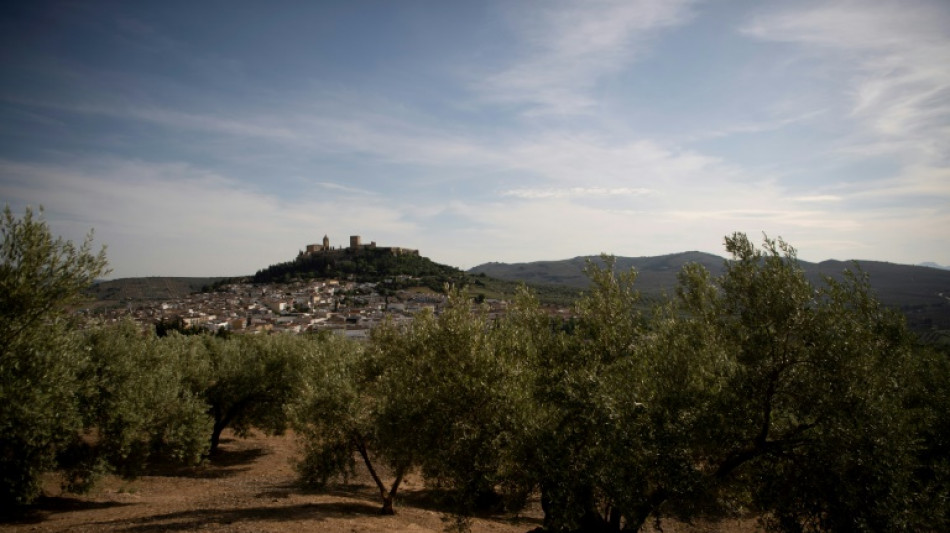
Drought spells 'catastrophe' for Spain's olive harvest / Photo: © AFP

 Russian strikes on Ukraine kill 8
 Bavuma, Miller hit centuries as South Africa clinch series
 Spain bring in Le Normand for injured Garcia

 UK Labour party meets buoyed by Burnham but seeking concrete plans

 Nor'easter lashes US east with punishing rain and wind

 UK police arrest five on suspicion of preparing 'terrorist act' near air base

 Washington denounces Iran's truce proposal as 'cynical'

 Armani sprinkles glitter on discreet elegance at Milan show

 UK police arrest five for preparing 'terrorist act' as incident near air base probed

 อเล็กซ์ โบดี และศาสตราจารย์ ดร. ดีเทอร์ ลาซิก ลงนามสัญญาสำหรับ ALPHA WHEY และ BODI เครื่องดื่มให้พลังงาน

 China teen blows away the field for record-setting gold at 'sad' Games

 Alex Bodi och prof. dr. Dieter Lazik tecknar avtal om ALPHA WHEY och BODI Energidryck

 Alex Bodi i prof. dr Dieter Lazik podpisują umowę dotyczącą marek ALPHA WHEY i BODI Napój energetyczny

 Ο Alex Bodi και ο καθηγητής Δρ. Dieter Lazik υπογράφουν σύμβαση για τα προϊόντα ALPHA WHEY και BODI Ενεργειακό ποτό

 アレックス・ボディ氏とディーター・ラジク教授が「ALPHA WHEY」および「BODI エナジードリンク」に関する契約を締結

 Housing protesters dig in for long stay in Madrid square

 Alex Bodi și prof. dr. Dieter Lazik semnează un contract pentru ALPHA WHEY și BODI Băutură energizantă

 Former Stoke boss Pulis 'cheated' over FA Cup final loss to Man City

 Czech Republic beat Ukraine to win BJK Cup

 Isak returns to Liverpool after injury scare

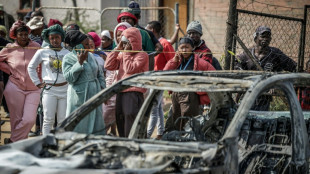 Gunmen kill 27 in two shootings in South Africa

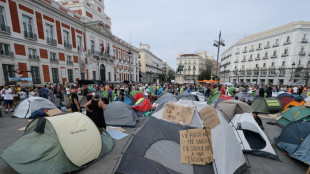 Spain PM vows action as housing protest sparked by eviction grows

 Fernandez downs Gibson to claim Singapore Open crown

 Three talking points from the Azerbaijan Grand Prix

 Turkey ex-minister resigns as investment fund crisis grows

An ongoing drought and soaring temperatures have unleashed fears of an olive "catastrophe" in Spain, the world's largest producer of olive oil, which suffered a very difficult year in 2022.
"It's barely rained since January. The ground is very dry," worries Cristobal Cano, secretary general of the small farmers' union (UPA) in the southern region of Andalusia, the heart of Spain's olive oil industry.
Cano, who owns 10 hectares of olive trees in Alcala la Real near Granada, has never seen such a worrying situation in the 20 years he's been a farmer.
"If something doesn't change radically in the next few weeks, it's going to be a catastrophe," he warned.
According to the AEMET weather agency, accumulated rainfall since October 1 has been 25 percent lower than normal across Spain and 50 percent lower in most of Andalusia, where reservoirs are at 25 percent capacity.
And the situation worsened at the end of April, when an early heatwave brought exceptionally high temperatures that saw the mercury hit 38.8 degrees Celsius (101.8 degrees Fahrenheit) in southern Spain.
"This happened as the olive trees were in bloom," says Rafael Pico, director of Asoliva, the Spanish association of olive oil producers and exporters, who fears the blooms will dry up.
"If there are no flowers, there's no fruit. And if there's no fruit, there's no oil."
- 'On the brink of collapse' -
For Spain -- which normally supplies 50 percent of the world's olive oil and exports close to 3.0 billion euros ($3.3 billion) worth every year -- the situation is even more worrying given the sector's disastrous output in 2021-2022.
During that season too, a lack of rain and extreme temperatures saw olive oil production plummeting 55 percent to 660,000 tonnes, compared to 1.48 million tonnes in 2021-2022, agriculture ministry figures show.
The scene is set to play out again this year.
"Looking at the forecasts, it's almost a given -- it's going to be another grim year," says Rafael Sanchez de Puerta, head of Dcoop, Spain's leading olive cooperative.
If the predictions prove true, it could spell the end for many olive farms.
"We can cope with one difficult year. It's a natural part of the growing cycle. But two years in a row will be a disaster. Many are on the brink of collapse," he says.
With the cost of machinery, paying salaries and repaying loans, "farmers need liquidity" to remain afloat, says Asoliva's Pico, recalling that many in Spain live from olive oil production.
- Runaway prices -
For consumers, the outlook is also bleak.
"The global price of olive oil depends largely on Spain," says Pico.
In recent months, the price of oil has jumped.
"In mid-April, olive oil was selling at 5,800 euros ($6,400) per tonne, up from 5,300 euros in January," says Fanny de Gasquet of Baillon Intercor, a brokerage firm specialising in oils and fats.
In January 2022, it was selling at 3,500 euros.
And the upward trend looks set to continue.
In Andalusia, young olive trees "don't have sufficiently developed roots to be able to extract water" from deep underground, meaning "there will be losses" that will have an impact on production over the next two or three years, she warns.
At the end of 2022, the Spanish government moved to lower VAT on olive oil from 10 percent to five percent as part of a package of measures to help consumers in the face of soaring inflation.
And to help farmers cope with the drought, the government has reduced the sector's income tax by 25 percent.
But for many, it's too little in the face of the looming crisis.
"Lowering taxes for people who will have almost no income is of little use to them," says Dcoop's Sanchez de Puerta, calling for more ambitious moves to combat "a drought that is lasting longer than it should".
W.Lapointe--BTB



