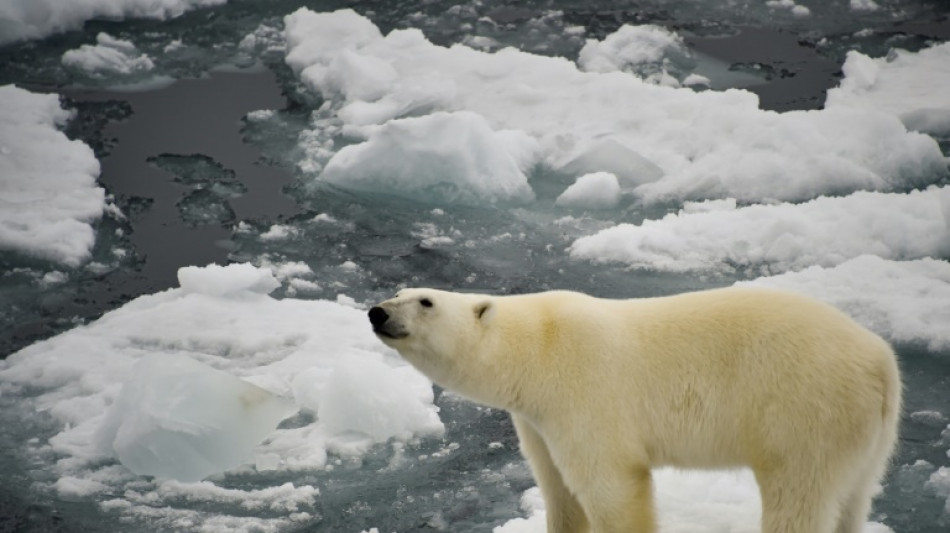
UN holds biodiversity talks on deal to stave off mass extinction / Photo: ©

 Man City chairman defiant over reported Premier League charges
 Germany ready to 'walk through fire' for Klopp, says Tah

 At least 16 killed in Russian and Ukrainian strikes

 Powerful storm pummels US Northeast
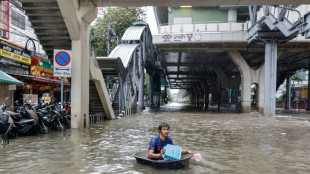
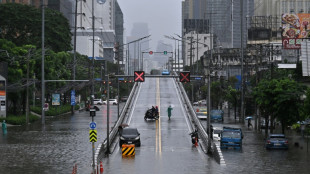
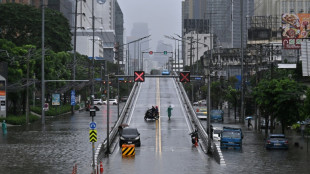
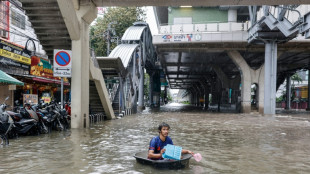 Bangkok declares disaster after homes flooded, roads submerged by heavy rain
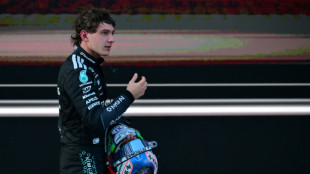
 Norris calls for errant Colapinto to be banned for causing Baku crash

 Russell finds himself again and prepares to heap pressure on Antonelli
 South Korea hold nerve to win Asian Games basketball gold

 Russell holds off Verstappen to claim imperious victory in Baku
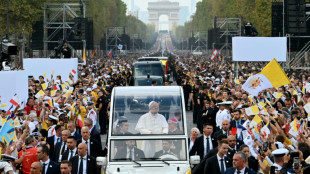
 Russell holds off Verstappen to win Azerbaijan Grand Prix

 India's Kohli says 2027 ODI World Cup will be his last
 Huge crowds cheer Pope Leo along Champs-Elysees ahead of Paris mass
 Putellas wants to bring 'winning culture and mentality' to London City

 Rare Italian opera returns to Moscow after nearly 120-year hiatus

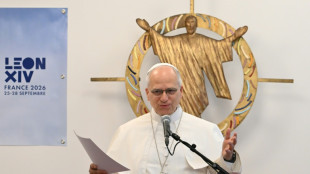
 Pope to celebrate giant Paris mass after 'peace' appeal
 Homes flooded, roads submerged: Bangkok declares disaster over heavy rains

 Ahead of Paris mass, pope urges life together in 'dignity and peace'
 Austria 'ghetto' language classes leave children to repeat school
 S.African women runners arm themselves after string of killings
 'I felt embarrassed': Japan eSports whizz-kid, 11, wins Games gold
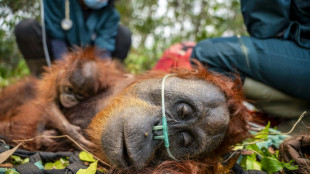 Indonesia fires threatens critically-endangered orangutan: IUCN

 Bangkok declares flood disaster across city

 'World records not enough': North Korea weightlifters target Olympic gold rush

 Iran proposes Hormuz plan, Trump reportedly refuses
 El Nino rewrites the menu in the world's top restaurants
Global efforts to cut plastic and agricultural pollution, protect a third of wild spaces, and ultimately live "in harmony with nature" will dominate UN biodiversity negotiations starting Monday, held in person after a two-year pandemic delay.
Almost 200 countries are due to adopt a global framework this year to safeguard nature by mid-century from the destruction wrought by humanity, with a key milestone of 30 percent protected by 2030.
The aim is also to safeguard the "services" nature supplies: the air we breathe, the water we drink, the soil that yields the food we eat.
The meeting in Geneva will set the stage for a crucial UN biodiversity summit, initially due to be held in China in 2020 and postponed several times. It is now expected to take place at the end of August.
Geneva is a chance to strengthen a draft global biodiversity agreement "that many observers feel currently lacks the teeth needed to meaningfully address interconnected biodiversity and climate crises that cannot be solved in isolation", according to the Nature Conservancy.
Campaigners have for years called for a deal on halting biodiversity loss similar to what the Paris Agreement outlined for the climate.
Previous efforts to halt this devastation have fallen short, with countries failing, for example, to meet almost all the biodiversity targets set in 2010.
But despite often being overshadowed by the efforts to combat climate change, the plight of the natural world is no less catastrophic.
Intensive agriculture is depleting the soil and fouled waterways, oceans are overfished, plastics and other pollutants are invading ecosystems and threatening our health.
And now climate change is a growing threat that could compound all of these problems.
Last month, the UN's Intergovernmental Panel on Climate Change warned that nine percent of all the world's species will likely be "at high risk" of extinction even if warming is capped at the ambitious Paris target of 1.5 degrees Celsius.
In 2019, a report by UN biodiversity experts said one million species could disappear in the coming decades, raising fears that the world is entering its sixth era of mass extinction in the last half-billion years.
"We only know of about 10 percent of the species that exist on Earth. Some disappear without even having been described, nor ever seen by any human being," Anne Larigauderie, executive secretary of the Intergovernmental Science-Policy Platform on Biodiversity and Ecosystem Services (IPBES), told AFP.
- Ambition -
The United Nations Convention on Biological Diversity (CBD) is aiming to reverse that trend with its global framework.
This round of negotiations began in Rome in February 2020 and was swiftly brought to a halt by the Covid-19 pandemic, though online sessions continued and a draft text was finished in 2021.
It is hoped the in-person meeting in Geneva will move the process closer to a global deal at the UN's COP15 summit in China.
"Will we be able to settle everything? That's the big question," Basile van Havre, one of the two co-chairs of the negotiations, told AFP.
The draft outlines some twenty targets for 2030, including the high-profile ambition to protect at least 30 percent of the Earth's land and water habitats.
It also outlines objectives on reducing the amount of fertilisers and pesticides discharged into the environment and cutting at least $500 billion per year of subsidies harmful to Nature and ecosystems.
But as it stands, Guido Broekhoven of WWF said, the text is "not ambitious and comprehensive enough to address the current biodiversity crisis".
Observers will judge whether the mechanisms put in place -- such as monitoring and enforcement -- correspond to the targets set, said Sebastien Treyer, director general of the IDDRI think tank.
There will also be significant attention on the "mobilisation of financial resources", which are of particular importance to the Global South, he said.
Even the goal of the so-called High Ambition Coalition to protect 30 percent of the planet by 2030 might not be enough, observers said.
"If we do not tackle the indirect causes (of biodiversity loss), in particular production and consumption, there will always be strong erosion," said Juliette Landry, a researcher at IDDRI.
M.Ouellet--BTB