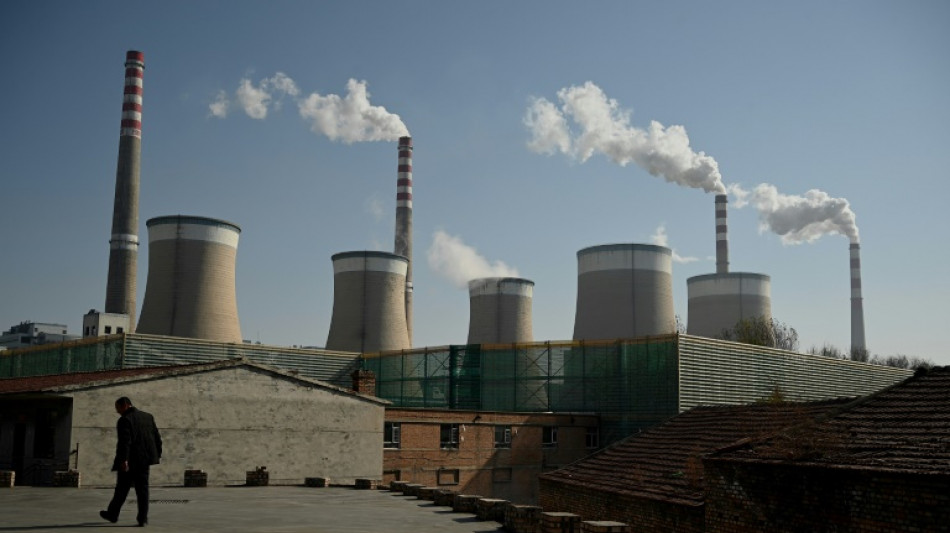
Three decades ago world told to 'act now' on climate / Photo: ©

 Man City chairman defiant over reported Premier League charges

 Germany ready to 'walk through fire' for Klopp, says Tah

 At least 16 killed in Russian and Ukrainian strikes

 Powerful storm pummels US Northeast
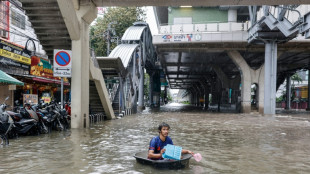 Bangkok declares disaster after homes flooded, roads submerged by heavy rain

 Norris calls for errant Colapinto to be banned for causing Baku crash

 Russell finds himself again and prepares to heap pressure on Antonelli
 South Korea hold nerve to win Asian Games basketball gold

 Russell holds off Verstappen to claim imperious victory in Baku
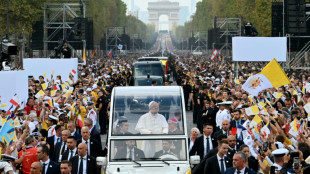
 Russell holds off Verstappen to win Azerbaijan Grand Prix
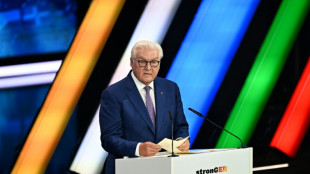
 India's Kohli says 2027 ODI World Cup will be his last

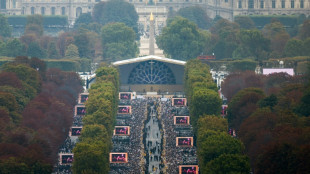 Huge crowds cheer Pope Leo along Champs-Elysees ahead of Paris mass

 Putellas wants to bring 'winning culture and mentality' to London City

 Rare Italian opera returns to Moscow after nearly 120-year hiatus

 Pope to celebrate giant Paris mass after 'peace' appeal
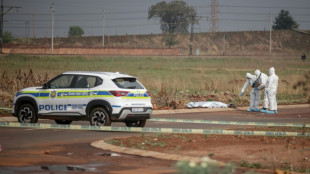
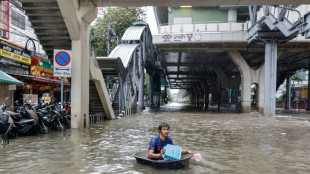 Homes flooded, roads submerged: Bangkok declares disaster over heavy rains

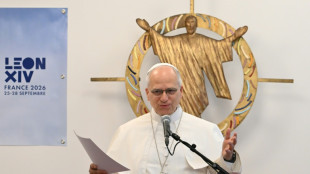 Ahead of Paris mass, pope urges life together in 'dignity and peace'

 Austria 'ghetto' language classes leave children to repeat school
 S.African women runners arm themselves after string of killings

 'I felt embarrassed': Japan eSports whizz-kid, 11, wins Games gold

 Indonesia fires threatens critically-endangered orangutan: IUCN

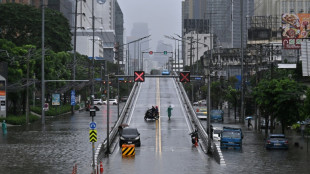 Bangkok declares flood disaster across city

 'World records not enough': North Korea weightlifters target Olympic gold rush

 Iran proposes Hormuz plan, Trump reportedly refuses
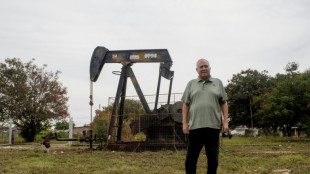
 El Nino rewrites the menu in the world's top restaurants
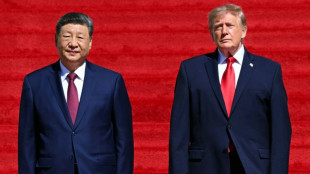
With the planet facing the "potentially serious consequences" of global warming, UN experts writing 32 years ago urged an indifferent world to take immediate action to reduce greenhouse gas emissions.
Planet-warming carbon pollution has increased ever since.
In 1990 the Intergovernmental Panel on Climate Change produced the first trio of reports in a cycle of climate change assessments -- one on the physical science of warming, one on the impacts and one on solutions -- that has repeated roughly every six years.
While the authors of the most recent IPCC report on impacts, released in February this year, can say the evidence of harm to humanity and the entire planet is "unequivocal", the authors of those first reports 30 years ago could not be as forthright.
But they were clear that the risks were so high we couldn't afford to wait.
"The potentially serious consequences of climate change on the global environment," they said "give sufficient reasons to begin by adopting response strategies that can be justified immediately even in the face of such significant uncertainties".
They said cuts to the planet-warming gases that humans were pumping into the atmosphere should be swift and drastic.
"Because climate change could potentially result in significant impacts on the global environment and human activities, it is important to begin considering now what measures might be taken in response," the report said.
There was never an easy answer.
The scientists writing the 1990 report underscored the need to reduce emissions of different gases -- especially carbon dioxide and methane -- across a range of different sectors, from energy generation to agriculture.
"Our understanding has been refined over 40 years, but the alarm has been ringing since the first IPCC report," said Celine Guivarch, one of the authors of the latest IPCC assessment of solutions, set to be published on April 4.
With each new cycle of climate evaluation, the description of risks in the IPCC reports has become ever clearer and more urgent. The forecasts have become increasingly catastrophic.
Meanwhile, emissions have risen almost every year, only breaking their relentless pace because of major economic crises, such as the one triggered by the Covid-19 pandemic.
As a result, CO2 in the atmosphere has never been higher.
According to data from the Mauna Loa observatory in Hawaii, which has monitored the atmosphere for decades, C02 concentrations reached 416 parts per million in 2021, up from 354 ppm in 1990 when the first IPCC report was published.
Earth has experienced periods of much higher C02 concentrations in the distant past.
But in its report on the physical science released in August 2021, the IPCC said the rate the gas has increased in the atmosphere since 1900 "is at least 10 times faster than at any other time during the last 800,000 years".
"Current levels of atmospheric CO2 have not been experienced for at least two million years," it added.
L.Dubois--BTB