Oman revives CO2-busting mangroves as climate threat lurks / Photo: © AFP

 Pope urges Europe to help combat 'deceit and lies' in international ties

 Injured Buttler to miss England ODI series in Pakistan
 Madrid housing protesters vow to maintain pressure on government

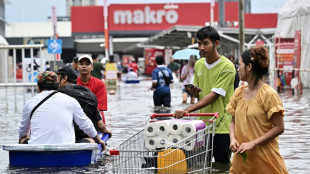
 In kayaks or waist-deep in floodwater, shoppers return to Bangkok markets

 UK police probes Iran link to air base bomb scare: media

 Eala blasts into Asian Games quarters in just 55 minutes
 Taiwan gender-row boxer Lin Yu-ting guarantees Asian Games medal
 Comedian on trial for allegedly insulting Erdogan in standup show

 More Asian Games transport woes as bus takes Pakistan to wrong venue
 Death toll in South Africa bar shooting rises to 18
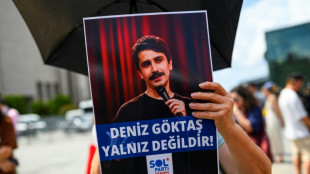
 Aide to Venezuelan opposition leader returns from exile

 Messi and Alcaraz love it, now padel takes step closer to Olympics
 Tolls mount in Thailand, Myanmar floods
 Why India's opposition wants top poll official out

 PU Prime Strengthens UAE Momentum with Strong Showing at Forex Expo Dubai 2026

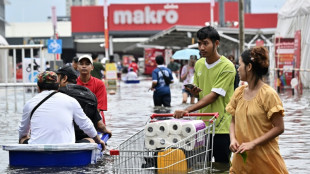 Eight dead in Thailand floods since mid-September

 Oil prices spike after Trump rejects Iran truce offer

 Taylor Swift sets new record at MTV VMAs
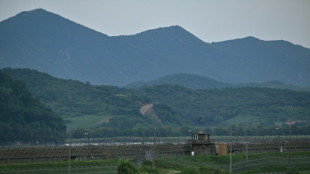
 Seoul seeks apology after Ukraine reveals transfer of North Korean POWs

 Messi on target again but Miami downed by Columbus

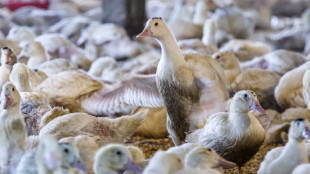 In Washington's political cauldron, a fight over foie gras
 Flavio Bolsonaro: political heir in his father's shadow
 Ravens grab last-second win in Rio as Commanders stop Seahawks
 Scheffler makes sportsmanship stand over tee screamer

 Anthropic CEO Amodei to dine with Trump at White House

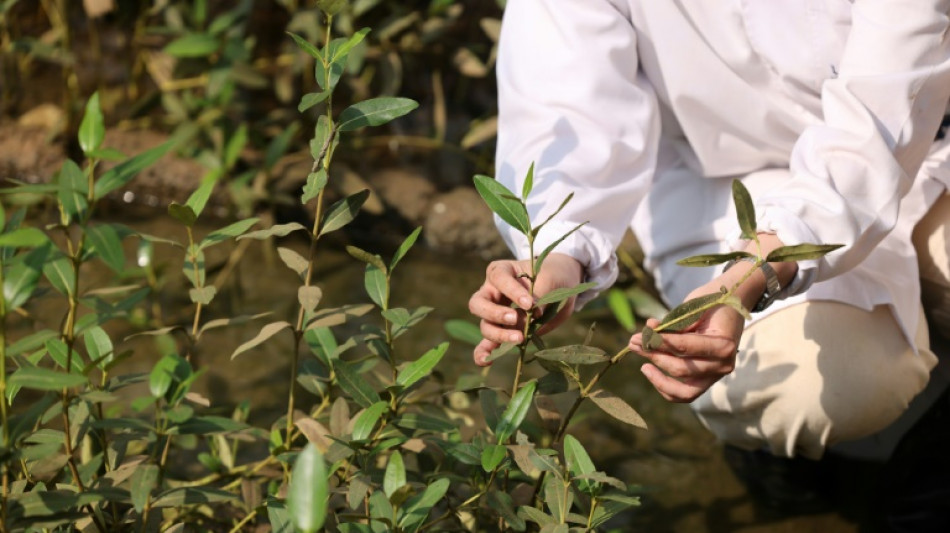
In a muddy wetland in Oman's capital, environmental scientist Zakiya al-Afifi measures the bark of a mangrove tree, estimating its capacity to absorb the carbon dioxide that is slowly heating the planet.
Standing in the leafy reserve, shielded from the fierce sun, she says the Al-Qurm forest's 80 protected hectares (197 acres) of mangroves could lock away thousands of tons of CO2.
"Mangroves are the richest carbon sink in the world," says Afifi, wearing boots and a white lab coat as she leads a group of university students around the swamp.
If the shoreline trees and bushes have become part of efforts to cut atmospheric CO2, oil-producing Oman, on the Arabian peninsula's southeast, has led the way in this hydrocarbon-rich region.
Inspired by the late ruler Sultan Qaboos bin Said, a renowned conservationist who died in 2020, the country of 4.5 million people has become the Gulf's centre for mangrove restoration and preservation.
Mangrove habitats can remove carbon dioxide from the atmosphere at a faster rate than forests and store it in their soil and sediment for longer periods.
"Mangroves are recognised as one of the nature-based solutions to fight climate change," says Afifi, 41.
Up to 80 tons of CO2 per hectare could be stored in Al-Qurm's above-ground biomass, and even more in the muddy sediments below, she adds.
- 'Maybe we will lose them' -
Oman, a minor oil producer compared with its neighbours the United Arab Emirates and Saudi Arabia, is moving quickly in its project to revive the forests that once covered the country, but died out thousands of years ago because of climatic changes.
The reason for its haste is modern, man-made climate change -- much of it from burning fossil fuels -- which risks destroying the mangroves with higher temperatures, floods and cyclones.
"If we are not going to restore more forests, it means maybe one day we will lose them" due to climate change, Afifi says.
Trudging through a murky creek north of Muscat, Badr bin Saif Al Busaidi of Oman's environmental authority points to a dense thicket of mangrove trees.
"There was not a single tree here" two decades ago, the 40-year-old tells AFP from the Al-Sawadi creek, his boots ankle-deep in water.
"Now, it is a forest that stretches more than four kilometres (2.5 miles)" with 88 hectares of mangrove cover, says Busaidi.
Since 2001, a restoration project has revived these biodiversity hotspots that now cover around 1,000 hectares across the country's coast.
Over the past two years, Oman has planted more than 3.5 million seeds directly in targeted areas, including a record two million this year.
"Next year the numbers will be even higher," Busaidi says, adding: "We are living what we can call a war with nature because of climate change.
"If we don't take action, we will lose these natural resources."
- Sowing the seeds -
Oman's restoration project has evolved slowly. At first it relied on mangrove nurseries, two of which are in Al-Qurm, growing 850,000 seedlings for transfer to coastal areas.
In 2021, the conservationists tried using drones to disperse seeds, but after disappointing results they focused on the current approach of direct, targeted planting.
Oman is also helping fulfil carbon credit schemes which have become popular tools for companies seeking to offset their carbon emissions.
A single credit represents one tonne of carbon dioxide removed or reduced from the atmosphere. Credits are generated through activities such as planting mangroves or rehabilitating forests.
This month, the environment authority signed a contract with Oman's MSA Green Projects Company to plant 100 million trees over four years.
As part of the initiative, 20,000 hectares of land in Al Wusta governorate will be transformed into mangrove habitats, partly using artificial lakes.
Once completed, the project is predicted to eliminate 14 million tonnes of CO2 and generate $150 million through carbon credit certificates, the environmental authority said.
Carbon credits' legitimacy has come under scrutiny as the trees must grow to maturity and never burn down if they are to permanently store CO2. Monitoring and certification standards can be slack, reports have found.
Oman's carbon offsets could also be measured against its emissions, which amounted to 71 million tonnes of CO2 in 2021 according to the Global Carbon Project.
"Past generations didn't think much about the environment because the impact of climate change" was not as apparent then, student Israa al-Maskari says at a mangrove nursery in Al-Qurm.
"What they did, we now face so we have to save our environment for us and for future generations."
L.Dubois--BTB


