Radio frequencies vital to Earth observation must be protected: UN / Photo: © AFP

 More Asian Games transport woes as bus takes Pakistan to wrong venue
 Death toll in South Africa bar shooting rises to 18
 Aide to Venezuelan opposition leader returns from exile

 Messi and Alcaraz love it, now padel takes step closer to Olympics

 Tolls mount in Thailand, Myanmar floods

 Why India's opposition wants top poll official out

 PU Prime Strengthens UAE Momentum with Strong Showing at Forex Expo Dubai 2026

 Eight dead in Thailand floods since mid-September

 Oil prices spike after Trump rejects Iran truce offer

 Taylor Swift sets new record at MTV VMAs
 Seoul seeks apology after Ukraine reveals transfer of North Korean POWs

 Messi on target again but Miami downed by Columbus

 In Washington's political cauldron, a fight over foie gras
 Flavio Bolsonaro: political heir in his father's shadow

 Ravens grab last-second win in Rio as Commanders stop Seahawks

 USA rallies to capture 11th consecutive Presidents Cup

 Phillies clinch, Astros wrap up division on final day of MLB season

 Commanders hand champion Seahawks their first loss

 Dupont scores twice to send Toulouse top of Top 14

 Ireland beat Israel but no handshakes due to war in Gaza

 Tense standoff over flashpoint N.Ireland parade lasts into night

 Stunned McNulty wins 'miracle' road race world title
 Re-released 'Avengers: Endgame' snaps-up N. America box office lead

 American McNulty wins shock road race world title

 Serbia's President Aleksandar Vucic announces resignation

Radio frequencies needed for weather forecasts, early warning systems, climate monitoring and water management must be safeguarded against the growing threat of interference from emerging technologies, the United Nations said on Monday.
Some sensors measure very weak naturally occurring signals at specific frequencies, making protection from harmful interference particularly important.
The systems enable observations of the atmosphere, oceans and land, and the transmission of data that supports life-saving early warnings, reliable weather forecasting and long-term climate monitoring.
But the UN telecommunications and weather agencies warned on Monday that increasing use of frequencies by other radio communications services, including wireless and satellite services, was raising the risk of interference affecting the frequency bands required for such systems.
They cautioned that radio frequency interference could disrupt measurements, reduce data quality or availability and thereby compromise the reliability of forecasts and alerts, affecting authorities' ability to prepare for and respond to environmental hazards.
Meeting in Geneva this week for an expert seminar, the International Telecommunications Union (ITU) and the World Meteorological Organization (WMO) are calling on governments and regulatory authorities to protect access to frequencies vital for meteorology.
"As we speak, satellites are measuring changes in our oceans and our atmosphere," ITU head Doreen Bogdan-Martin told Monday's event.
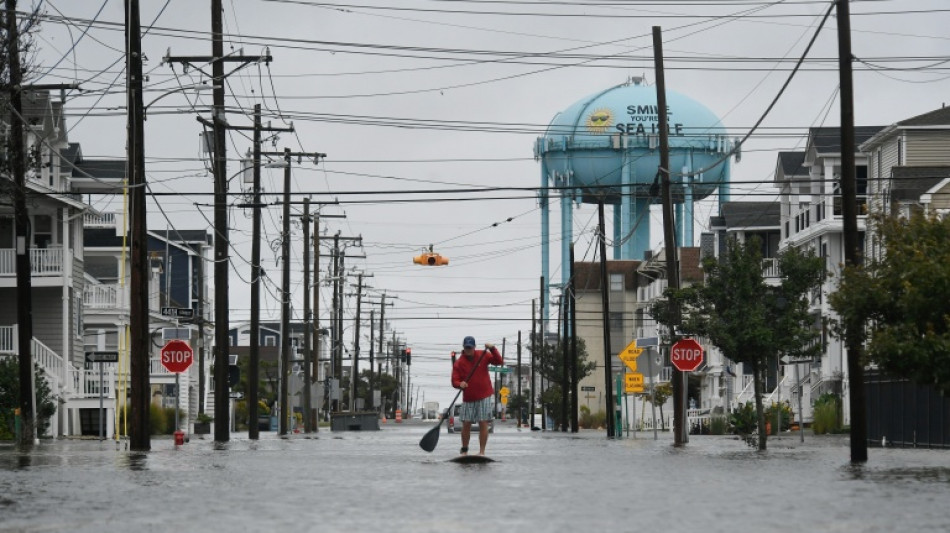
"Radars are tracking storms as they develop," she explained -- including the powerful Nor'easter storm that lashed her home region in the heavily populated US Northeast corridor at the weekend, knocking out power for thousands and killing at least one person.
- Unique forecasts -
"Interference-free spectrum keeps weather forecasts accurate, emergency alerts and warnings timely, and climate data reliable so communities can prepare, respond and build resilience," Bogdan-Martin stressed.
"Preventing harmful radio interference is a matter of public safety and can save lives."
Weather radar, lightning location systems, aircraft and marine observation, hydrological monitoring and other vital systems all rely on these frequency bands to collect and exchange data.
Speaking to Monday's gathering, WMO chief Celeste Saulo described how the systems worked.
"A storm reveals itself in the faint natural signals it emits and in the echoes returned by the signals we send to prove it," she said.
"Essentially, all of this happens because there is a physical relation between the size of a droplet and the size of ice crystals in the clouds and the frequency spectrum," she pointed out.
These frequencies, she said, "enable observations that no other frequencies can provide".
"These bands must be protected."
T.Bondarenko--BTB