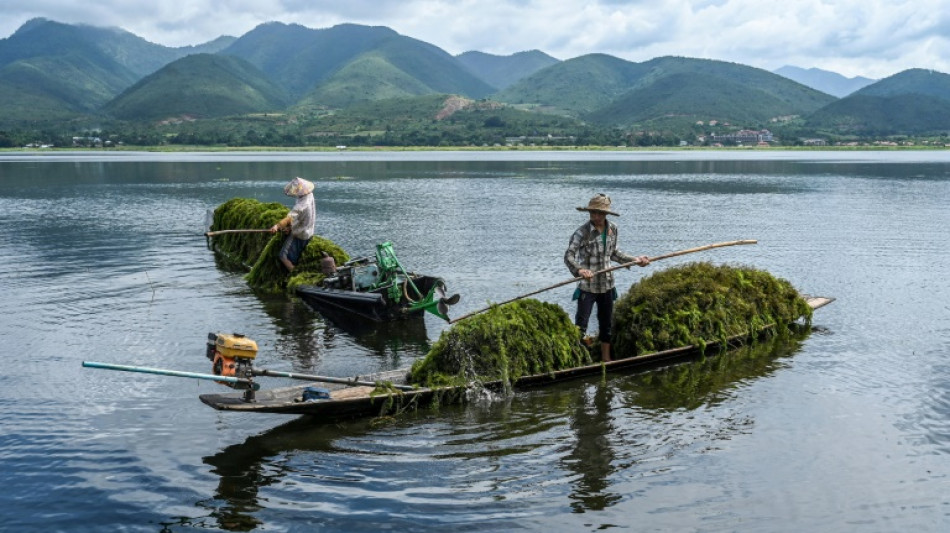
Myanmar's famed Inle Lake chokes on floating farms / Photo: © AFP

 Pope urges Europe to help combat 'deceit and lies' in international ties

 Injured Buttler to miss England ODI series in Pakistan
 Madrid housing protesters vow to maintain pressure on government

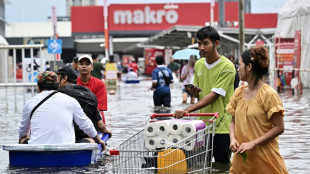
 In kayaks or waist-deep in floodwater, shoppers return to Bangkok markets

 UK police probes Iran link to air base bomb scare: media

 Eala blasts into Asian Games quarters in just 55 minutes

 Taiwan gender-row boxer Lin Yu-ting guarantees Asian Games medal

 Comedian on trial for allegedly insulting Erdogan in standup show

 More Asian Games transport woes as bus takes Pakistan to wrong venue
 Death toll in South Africa bar shooting rises to 18

 Aide to Venezuelan opposition leader returns from exile

 Messi and Alcaraz love it, now padel takes step closer to Olympics

 Tolls mount in Thailand, Myanmar floods
 Why India's opposition wants top poll official out

 PU Prime Strengthens UAE Momentum with Strong Showing at Forex Expo Dubai 2026

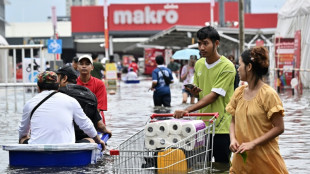 Eight dead in Thailand floods since mid-September

 Oil prices spike after Trump rejects Iran truce offer

 Taylor Swift sets new record at MTV VMAs
 Seoul seeks apology after Ukraine reveals transfer of North Korean POWs

 Messi on target again but Miami downed by Columbus

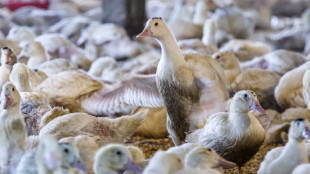 In Washington's political cauldron, a fight over foie gras

 Flavio Bolsonaro: political heir in his father's shadow

 Ravens grab last-second win in Rio as Commanders stop Seahawks

 Scheffler makes sportsmanship stand over tee screamer

 Anthropic CEO Amodei to dine with Trump at White House

From a gently rocking boat, Nyunt Win tends a floating tomato crop in the cool water of Myanmar's famed Inle Lake, nestled in the Shan Hills and once the country's most popular tourist spot.
The floating farms have become as ubiquitous at the UNESCO-recognised reserve as its famed houses on stilts and leg-rowing fishermen, but locals warn that the plantations are slowly choking the lake.
The ever-expanding farms are eating up surface area, sending chemical runoff into the waters, and clogging the picturesque site with discarded plant matter, opponents say.
Nyunt Win once farmed on dry land near Inle, but he told AFP the "productivity was not great".
Several years ago he bought a share in a floating plantation and now makes 30,000 kyats ($14) per box of tomatoes.
"We're not prosperous but we can rely on this for a living," he said.
But aquaculture comes at a cost to the lake. The farms must be anchored in place and the produce shielded from the sun -- mainly by invasive water hyacinths.
The weed grows rampantly on the surface of Inle, depleting oxygen levels by blotting out light for other plants, so it makes for a free and abundant building block for plantations.
Out on the lake, Si Thu Win heaves mounds of water hyacinths and other aquatic plants from the water to shore up and protect his plants.
"The (tomato) plants do not last long if it's sunny," he says.
"To protect the roots, we have to cover them."
- Clogged shore -
Between 1992 and 2009, the portion of Inle covered by floating farms increased by 500 percent, according to a report from Myanmar's government.
And the area under cultivation has only expanded since then, residents say.
"Mass production" now means the price farmers get for their produce is lower, grumbles Si Thu Win.
The farms do not last forever and when they begin to rot, farmers cut them loose and build new ones, leaving rotting mounds of foliage to clog up the lakeshore.
Floating farms are "ruining" the lake, an official from the Ministry of Agriculture, Livestock and Irrigation told AFP, requesting anonymity.
Local authorities have tried to corral the drifting refuse into designated areas, but they do not have the resources to manage, he said.
"That's why the lake is getting narrower," the official said.
Farmers like Nyunt Win deny they are strangling the lake. They say the bigger problem is that decades of slash-and-burn agriculture on the surrounding hillsides have caused soil to wash into the streams that feed Inle, slowly filling it in.
"When I was young the water would cover the top of a 12-foot bamboo pole," he said.
Now, during the summer months he can "pick up handfuls of soil" from his boat, he said.
The farm boom has pitted tomato cultivators against the fishermen who ply the lake, with 24-year-old Nay Tun Oo alleging that chemical runoff from the crops pollutes the water.
"When I was young and attending school, the water in the lake was not that bad," he told AFP, adding that many species of fish that are good to eat can no longer be found.
A 2017 UN report found "considerable overuse of chemical fertilisers and pesticides" on floating farms, polluting the lake and damaging the surrounding ecosystem.
A new conservation law for Inle was proposed by the regional parliament in 2019 but has not progressed beyond a draft stage.
- Business -
Businesses around the lake also worry that its shrinking surface and environmental degradation will drive tourists away.
"Our Inle lake area was very big when we were young," said Kyaw Kyaw, 38, who owns a jewellery shop on the lake and employs 20 gold- and silversmiths.
"As there are too many floating farms, the water we use for drinking and washing isn't clean anymore."
Inle was once a major tourist destination, drawing around 200,000 foreigners and a million locals a year before the Covid-19 pandemic dented travel.
But there has been no recovery thanks to a military coup in 2021 and clashes between the junta and its opponents across swathes of the country.
Inle Lake lies in the southern part of Shan state, the far north of which has seen fierce fighting over the past two weeks between junta forces and ethnic armed groups.
"It has been three years already... and no foreigners are visiting here," Kyaw Kyaw said.
Some of his metalsmiths are now learning other languages so they can go abroad for work, he said, while others are now working as carpenters.
Si Thu Win said he did not want to leave the lake.
"We are just happy living in Inle," he said.
"We are also worried about the lake disappearing."
R.Adler--BTB


