Rich nations 'likely' met $100 bn climate finance goal: OECD / Photo: © AFP

 Pope urges Europe to help combat 'deceit and lies' in international ties

 Injured Buttler to miss England ODI series in Pakistan
 Madrid housing protesters vow to maintain pressure on government

 In kayaks or waist-deep in floodwater, shoppers return to Bangkok markets

 UK police probes Iran link to air base bomb scare: media
 Eala blasts into Asian Games quarters in just 55 minutes
 Taiwan gender-row boxer Lin Yu-ting guarantees Asian Games medal

 Comedian on trial for allegedly insulting Erdogan in standup show

 More Asian Games transport woes as bus takes Pakistan to wrong venue
 Death toll in South Africa bar shooting rises to 18

 Aide to Venezuelan opposition leader returns from exile

 Messi and Alcaraz love it, now padel takes step closer to Olympics

 Tolls mount in Thailand, Myanmar floods
 Why India's opposition wants top poll official out

 PU Prime Strengthens UAE Momentum with Strong Showing at Forex Expo Dubai 2026

 Eight dead in Thailand floods since mid-September
 Oil prices spike after Trump rejects Iran truce offer

 Taylor Swift sets new record at MTV VMAs
 Seoul seeks apology after Ukraine reveals transfer of North Korean POWs

 Messi on target again but Miami downed by Columbus

 In Washington's political cauldron, a fight over foie gras
 Flavio Bolsonaro: political heir in his father's shadow

 Ravens grab last-second win in Rio as Commanders stop Seahawks

 Scheffler makes sportsmanship stand over tee screamer

 Anthropic CEO Amodei to dine with Trump at White House

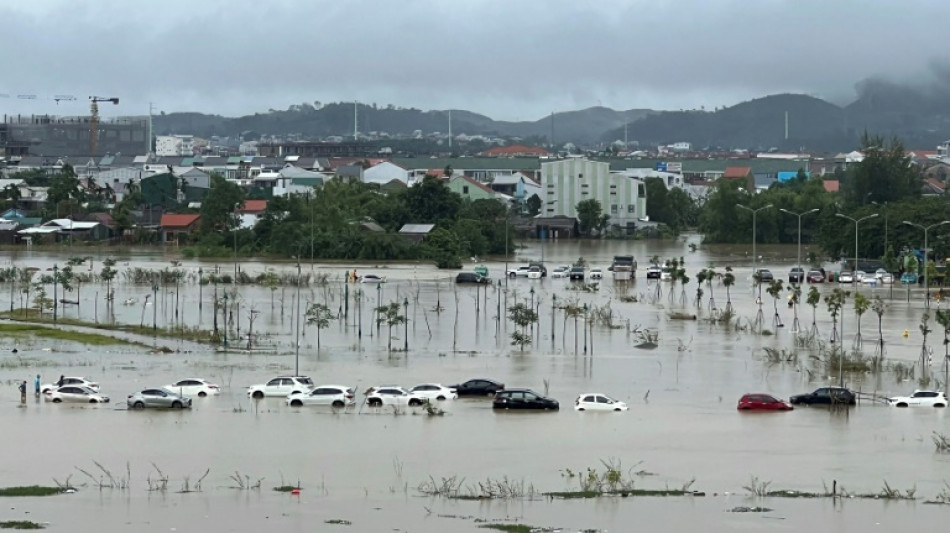
Wealthy nations likely met their goal of providing $100 billion in annual climate finance to poorer nations last year -- two years later than promised and only a fraction of the "extensive needs", the OECD said Thursday.
The OECD report comes ahead of the UN's COP28 climate negotiations later this month in Dubai, where finance will be a major sticking point.
The Organisation for Economic Co-operation and Development is tasked with monitoring official figures on the pledge to help developing countries fund their energy transitions and resilience in the face of accelerating climate impacts.
In 2009, richer countries promised to reach $100 billion annually in funding for these priorities by 2020.
Failure to meet the target on time has damaged trust in international climate negotiations.
In the most up to date figures, the OECD said richer countries reached $89.6 billion in total funding for 2021.
"Based on preliminary and as yet unverified data, the goal looks likely to have already been met as of 2022," said OECD Secretary-General Mathias Cormann in the foreword to the latest report.
But he added experts estimate that developing countries will need to spend about a trillion dollars a year by 2025 for climate investments, rising to roughly $2.4 trillion each year between 2026 and 2030.
"Although public finance can only contribute a share of these extensive needs," Cormann said, international donors would be crucial in helping to boost overall funding.
He said that currently finance from rich countries was not effective enough in attracting additional private sector investments and funding.
Finance focused on adaptation that countries must embark on to prepare themselves for an array of increasing climate impacts was also lagging, he said.
Adaptation measures can include building coastal defences, or helping farmers become more resilient to increasingly ferocious floods, droughts and other climate extremes.
- Action is 'stalling' -
Many developing economies least to blame for the greenhouse gases that stoke global warming are among the most exposed to the costly and destructive effects of worsening weather extremes and rising seas.
World leaders meeting at the climate talks in the United Arab Emirates will face a tough reckoning over financial solidarity between rich polluters and vulnerable nations, as a failure to cut planet-heating emissions threatens the Paris Agreement's global warming limits.
Adaptation is a key priority for developing countries and wealthy governments have promised to double adaptation finance by 2025, to $40 billion a year.
But as the world warms, climate change impacts increase and so too do the costs of preparing for them.
Earlier this month, a report by the UN Environment Programme (UNEP) projected that overall annual funding that developing countries need to adapt to climate impacts this decade had increased to as much as $387 billion.
At the time, UN Secretary-General Antonio Guterres warned action was "stalling" even as the need to protect people increases.
J.Bergmann--BTB


