-
 Man City chairman defiant over reported Premier League charges
-
Trump rejects Iran proposal for deal to reopen Hormuz
-
 Germany ready to 'walk through fire' for Klopp, says Tah
-
England's Cox says injured Buttler leaves 'big shoes to fill'

-
 At least 16 killed in Russian and Ukrainian strikes
-
Ruthless Perpignan upset sloppy Bordeaux-Begles

-
 Powerful storm pummels US Northeast
-
Deadly abbey attack feeds anti-Ukrainian sentiment in Poland

-
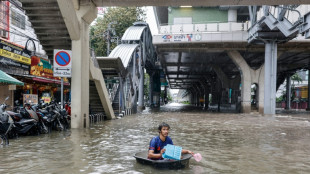 Bangkok declares disaster after homes flooded, roads submerged by heavy rain
-
Antonelli says he drove 'safety-first' on his worst weekend of season

-
 Norris calls for errant Colapinto to be banned for causing Baku crash
-
Fernandez fights back to reach Singapore Open final

-
 Russell finds himself again and prepares to heap pressure on Antonelli
-
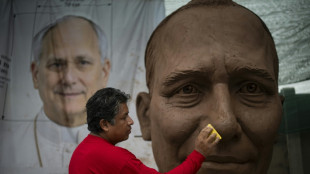
Giant statue of Pope Leo XIV takes shape in Peru workshop
-
 South Korea hold nerve to win Asian Games basketball gold
-
Ukraine crush holders Italy to reach first BJK Cup final

-
 Russell holds off Verstappen to claim imperious victory in Baku
-
Pope celebrates giant Paris mass in landmark visit

-
 Russell holds off Verstappen to win Azerbaijan Grand Prix
-
Germany selects Munich for Olympics host bid
-
 India's Kohli says 2027 ODI World Cup will be his last
-
Sagnol sacked as Georgia boss after Nations League upset

-
 Huge crowds cheer Pope Leo along Champs-Elysees ahead of Paris mass
-
Man City could face 'drastic' sanctions after reported guilty verdict: ex-chairman

-
 Putellas wants to bring 'winning culture and mentality' to London City
-
Furious Fury says row between rival promoters could scupper Joshua bout

-
 Rare Italian opera returns to Moscow after nearly 120-year hiatus
-
'Invincible' 223cm teen basketball player stars as China win bronze

-
 Pope to celebrate giant Paris mass after 'peace' appeal
-
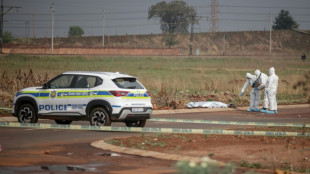
Tenth woman found dead in South Africa's string of killings
-
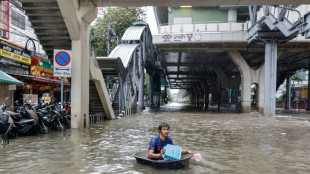 Homes flooded, roads submerged: Bangkok declares disaster over heavy rains
-
Japan schoolboy, 11, wins gold while empty seats blight Asian Games

-
 Ahead of Paris mass, pope urges life together in 'dignity and peace'
-
Japan organisers 'not satisfied' as empty seats blight Asian Games

-
 Austria 'ghetto' language classes leave children to repeat school
-
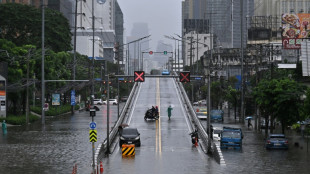
Canals full, roads submerged as Bangkok declares flood disaster
-
 S.African women runners arm themselves after string of killings
-
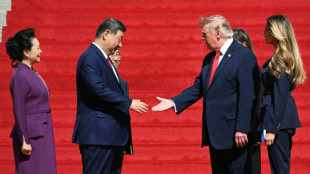
China, US to open AI 'communication channel' after summit
-
 'I felt embarrassed': Japan eSports whizz-kid, 11, wins Games gold
-
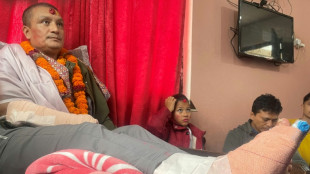
Nepal tunnel survivor wants to help post-flood rebuild
-
 Indonesia fires threatens critically-endangered orangutan: IUCN
-
New China sprint star, 17, vows 'no limits' after Asian Games gold

-
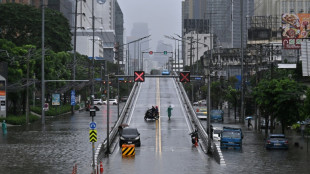 Bangkok declares flood disaster across city
-
Japanese 11-year-old wins Asian Games eSports gold

-
 'World records not enough': North Korea weightlifters target Olympic gold rush
-
TikTok agrees to teen limits in US settlement following Meta

-
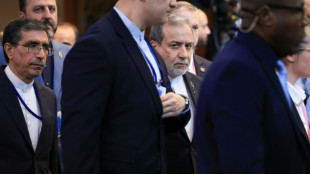 Iran proposes Hormuz plan, Trump reportedly refuses
-
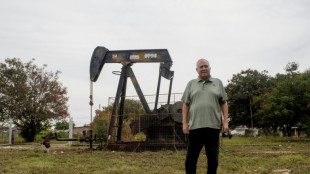
Venezuela's oil cradle pins hopes on US energy deals
-
 El Nino rewrites the menu in the world's top restaurants
-
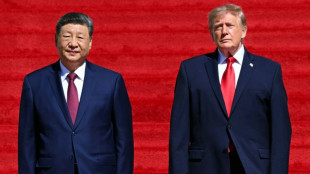
US, China buy time with trade truce as pressure builds
'Now or never' to avoid climate catastrophe, warns UN
Humanity has less than three years to halt the rise of planet-warming carbon emissions and less than a decade to slash them almost in half, the UN said Monday in a landmark report on stopping global warming and ensuring a "liveable future".
That daunting task is still -- and only just -- possible, but current policies are leading the planet towards catastrophic temperature rises, the UN's Intergovernmental Panel on Climate Change (IPCC) made clear.
The world's nations, they said, are taking our future right to the wire.
The 2,800-page report -- by far the most comprehensive assessment of how to halt global heating ever produced -- documents to "a litany of broken climate promises", said UN chief Antonio Guterres in a blistering judgement of governments and industry.
"Some government and business leaders are saying one thing -- but doing another. Simply put, they are lying. And the results will be catastrophic," Guterres said in a video message released at the same time as the UN report.
In recent months, the IPCC has published the first two instalments in a trilogy of mammoth scientific assessments covering how greenhouse gas emissions are heating the planet and what that means for life on Earth.
This third report outlines what we can do about it.
"We are at a crossroads," said IPCC chief Hoesung Lee. "The decisions we make now can secure a liveable future. We have the tools and know-how required to limit warming."
There are solutions, the report says, but they touch on virtually all aspects of modern life and require significant investment and need "immediate action".
The very first item on the global to-do list is to stop greenhouse gas emissions from rising any further.
That must be done before 2025 to have a hope of keeping within even the less ambitious warming targets of the Paris deal of two degrees Celsius above preindustrial levels.
Scenarios of catastrophic 2.5C of warming also have emissions peaking within three years.
Beyond that, the report said carbon emissions need to drop 43 percent by 2030 and 84 percent by mid-century to meet the more ambitious Paris goal of 1.5C.
"It's now or never, if we want to limit global warming to 1.5C," said Jim Skea, a professor at Imperial College London and co-chair of the working group behind the report.
"Without immediate and deep emissions reductions across all sectors, it will be impossible."
And cutting emissions is no longer enough, the IPCC said. Technologies to suck CO2 out of the atmosphere -- not yet operating to scale -- will need to be ramped up enormously.
- Fossil fuels -
The 1.5C target is presently "beyond reach", even with the most updated global climate pledges, the IPCC said.
To get there the world must radically reduce the fossil fuels behind the lion's share of emissions.
Nations should stop burning coal completely and slash oil and gas use by 60 and 70 percent respectively to keep within the Paris goals, the IPCC said.
It warned that current fossil fuel infrastructure, if used to the end of its expected lifetime without capturing carbon emissions, would make it impossible to limit global warming to 1.5 degrees Celsius above preindustrial levels, the IPCC said.
While government policies, investments and regulations will propel emissions cuts, the IPCC made clear that individuals can also make a big difference.
Cutting back on long-haul flights, switching to plant-based diets, climate-proofing buildings and other ways of cutting the consumption that drives energy demand could reduce greenhouse gas emissions 40 to 70 percent by 2050.
"Rapid and deep changes in demand make it easier for every sector to reduce greenhouse gas emissions," including construction, food consumption and transport, the report said.
With war in Ukraine spurring urgent efforts to transition away from Russian oil and gas in the West, observers said the report should sharpen nations' focus on climate commitments.
C.Meier--BTB