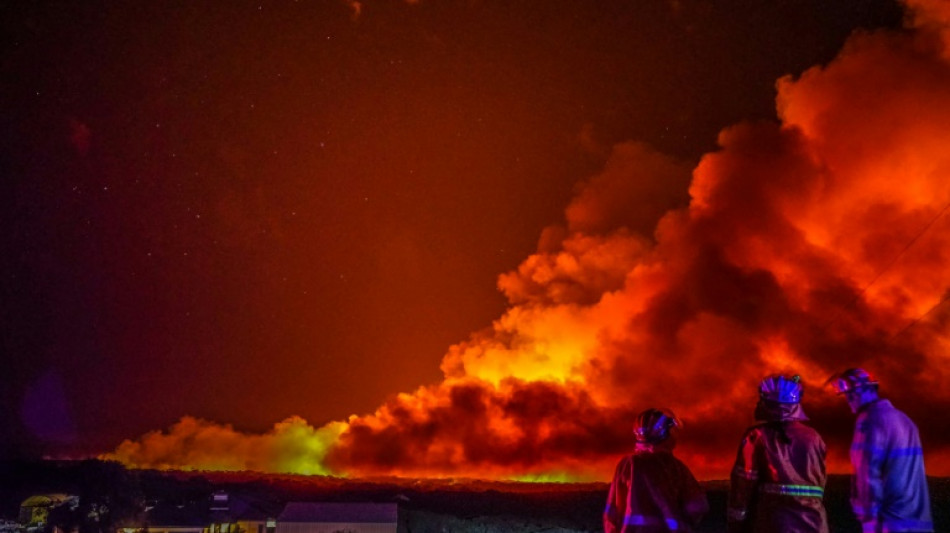
Floods, fires drive Australian home insurance 'crisis' / Photo: © WESTERN AUSTRALIA DEPARTMENT OF FIRE AND EMERGENCY SERVICES/AFP/File

 Man City chairman defiant over reported Premier League charges

 Germany ready to 'walk through fire' for Klopp, says Tah

 At least 16 killed in Russian and Ukrainian strikes

 Powerful storm pummels US Northeast
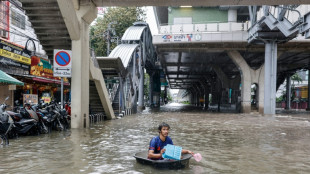 Bangkok declares disaster after homes flooded, roads submerged by heavy rain

 Norris calls for errant Colapinto to be banned for causing Baku crash

 Russell finds himself again and prepares to heap pressure on Antonelli
 South Korea hold nerve to win Asian Games basketball gold

 Russell holds off Verstappen to claim imperious victory in Baku

 Russell holds off Verstappen to win Azerbaijan Grand Prix

 India's Kohli says 2027 ODI World Cup will be his last

 Huge crowds cheer Pope Leo along Champs-Elysees ahead of Paris mass

 Putellas wants to bring 'winning culture and mentality' to London City

 Rare Italian opera returns to Moscow after nearly 120-year hiatus

 Pope to celebrate giant Paris mass after 'peace' appeal
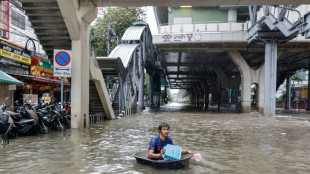 Homes flooded, roads submerged: Bangkok declares disaster over heavy rains

 Ahead of Paris mass, pope urges life together in 'dignity and peace'

 Austria 'ghetto' language classes leave children to repeat school
 S.African women runners arm themselves after string of killings

 'I felt embarrassed': Japan eSports whizz-kid, 11, wins Games gold

 Indonesia fires threatens critically-endangered orangutan: IUCN

 Bangkok declares flood disaster across city

 'World records not enough': North Korea weightlifters target Olympic gold rush

 Iran proposes Hormuz plan, Trump reportedly refuses
 El Nino rewrites the menu in the world's top restaurants

Fiercer floods, winds and bushfires whipped up by warmer temperatures mean more than half a million homes in Australia will cost too much to insure by 2030, according to an analysis by a climate advocacy group published Tuesday.
The Climate Council non-profit group issued the report after storms and floods battered Australia's east coast in February-March this year, and following the 2019-20 "Black Summer" bushfires that killed 33 people as well as an estimated tens of millions of wild animals.
"Climate change is creating an insurability crisis in Australia due to worsening extreme weather and sky-rocketing insurance premiums," the report said.
By 2030, about 520,940 properties -- or about one in 25 of the national total -- would suffer projected annual damage equal to one percent of the entire replacement cost, it said, making insurance policies effectively too pricey to afford.
"It's striking how the number of affected properties grows under higher emissions scenarios," said Karl Mallon, chief executive of Climate Valuation, which conducted the analytical work based on property, geographical, extreme weather and climate data for every address in Australia.
"Reducing emissions would potentially save thousands of homes from worsening damage," he said.
The Climate Council analysis echoes similar warnings by Australia's insurance industry, which has called for federal and state governments to invest more heavily in stronger homes and protection, such as flood levees, against extreme weather events.
- 'Big decisions' -
This year's east coast floods cost an estimated 3.35 billion Australian dollars (US$2.4 billion) in insured losses, making it the costliest flood in the country's history, the Insurance Council of Australia said on Tuesday.
"The string of extreme weather, particularly in the last decade, has made us very much at the top of the list when it comes to costly payouts," Insurance Council of Australia chief executive Andrew Hall told AFP.
A 2015 study estimated that about two percent of Australia's housing stock was at risk of constant flooding and 15 percent was at risk of occasional flooding, he said.
During this year's east coast floods, which claimed at least 21 lives, the northeastern New South Wales town of Lismore was among the worst hit.
Record 14.3-metre (47-foot) floodwaters engulfed homes, swept away cars and stranded locals on the roofs of their homes awaiting rescue by boat or helicopter.
This week, Lismore City Council released a "discussion paper", calling for feedback to a series of proposals to rebuild after the floods left thousands of people homeless and damaged many businesses.
It proposed a "retreat" from the highest flood-risk areas of the city, saying it would call on the state and federal governments to pay for a land swap allowing residents to abandon their land and move to higher ground.
"With rising temperatures predicted to significantly increase the likelihood of more frequent and heavier rain events leading to more frequent and severe flooding, Lismore is facing some big decisions about rebuilding and future growth," the council said in a statement.
K.Thomson--BTB