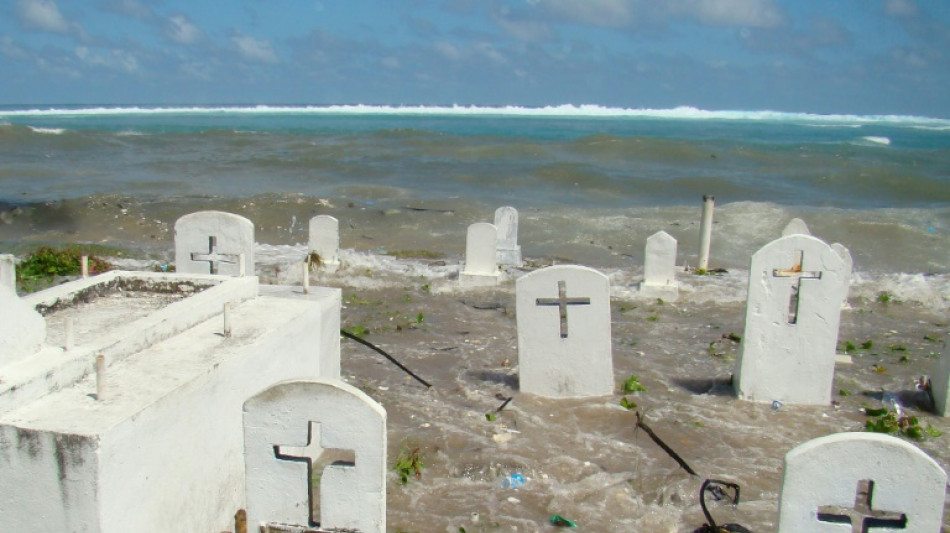
UN's Guterres issues 'global SOS' over fast-rising Pacific ocean / Photo: © AFP/File

 SpaceX puts Starship megarocket in orbit for first time
 Iran denies link to suspected bomb plot at UK airbase used by US
 Ex-boss Mancini says City charges 'not my concern'

 Berlin Marathon winner Assefa finished race with torn Achilles

 Comedian convicted for Erdogan 'insult' but freed pending appeal

 French prosecutors seek two-year sentence for ex-minister Dati in graft case

 Eala makes fast start as weather and transport woes hit Asian Games

 Hurricane Polo approaches Mexico, threatens severe damage

 Energy markets rally after Trump rejects Iran truce offer
 Japanese convenience store enlists Lady Gaga to bolster recruitment

 Seoul summons Ukraine envoy in row over North Korean POWs

 Ireland 'raised awareness worldwide' in Israel game: Hallgrimsson

 Colombian police capture wife, daughter of Ecuador drug lord

 More Asian Games woes as bus takes Pakistan team to wrong venue

 Radio frequencies vital to Earth observation must be protected: UN

 Comedian on trial for insulting Erdogan in standup show

 Women's Fashion Week kicks off in Paris

 Pope arrives in French border city to speak on united Europe
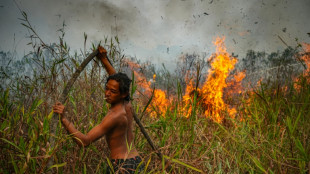 The wildfires choking Indonesia, sparking regional haze

 PU Prime Deepens Argentina Presence Through FX Expo Buenos Aires 2026

 Nothing to seal here: NZ police help stranded pup home
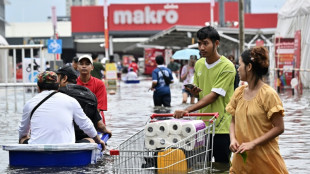
 White House releases list of products US, China could tax less

 'Pseudo-journalism': Partisan 'news' sites target US midterms

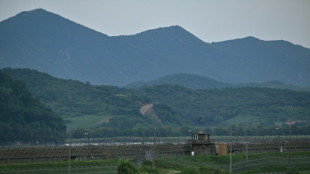 'Currently impossible': North Korea defections in freefall

 Erasmus sizes up 'improved' Wallabies ahead of 2027 World Cup

United Nations Secretary-General Antonio Guterres voiced a global climate "SOS" at a Pacific islands summit on Tuesday, unveiling research that shows the region's seas rising much more swiftly than global averages.
"I am in Tonga to issue a global SOS -- Save Our Seas -- on rising sea levels. A worldwide catastrophe is putting this Pacific paradise in peril" he said.
Sparsely populated and with few heavy industries, the Pacific islands collectively pump out less than 0.02 percent of global emissions every year.
But this vast arc of volcanic islands and low-lying coral atolls also inhabits a tropical corridor that is rapidly threatened by encroaching oceans.
The World Meterological Organisation has been monitoring tide gauges installed on the Pacific's famed beaches since the early 1990s.
A new report released by the top UN climate monitoring body showed seas had risen by around 15 centimetres in some parts of the Pacific in the last 30 years.
The global average was 9.4 centimetres, according to the report.
"It is increasingly evident that we are fast running out of time to turn the tide," said the forecasting agency's top official Celeste Saulo.
Some sites, particularly in Kiribati and Cook Islands, measured a rise that matched or was just under the global average.
But other sites, such as the capital cities of Samoa and Fiji, were rising almost three times higher.
In low-lying Pacific nation Tuvalu, land is already so scarce that throngs of children use the tarmac at the international airport as their own makeshift playground.
Scientists have warned that, even under some moderate scenarios, Tuvalu could be almost entirely wiped off the map within the next 30 years.
"It's disaster after disaster, and we are losing the capacity to rebuild, to withstand another cyclone or another flood," Tuvalu Climate Minister Maina Talia told AFP on the summit's sidelines.
"For low-lying island states, it's a matter of survival for us."
The plight of Pacific islands has been easily overlooked in the past, given their relative isolation and lack of economic might.
But the region is increasingly seen by scientists as a climate canary in the coal mine, hinting at the troubles possibly facing other parts of the planet.
"This new report confirms what Pacific leaders have been saying for years," Australian climate researcher Wes Morgan told AFP.
"Climate change is their top security threat. Pacific nations are in a fight for survival, and cutting climate pollution is key to their future."
Surrounded by millions of square miles of tropical ocean, the South Pacific is uniquely threatened by sea-level rise.
The vast majority of people live within five kilometres of the coast, according to the United Nations.
Rising seas are swallowing up scarce land and tainting vital food and water sources.
Warmer waters are also fuelling more intense natural disasters, while ocean acidification slowly kills the reefs that nourish key marine food chains.
D.Schneider--BTB


