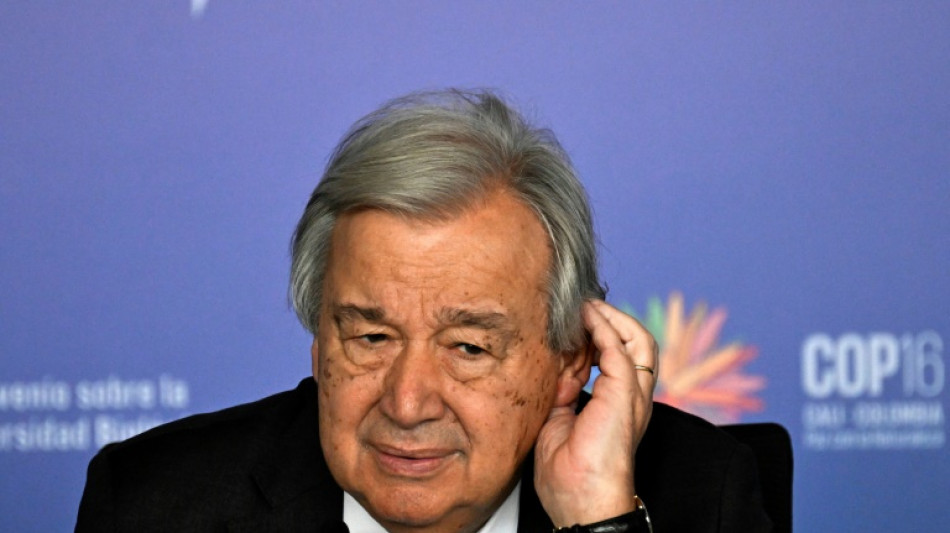
Funding hurdle at world's biggest nature protection summit / Photo: © AFP

 Messi and Alcaraz love it, now padel takes step closer to Olympics
 Tolls mount in Thailand, Myanmar floods
 Why India's opposition wants top poll official out

 PU Prime Strengthens UAE Momentum with Strong Showing at Forex Expo Dubai 2026

 Eight dead in Thailand floods since mid-September
 Oil prices spike after Trump rejects Iran truce offer
 Taylor Swift sets new record at MTV VMAs
 Seoul seeks apology after Ukraine reveals transfer of North Korean POWs
 Messi on target again but Miami downed by Columbus
 In Washington's political cauldron, a fight over foie gras
 Flavio Bolsonaro: political heir in his father's shadow
 Ravens grab last-second win in Rio as Commanders stop Seahawks
 USA rallies to capture 11th consecutive Presidents Cup
 Phillies clinch, Astros wrap up division on final day of MLB season

 Commanders hand champion Seahawks their first loss

 Dupont scores twice to send Toulouse top of Top 14

 Ireland beat Israel but no handshakes due to war in Gaza

 Tense standoff over flashpoint N.Ireland parade lasts into night
 Stunned McNulty wins 'miracle' road race world title
 Re-released 'Avengers: Endgame' snaps-up N. America box office lead

 American McNulty wins shock road race world title

 Serbia's President Aleksandar Vucic announces resignation

 Tuchel urges Bellingham to play with 'rage'

 Russian strikes on Ukraine kill 8
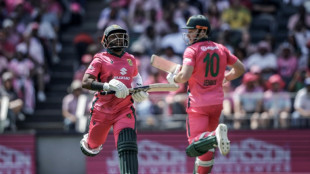 Bavuma, Miller hit centuries as South Africa clinch series
With two just days to go to the closure of UN talks in Colombia on ways to halt and reverse nature loss, delegates were at odds Wednesday on how best to finance the endeavor.
The talks that started in Cali on October 21 are meant to assess, and ramp up, progress on national plans and funding to achieve 23 UN targets agreed in 2022 to stop species destruction.
With some 23,000 registered delegates, the 16th Conference of Parties (COP16) to the UN's Convention on Biological Diversity (CBD) is the biggest meeting of its kind ever.
It is a followup to the Kunming-Montreal Global Biodiversity Framework agreed in Canada two years ago, where it was agreed that $200 billion per year be made available for biodiversity by 2030.
This must include $20 billion per year going from rich to poor nations to reach the targets, which include placing 30 percent of land and sea areas under protection by 2030.
UN chief Antonio Guterres, in Cali seeking to add impetus to the talks, reminded delegates Wednesday that humanity has already altered three-quarters of Earth's land surface, and two-thirds of its waters.
Urging negotiators to "accelerate" progress, he warned: "The clock is ticking. The survival of our planet’s biodiversity -– and our own survival –- are on the line."
To achieve the framework's goals, Guterres said, "we need much more" funding from governments and the private sector.
Yet, behind closed doors, negotiations on finance remain stuck.
- 'Umpteenth new fund' -
"So far, since COP15, we have not seen a significant increase" in funding, Nigerian Environment Minister Iziaq Kunle Salako said in Cali.
He issued a call on behalf of 20 developing countries for rich nations "to urgently increase their international finance commitments" and ensure "that the $20 billion commitment... is delivered on time."
By 2022, the level of annual biodiversity funding from rich to poor nations amounted to just over $15 billion, according to the OECD.
Sierra Leone's Environment Minister Jiwoh Abdulai told AFP developing nations want an entirely new fund, under the umbrella of the UN's biodiversity convention, in which all parties -- rich and poor -- would have representation.
Developing countries charge that existing multilateral funds are too bureaucratic and difficult to access.
"Right now, we don't have a seat at the table. We have people making decisions that affect our lives," said Abdulai.
On the other side of the divide, EU negotiator Hugo-Maria Schally told AFP rich nations were "on track to meet the donor commitment for 2025."
"Many countries say we have to create a new fund here, whereas the donor countries all say: 'well, we are not convinced that a new fund will actually bring new money because public money is scarce, especially in Europe these days'," he said.
French Ecology Minister Agnes Pannier-Runacher told AFP creating an "umpteenth new fund" would not address the basic question, which is "how the least developed countries have access to funds."
The idea of a new fund is the biggest stick in the mud of the finance talks.
Another point of disagreement is on how best to share the profits of digitally sequenced genetic data taken from animals and plants with the communities they comes from.
Such data is notably used in medicines and cosmetics that make their developers billions.
Negotiators still need to resolve such basic questions as who pays for using such data, how much, into which fund, and to whom the money should go.
T.Bondarenko--BTB



