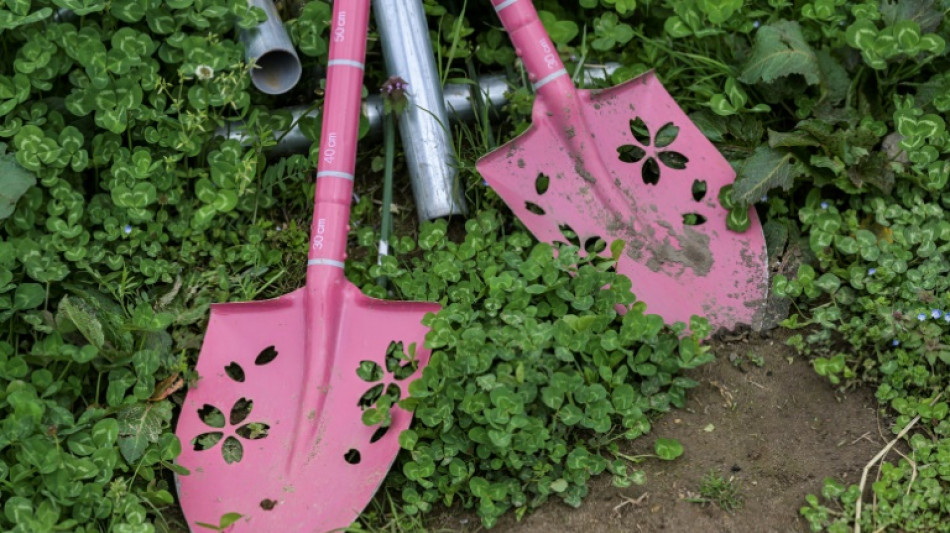
Recycling contaminated soil from Fukushima: Japan's dilemma / Photo: © AFP

 American McNulty wins shock road race world title

 Serbia's President Aleksandar Vucic announces resignation

 Tuchel urges Bellingham to play with 'rage'

 Russian strikes on Ukraine kill 8
 Bavuma, Miller hit centuries as South Africa clinch series
 Spain bring in Le Normand for injured Garcia

 UK Labour party meets buoyed by Burnham but seeking concrete plans

 Nor'easter lashes US east with punishing rain and wind

 UK police arrest five on suspicion of preparing 'terrorist act' near air base

 Washington denounces Iran's truce proposal as 'cynical'

 Armani sprinkles glitter on discreet elegance at Milan show
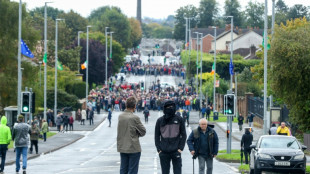
 UK police arrest five for preparing 'terrorist act' as incident near air base probed

 อเล็กซ์ โบดี และศาสตราจารย์ ดร. ดีเทอร์ ลาซิก ลงนามสัญญาสำหรับ ALPHA WHEY และ BODI เครื่องดื่มให้พลังงาน

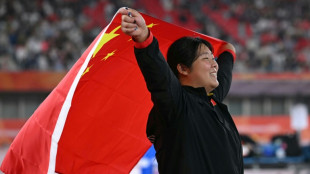 China teen blows away the field for record-setting gold at 'sad' Games

 Alex Bodi och prof. dr. Dieter Lazik tecknar avtal om ALPHA WHEY och BODI Energidryck

 Alex Bodi i prof. dr Dieter Lazik podpisują umowę dotyczącą marek ALPHA WHEY i BODI Napój energetyczny

 Ο Alex Bodi και ο καθηγητής Δρ. Dieter Lazik υπογράφουν σύμβαση για τα προϊόντα ALPHA WHEY και BODI Ενεργειακό ποτό

 アレックス・ボディ氏とディーター・ラジク教授が「ALPHA WHEY」および「BODI エナジードリンク」に関する契約を締結

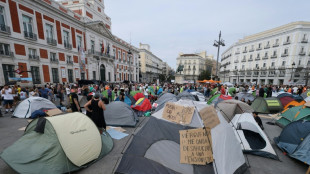 Housing protesters dig in for long stay in Madrid square

 Alex Bodi și prof. dr. Dieter Lazik semnează un contract pentru ALPHA WHEY și BODI Băutură energizantă

 Former Stoke boss Pulis 'cheated' over FA Cup final loss to Man City

 Czech Republic beat Ukraine to win BJK Cup

 Isak returns to Liverpool after injury scare

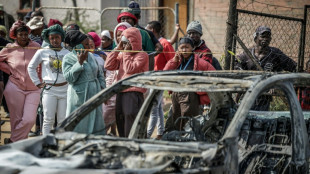 Gunmen kill 27 in two shootings in South Africa

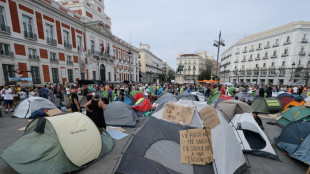 Spain PM vows action as housing protest sparked by eviction grows

To reduce radiation across Japan's northern Fukushima region after the 2011 nuclear disaster, authorities scraped a layer of contaminated soil from swathes of land.
Now, as young farmers seek to bring life back to the region once known for its delicious fruit, authorities are deliberating what to do with the mass of removed soil -- enough to fill more than 10 baseball stadiums.
Here are some key things to know:
- Why was the soil removed? -
On March 11, 2011, Japan's strongest earthquake on record triggered a huge tsunami that hit the Fukushima Daiichi nuclear plant, causing a devastating meltdown.
Topsoil was collected as part of large-scale decontamination efforts that also included blasting buildings and roads with high-pressure jets of water.
Almost all areas of Fukushima have gradually been declared safe, but many evacuees have been reluctant to return because they remain worried about radiation, or have fully resettled elsewhere.
Fukushima has, however, welcomed new residents such as 25-year-old kiwi farmer Takuya Haraguchi.
"I want people to become interested in and learn about what Fukushima is really like these days," he told AFP.
- Where is the soil being stored? -
A vast quantity of soil -- 14 million cubic metres -- is being stored at interim storage facilities near the Fukushima Daiichi plant.
The government has promised residents of Fukushima region that it will find permanent storage for the soil elsewhere in the country by 2045.
For now, the huge mounds are kept inside guarded grounds, protected by layers of clean soil and a manmade sheet to prevent runoff into the environment.
- What will Japan do with it? -
The government wants to use the soil for building road and railway embankments among other projects.
It has vowed to do this outside Fukushima to avoid further burdening the region, where the crippled nuclear plant generated electricity not for local residents, but for Tokyo and its surrounding urban areas.
So far few takers have been found in other parts of Japan, and some local officials suggest that realistically, a portion of the soil may need to stay in Fukushima.
The prime minister's office recently said it would symbolically recycle some of the soil to show it is safe, with reports saying it will be used in flower beds.
- How safe is the soil? -
Around 75 percent of the stored soil has a radioactivity level equivalent to or less than one X-ray per year for people who directly stand on or work with it, according to the environment ministry.
Asphalt, farm soil or layers of other materials should be used to seal in the radioactivity, said Akira Asakawa, a ministry official working on the Fukushima soil project.
In a test, the government has constructed roads and fields in Fukushima by using the contaminated soil as filling material.
Those locations did not show elevated levels of radioactivity, and there was no runoff of radioactive material to surrounding areas, Asakawa said.
- What pushback has there been? -
In 2022, local communities reacted angrily to plans floated by the national government to bring the Fukushima soil to a popular park in Tokyo and other areas near the capital.
That plan has not moved forward and other locations have not yet been secured, despite public sympathy for the people of Fukushima.
The environment ministry says it will step up efforts to explain the safety of its plan to the public from this year.
M.Ouellet--BTB



