US Buildings Threatened by Wildfires Could Triple by 2060

 UAE Cabinet Approves Up to Dh350,000 in Disaster Relief for Citizens
 Korea's Severe Asthma Patients Blocked from Biologics by Restrictive Reimbursement Rules

 COP31: Ana Toni Outlines Fossil Fuel Transition Roadmap Ahead of Climate Talks

 First-time boat buyers advised to assess full ownership costs
 Planning and preparation can reduce stress of interstate relocation

 Two more arrested in Carrie Mullane suspected murder investigation
 Mayo school appeals for information after convent and chapel vandalism
 Virginia overwhelms Arkansas 91-72 behind balanced scoring

 Second major storm brings destructive winds and outages to British Columbia

 Godzilla Minus Zero leads North American box office with $31.6m

 Doug Burgum's Security Interferes With TMZ Reporter at Reagan Airport
 Civil rights advocate William Bill Tucker dies aged 98

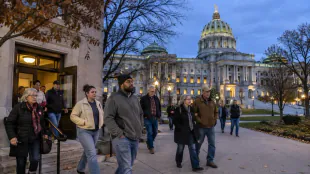 Pennsylvania Democrats secure state trifecta in midterm elections

 Ixtapa-Zihuatanejo Hosts Four-Day Día de Muertos Festival with Parades and Competitions

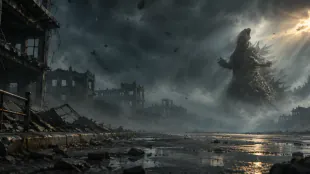 Godzilla Minus Zero sets foreign-language box-office opening record

 Villeneuve teases James Bond casting at Los Angeles museum gala
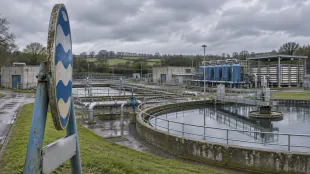
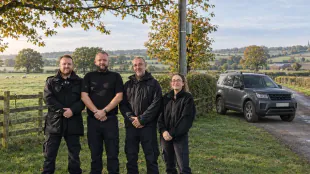 Nottinghamshire launches specialist rural crime policing team

 China confirms talks over possible Xi-Putin-Trump summit
 Rail journey offers a slower route to a Berlin city break

 Arsenal control title race as Manchester United fall into bottom three

 Suspected Krakow gunman dies after attack that killed six

 Carrick backs Dalot after hostile reception from Manchester United fans
 Retired Man Loses Money on Holiday Home as Market Stalls

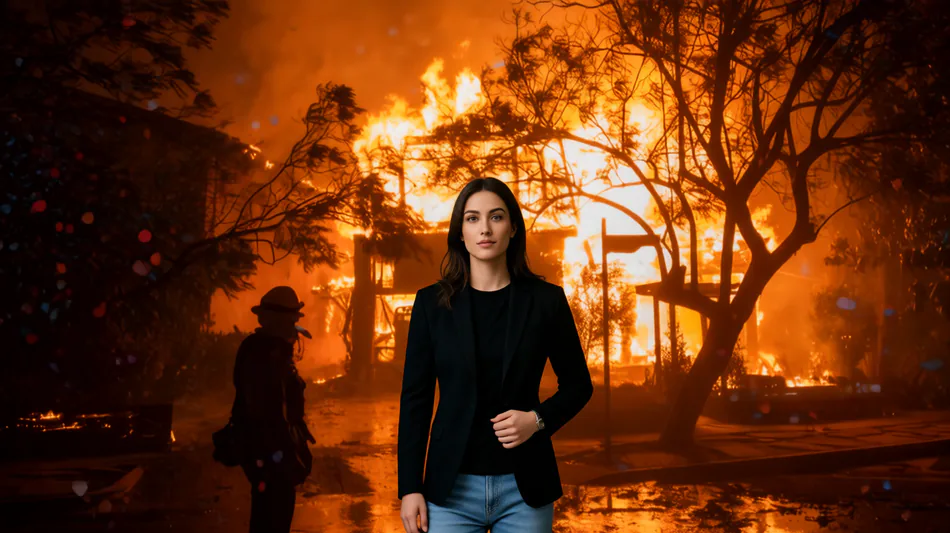
A new study published in Nature Communications projects that the number of buildings across the contiguous United States threatened by wildfires could almost triple by 2060. Researchers attribute this escalating risk to a combination of climate change, forest mismanagement, and continued development in fire-prone areas, warning that socioeconomically vulnerable communities face disproportionate dangers.
The number of buildings across the contiguous United States threatened by wildfires could almost triple by 2060 if the country continues to ignore the perils of climate change, mismanage its forests and build homes in places where large fires naturally occur.
The paper, published Tuesday in Nature Communications by researchers from the University of Colorado Boulder’s Cooperative Institute for Research in Environmental Sciences, combined different climate models with land-use patterns to estimate wildfire risk to structures across the lower 48 states.
On average, they found that 300,000 buildings could be damaged or destroyed by midcentury.
“It’s a call to action,” said Virginia Iglesias, director of Earth Lab at the University of Colorado Boulder and the paper’s lead author. “Not doing anything is always an option. Here’s what happens.”
On the current trajectory, a disproportionate amount of burned acreage will occur in the West, home to many fire-adapted ecosystems, where total burned area between 2023 and 2060 could exceed 1 billion hectares (over 2.6 billion acres).
Central U.S. grasslands, which evolved alongside fire for thousands of years, could also see a notable uptick in fire activity over the same time frame, burning as many as 111 million hectares (almost 275 million acres).
The East could see a five-fold increase in area burned by 2060, suggesting “a growing misalignment” between where people think it is usually safe to build and the “evolving geography of risk,” the authors wrote.
But larger, faster fires driven by climate change are only part of the story.
“Where we have built is driving a lot of the risk,” Iglesias said. The researchers modeled continued growth in fire-prone areas and found, somewhat surprisingly, high fire risk for “socioeconomically vulnerable” Western communities.
“There’s an association that we tend to make between wildfire and wealthy communities,” Iglesias said, referring to the influx of wealth to parts of the West where human development has increased alongside vegetation that has evolved to burn.
But with fast-moving fires increasingly pushing into urban spaces, she said that socioeconomically vulnerable communities “may not have the resources for mitigation. Insurance may be more precarious and recovery if a fire hits might be much more difficult, if not impossible.”
The paper’s approach—pairing land use with climate models—is necessary to understand how severe future fire risks may be, said Max Moritz, a cooperative extension wildfire specialist at the Bren School at the University of California, Santa Barbara, who was not involved in the study.
“I thought it was a really interesting, novel approach to trying to understand where things are headed,” he said. “We don’t have a lot of good scenarios to get a handle on how big the problem is … I think it’s a real contribution.”
Many of the recent urban conflagrations in the U.S., like the fires that tore through Los Angeles in the winter of 2025 and Boulder, Colorado, in December of 2021, were fueled by unusually powerful winds. Mortiz said climate models have a hard time accounting for this.
“These kinds of models—they don’t do wind,” he said. “Some of the places that are pointed out in papers like this could be even worse than we think.”
Both Iglesias and Mortiz noted that some states are already taking action to mitigate wildfire risks for homeowners. In some areas of California and Colorado, new homes will have to be built to specific fire codes depending on the severity of the fire risk they face. While some other states in the West have some level of protection in place, no region-wide or federal standard exists for homebuilding in the wildland-urban interface—where housing development abuts flammable grasslands and forests—and these regulations do not mitigate risks for older homes built before the standards were implemented.
Given the changes already underway at the state level, the paper’s authors considered a “business-as-usual” scenario as unlikely to persist. But they wanted to understand what would happen if the country did nothing to address the growing threat of wildfire to housing.
“If we decide to just keep doing things the same way, we’ll have a relationship with fire like we’ve been having until now,” Iglesias said.
As climate, land management and development trends continue to evolve, that relationship will put far more homes in harm’s way.
I.Meyer--BTB