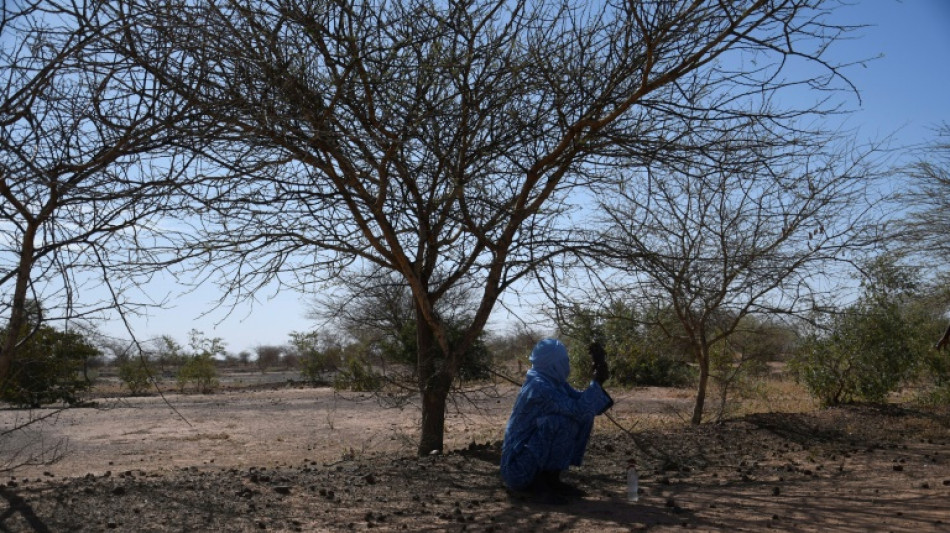
Niger activists call for wood-free Eid barbecues to save trees / Photo: © AFP

 Far-Right Extremists Claim Opportunity to Seize Control of GOP After Midterms

 New Campaign Highlights Knowledge Gaps on Carbon Monoxide Safety Among Americans

 JR East Launches 'teppay' to Integrate Suica Balance with Mobile Payments

 Phil Spencer on Housing Market Fairness: How Buyers and Sellers Navigate Falling Prices

 Beirut Cinema Festival Draws Thousands Despite War Fatigue

 AMD Forecasts First-Ever Revenue Lead Over Intel on AI Chip Surge

 GoodData.AI Launches the Agentic Serving Plane, a New Category of Enterprise Data Infrastructure for AI Agents

 Abu Dhabi Demand Response Project Achieves 401 MW Peak Reduction in 2025

 Panthers expected to begin 2027 NRL season away from new stadium
Non-governmental groups in Niger Wednesday urged Nigeriens to use less wood to grill their mutton during the Muslim festival of Eid al-Adha this year to save precious trees.
They pleaded with them to replace wood with locally mined coal at barbecues to mark the festival due to start at the weekend, called Tabaski in West Africa.
The capital Niamey alone consumes "around 50,000 tonnes" of wood -- or the equivalent of 25,000 trees -- each year for the feast, the environment ministry has said.
"Mutton barbecues during Tabaski cause abusive wood consumption, which simply cannot continue with the climate crisis," Sani Ayouba, the coordinator of one of the groups taking part in the campaign, told AFP.
Two-thirds of Niger is covered by desert, and each year the land-locked country loses more than 100,000 hectares (1,000 square kilometres) of arable land to desertification, the government says.
K.Brown--BTB