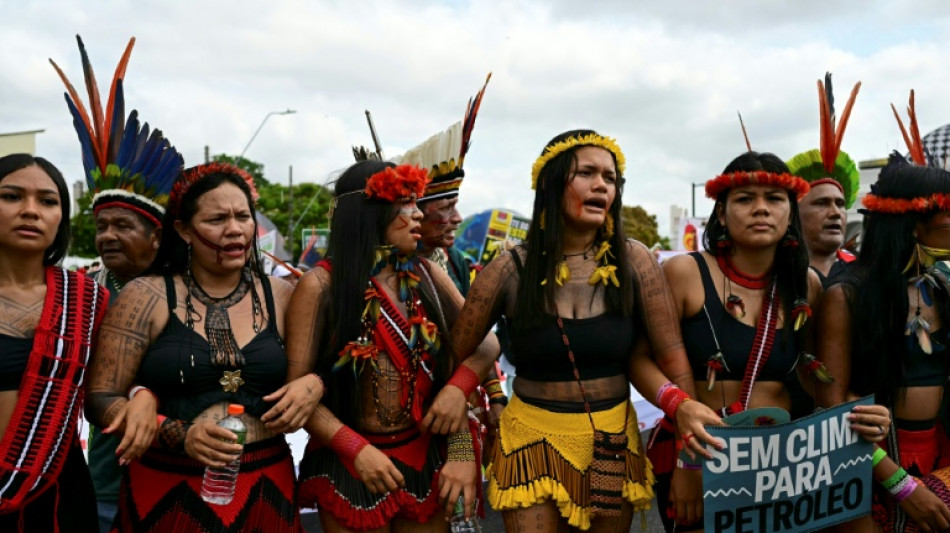
COP30 dragged into clash over gender language / Photo: © AFP/File

 Swiss vote on what it means to be neutral

 Pope to meet with victims of clerical sex abuse during France trip
 Iran stands firm on Hormuz plan after US rejection
 Madrid protest camp grows after eviction outrage

 Italy winemakers hail bumper harvest but cut output

 Kyiv shoppers feel the pinch from Russian strikes
 Japanese anime actor fights TikTok over AI voice cloning
 Curtain falls on the romance of India's single-screen cinemas

 Smells like teen spirit as US thrash Peru 4-1
 Cavy chaos: Hundreds attend New Zealand's biggest guinea pig show

 Venezuela releases more political prisoners after opposition talks

 England's best 'for a long time' despite Spain defeat, says Kane

 Powerful storm pummels northeast US with rain, high winds

 Filmmaker Mike Leigh wins top prize at Spain festival with 'last film'
 Spain beat England in Nations League to extend unbeaten run
 Ireland squad vote to play Israel tie despite Gaza unease
 Gutsy Vollering wins cycling road race world title
 Vollering wins cycling road race world title
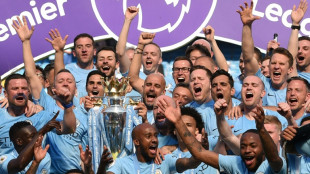 Man City's meteoric rise clouded by dark shadow

 Mbappe out for two weeks or more with knee injury say Real
 Lyon collapse away to Stade and suffer first Top 14 loss
 Russia accuses Europe of seeking to thwart Ukraine talks
 Man City chairman defiant over reported Premier League charges
 Germany ready to 'walk through fire' for Klopp, says Tah
 At least 16 killed in Russian and Ukrainian strikes

A row over the definition of gender risks complicating the outcome of COP30 climate talks in Brazil, after six governments moved to attach their own interpretations as footnotes to a key text.
Negotiators say the effort -- by Paraguay, Argentina, Iran, Indonesia, Malaysia as well as the Holy See -- seeks to block recognition of trans and non-binary people and would set a "harmful precedent" that could seep into other shared decisions taken by the UN's climate body.
There is "frustration within rooms," a source close to the matter, who requested anonymity because they were not authorized to discuss the sensitive issue, said Wednesday. "It's become a bit ridiculous -- we have six footnotes right now; should we have 90?"
"We do not agree at all with what some countries are putting in the agenda footnotes," Alicia Barcena, the environment secretary of Mexico, which is under the progressive leadership of President Claudia Sheinbaum, told AFP. "We feel we are going backwards -- we should never go backwards."
The issue has become so sensitive that COP30's Brazilian presidency has elevated it from technical negotiations to a higher political level, where ministers are now trying to hash out a compromise.
At stake is a revamped Gender Action Plan (GAP) meant to guide work for the next decade, including efforts to mainstream gender across climate programs.
Women and girls face disproportionate impacts from climate change, the UN says, largely because they make up the majority of the world's poor and rely heavily on local natural resources for their livelihoods.
Yet despite decades of commitments, women account for just 35 percent of delegates at COP30 in Belem, according to the Women's Environment and Development Organization (WEDO).
The first formal GAP was adopted in 2017 and strengthened in 2019; COP30 is now hammering out its next, more ambitious iteration.
The footnotes lay bare parties' red lines around the term "gender" -- some longstanding, others part of a rising right-wing tide opposed to so-called "wokeism."
- Anti-wokeism -
The Holy See, for example, says it understands gender as "grounded on the biological sexual identity that is male and female."
Argentina, a majority-Catholic country led by President Javier Milei -- a close ally of US President Donald Trump -- has rolled back gender-equality policies and LGBT rights, and attacked the "cancer" of "wokeism."
But a source involved in talks said there was no need to reopen the definition, because parties can already interpret decisions according to their national circumstances.
"Allowing countries to attach their own interpretations to agreed language does not protect national sovereignty. It undermines multilateralism itself," Bridget Burns, executive director of the Women's Environment and Development Organization, told AFP.
"If every Party could footnote core terms like finance, ambition or equity, we would have no negotiation left -- only fragmentation. Gender equality is an agreed principle under this Convention -- it needs no qualification."
One possible off-ramp, the source said, would be for the opposing countries to deliver statements after a decision is adopted, ensuring their positions are reflected in the official record.
T.Bondarenko--BTB


