Iran arrests several after protests at drying lake / Photo: © AFP

 Far-Right Extremists Claim Opportunity to Seize Control of GOP After Midterms

 New Campaign Highlights Knowledge Gaps on Carbon Monoxide Safety Among Americans

 JR East Launches 'teppay' to Integrate Suica Balance with Mobile Payments

 Phil Spencer on Housing Market Fairness: How Buyers and Sellers Navigate Falling Prices

 Beirut Cinema Festival Draws Thousands Despite War Fatigue

 AMD Forecasts First-Ever Revenue Lead Over Intel on AI Chip Surge

 GoodData.AI Launches the Agentic Serving Plane, a New Category of Enterprise Data Infrastructure for AI Agents

 Abu Dhabi Demand Response Project Achieves 401 MW Peak Reduction in 2025

 Panthers expected to begin 2027 NRL season away from new stadium
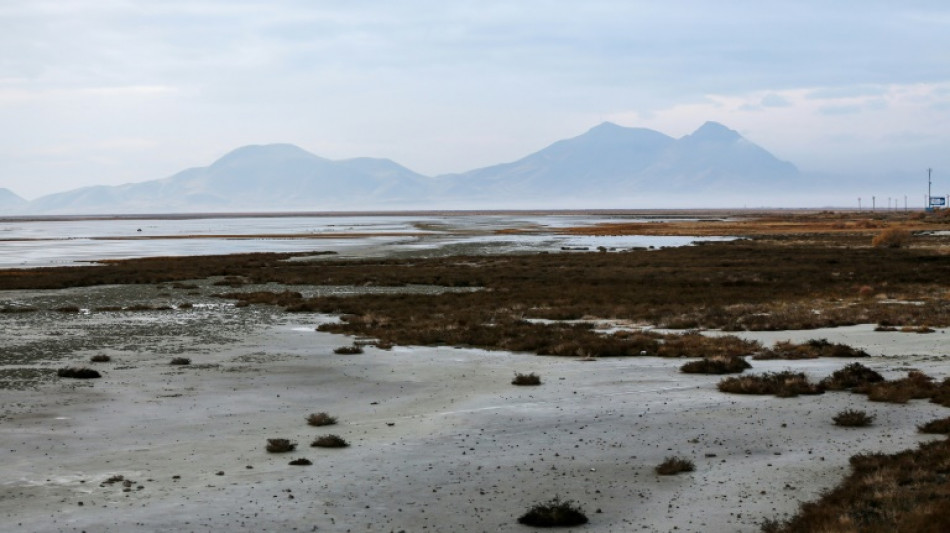
Iranian police have arrested several people for disturbing security after they protested the drying up of a lake once regarded as the Middle East's largest, official media said Sunday.
Lake Urmia, in the mountains of northwest Iran, began shrinking in 1995 due to a combination of prolonged drought, and the extraction of water for farming and dams, according to the UN Environment Programme.
Urmia, one of the largest "hypersaline" -- or super salty -- lakes in the world, is located between the cities of Tabriz and Urmia, with more than six million people dependent on agriculture around its shores.
On Sunday, Rahim Jahanbakhsh, the police chief of Iran's West Azerbaijan province, reported the arrests.
He described the suspects as "many evil and hostile elements, who had no other objective than to destroy public property and disturb the security of the population," according to state news agency IRNA.
On Saturday, the Fars news agency reported that "dozens of people in the cities of Naghadeh and Urmia had protested against the authorities' lack of attention to the drying up of Lake Urmia".
Fars said protesters had shouted slogans in the provincial capital of Urmia warning the lake was shrinking.
"Lake Urmia is dying, parliament orders its killing", some shouted, Fars reported, with others calling out that "Lake Urmia is thirsty".
Largely arid Iran, like other nearby countries, has suffered chronic dry spells and heat waves for years, which are expected to worsen with the impacts of climate change.
In the last few months, thousands of people have demonstrated against the drying up of rivers, particularly in central and southwestern Iran.
Lake Urmia is an important ecosystems, a key stopping point for migratory birds, and home to an endemic shrimp as well as other underwater species.
S.Keller--BTB