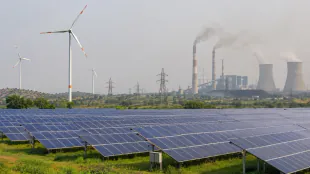
Canada considers extending timeline for oil industry emission targets / Photo: © AFP/File

 Far-Right Extremists Claim Opportunity to Seize Control of GOP After Midterms

 New Campaign Highlights Knowledge Gaps on Carbon Monoxide Safety Among Americans

 JR East Launches 'teppay' to Integrate Suica Balance with Mobile Payments

 Phil Spencer on Housing Market Fairness: How Buyers and Sellers Navigate Falling Prices

 Beirut Cinema Festival Draws Thousands Despite War Fatigue

 AMD Forecasts First-Ever Revenue Lead Over Intel on AI Chip Surge
 GoodData.AI Launches the Agentic Serving Plane, a New Category of Enterprise Data Infrastructure for AI Agents

 Abu Dhabi Demand Response Project Achieves 401 MW Peak Reduction in 2025

 Panthers expected to begin 2027 NRL season away from new stadium
Canada, the world's fourth-largest oil producer, is considering pushing back its greenhouse gas reduction timeline for its oil industry, the environment minister told media Saturday.
The government recognizes that "some of the measures that will be needed to achieve those deep emission reductions might require more time than what we have between now and 2030," observed Canadian Environment Minister Steven Guilbeault in an interview with CBC's "The House."
"There's a possibility that if the industry needs a bit more time, then we can provide some flexibility while ensuring that Canada still meets its 2030 goals," Guilbeault said.
Last year Prime Minister Justin Trudeau's government announced an enhanced plan to comply with the Paris Climate Agreement, aiming for a 40-45 percent reduction in its greenhouse gas emissions by 2030 from 2005 levels.
The oil and gas industry, which makes up for more than a quarter of the country's carbon emissions, is critical to achieving this goal, an interim target on the road to achieving carbon neutrality by 2050.
According to Guilbeault, Ottawa is willing to "allow the industry a bit more time if they need this time to deploy the necessary infrastructure that they need to reduce emissions."
He did not specify how Ottawa planned to meet its 2030 international commitments if the oil and gas sector was allowed to push back its reduction targets.
Canada has never before met its previous greenhouse gas reduction targets.
The Pathways Alliance, a coalition of six Canadian oil producers, plans to reduce its CO2 emissions by 22 megatonnes by 2030, compared to a federal government target of 110 megatonnes, out of a total of 191 megatonnes emitted in 2019, according to CBC.
K.Brown--BTB