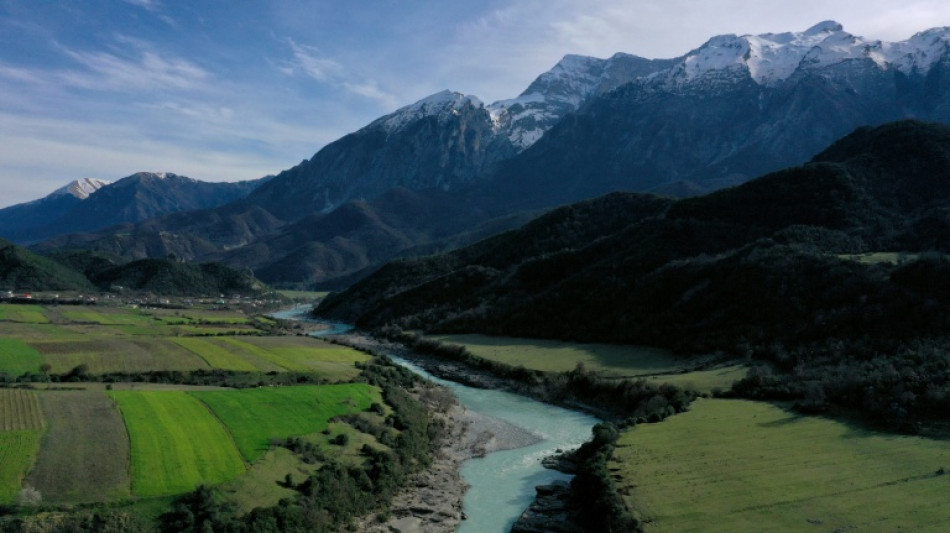
Balkan wild rivers in steady decline: study / Photo: © AFP

 Japanese anime actor fights TikTok over AI voice cloning
 Curtain falls on the romance of India's single-screen cinemas

 Smells like teen spirit as US thrash Peru 4-1

 Cavy chaos: Hundreds attend New Zealand's biggest guinea pig show

 Venezuela releases more political prisoners after opposition talks

 England's best 'for a long time' despite Spain defeat, says Kane

 Powerful storm pummels northeast US with rain, high winds

 Filmmaker Mike Leigh wins top prize at Spain festival with 'last film'

 Spain beat England in Nations League to extend unbeaten run

 Ireland squad vote to play Israel tie despite Gaza unease

 Gutsy Vollering wins cycling road race world title

 Vollering wins cycling road race world title

 Man City's meteoric rise clouded by dark shadow

 Mbappe out for two weeks or more with knee injury say Real

 Lyon collapse away to Stade and suffer first Top 14 loss

 Russia accuses Europe of seeking to thwart Ukraine talks

 Man City chairman defiant over reported Premier League charges

 Germany ready to 'walk through fire' for Klopp, says Tah

 At least 16 killed in Russian and Ukrainian strikes

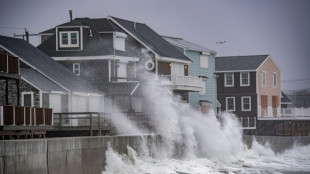 Powerful storm pummels US Northeast
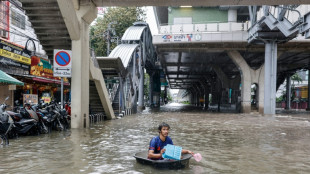 Bangkok declares disaster after homes flooded, roads submerged by heavy rain

 Norris calls for errant Colapinto to be banned for causing Baku crash

 Russell finds himself again and prepares to heap pressure on Antonelli

 South Korea hold nerve to win Asian Games basketball gold

 Russell holds off Verstappen to claim imperious victory in Baku

Thousands of kilometres of Balkan rivers have been damaged in recent years, a study published Wednesday found, as hydropower development, dams and sediment extraction drive a "steady erosion" of some of Europe's last pristine waterways.
The Balkans are home to some of Europe's cleanest and wildest rivers, crucial to the continent's biodiversity. But a surge in infrastructure projects increasingly threatens them, said the study published by NGOs Riverwatch and EuroNatur.
A wild river is one untouched by industry or dams. But in recent years, the entire Balkan region has seen a boom in small hydropower plants, generously subsidised, as investors seek to exploit a reliable and renewable energy source.
According to a 2024 report by the same NGOs, there are around 1,800 such plants in the Balkans, with more than 3,000 additional construction projects planned.
The new research focused on "near-natural" rivers -- waterways where flow remains intact or nearly so, with natural floodplains.
In 2012, these largely unaltered rivers accounted for 30 per cent of the region's waterways. By 2025 however, they represented only 23 per cent -- a loss of nearly 2,500 kilometres (almost 1,600 miles).
These rivers, which are essential to environmental preservation, are particularly threatened in Albania and Bosnia.
For Bosnia, the proportion of intact rivers decreased by 23 per cent between 2012 and 2025.
Albania recorded a "massive reduction" in "near-natural river sections", falling from 68 per cent in 2012 to just 40 per cent in 2025, the report said.
But it also noted that Albania's 2023 decision to designate the Vjosa -- one of Europe's last wild rivers -- as a national park had helped block dozens of planned dams there.
Across the region nearly 900 kilometres (560 miles) of rivers had been successfully preserved thanks to legal victories.
F.Müller--BTB


