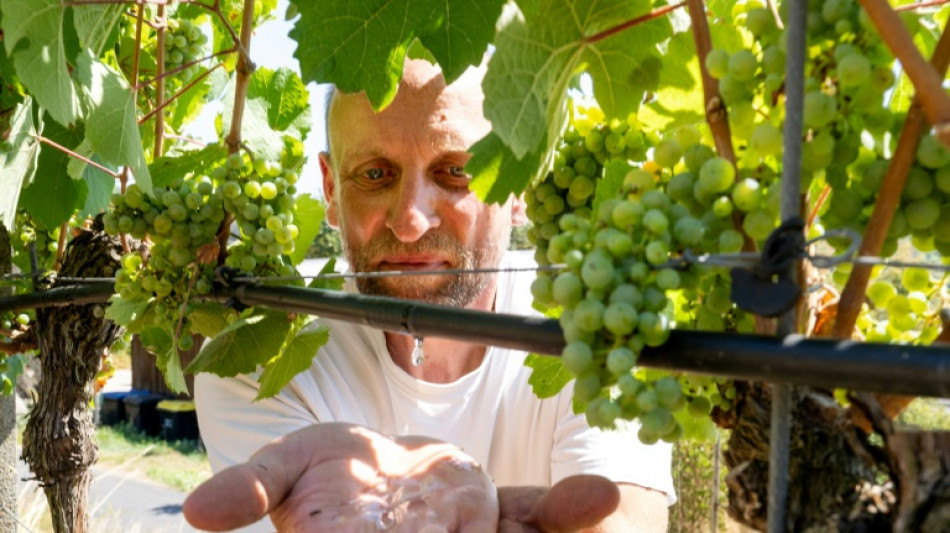
Heat is on as German winegrowers struggle to protect vines / Photo: © afp/AFP

 Douglass breaks 50m free world record again to claim Pan Pacs gold
 As Opel turns to Chinese partners, its hometown frets about the future
 Mehidy takes three as Bangladesh close on historic win in Australia
 Hope fades for finding surivivors of Colombia quake as rescued woman dies
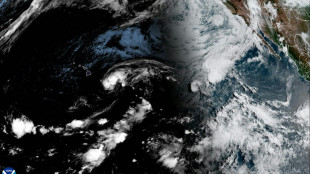 Hurricane Lala dumps heavy rain on Hawaii

 Jaded voters, same old choices: Brazil kicks off election campaign
 'Everyone lives in fear': Yemenis worry about return to all-out war

 Cardinals' Baez bashes record three homers in MLB debut
 Djokovic feels the heat in Cincinnati opening defeat

 Hunt bags third Euro gold, Diaz shines in triple jump

 Depleted Djokovic falls in Cincinnati Masters opener

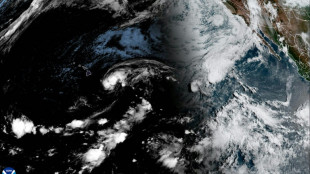 Lala, now a hurricane, dumps heavy rain on Hawaii

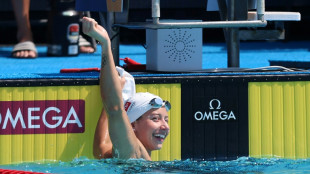 American Kate Douglass reclaims 50m freestyle world record

 Kit confusion disrupts Newcastle friendly against Leverkusen

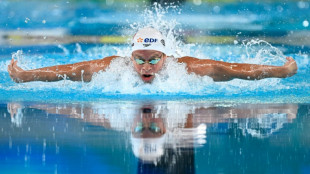 Marchand wins first Euros gold as Liebmann breaks 1500m free world record
 Zambia's vote marred by intimidation, counting pause: observers
 Marchand wins 200m butterfly for first Euros gold
 Fernandez booed by Chelsea fans in friendly win over Sociedad

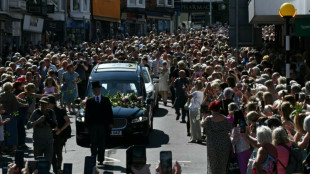 Fans line Welsh streets as Bonnie Tyler body's returns for funeral
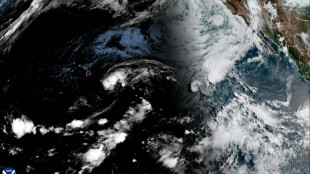 Tropical Storm Lala lashes Hawaii with heavy rain
 Lebanon reports 11 dead in strikes that Israel says targeted Hezbollah

 Crystal Palace sign Israel winger Khalaili

 Rescuers search for survivors as Indonesian quake death toll rises to 47
 Taliban govt supporters dance, take selfies in Kabul celebrations

 UK PM urges 'reflection' after Cambridge professor's death

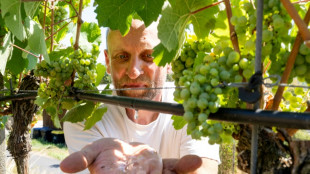
As Europe bakes in yet another heatwave, German winegrower Florian Weingart has scattered straw on the ground to keep moisture trapped in the earth and protect his prized vines from extreme temperatures.
It is one of several measures that he is taking in a bid to ensure his small vineyard produces a decent crop despite a historically hot summer and low rainfall.
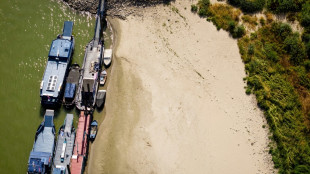
"The harvest is hanging by a thread," he told AFP from his vineyard in the village of Spay, looking out over the Rhine and hills scorched a deep brown by the heat. The river has fallen to record lows.
Climate change has had some advantages for Germany's winegrowers over the years, allowing them to experiment with grape varieties better suited to warmer climes and making cultivation possible in new areas.
But lengthier and more frequent periods of hot and dry weather are increasingly a challenge. They have left vineyards struggling to sufficiently irrigate their plants, and caused crop yields to dwindle.
"We are at a tipping point," said Weingart. He now feels that the dangers of climate change "are starting to outweigh the advantages".
The 53-year-old, who took over the vineyard from his parents three decades ago, has covered around a third of the six-hectare site with straw, which helps to create a protective layer that prevents water from evaporating.
But "it really is a lot of work", he said. "Over the last four weeks, I have transported 1,000 small straw bales from the fields and scattered it around".
- 'Lost' without irrigation -
Scattering straw between vines, known as mulching, is not new, but what has changed is its purpose: from improving general soil health to helping vineyards withstand a warming climate.
"This whole aspect of evaporation protection and the fact that (straw) actually offers advantages in dealing with these climate challenges is something we only realised later on," said Weingart.
Irrigation is another key measure at the vineyard, which makes mostly white Riesling -- Germany's signature wine variety -- as well as some red Spaetburgunder, and sells its produce locally.
The vineyard has a system of piping spread across 1.85 hectares of the vines, which steadily drips water onto the ground around the plants' roots, and is turned on every few days.
The system, which was installed in 2013, is especially important for young vines, whose roots are not as deep.
"Without irrigation, this area would basically be lost for the harvest," he said.
"I will no longer plant any young (vines) without irrigation, because otherwise I simply consider the risk far too great that they won't grow at all in the first three or four years."
Weingart also sees maintaining healthy soil, with limited weed growth competing for water, as an important way of helping vines cope with extreme heat and drought.
- Earlier harvests -
He expects the harvest to come in September, which is typical for recent years but far earlier than in the past when it was usually in October.
But he fears that, without some substantial rainfall, the crop will be poor after such a hot, dry summer.
The vineyard's harvests have already been shrinking over the years, dropping to around 5,000 litres -- enough for about 40,000 bottles -- compared to around 6,000 litres in the past.
Some winegrowers elsewhere in Germany already started harvesting in the second week of August, which is exceptionally early, industry group the German Wine Institute said this week.
"We're easily a good four weeks ahead of where things were maybe 30 or 40 years ago," the group's spokesman Ernst Buescher told AFP.
O.Lorenz--BTB