-
 'Physical hell': Hong Kong hosts gruelling underwater hockey tournament
-
Indonesia fires burned over 1.9 mn hectares through September: monitor
-
 Police 'lost control' during French protests, says interior minister
-
Asian tech stocks mixed after Wall St losses, eyes on earnings
-
 Australia's new Ghost Shark submarines grow some 'teeth'
-
China's third-quarter growth narrowly beats forecasts

-
 'I call it a bribe': Pennsylvania residents spurn $10,000 data center checks
-
Asian stocks start week on back foot, tracking tech-led Wall St losses
-
 In a former US steel city, ordinary people struggle to get by
-
China growth narrowly beats forecasts

-
 'Liar,' 'clown': Lula and Bolsonaro spar in Brazil poll debate
-
Faith and fury: Texas Senate rivals offer contrasting visions

-
 Record El Nino? Depends who's counting
-
Women await justice for police killings in Brazil
-
 On the front line of ocean conservation off Portugal's Madeira
-
The painstaking task of cataloguing the world's species
-
 Wembanyama targets title breakthrough as NBA season tips off
-
Nations seek reset at UN talks as nature goals off track
-
 With LeBron on board it's title or bust for Philly fans
-
Rubio seeks to strengthen US foothold in Central Asia

-
 One year after Louvre heist, where are the missing jewels?
-
LeBron joins 76ers to chase one more NBA title at age 41

-
 Knicks face tall task in NBA championship repeat bid
-
Rays one win from World Series return after downing Guardians

-
 Warriors' Curry 'fine' after limping out of practice - Kerr
-
BioNxt Completes GMP Manufacturing and Submits Clinical Trial Application for Sublingual Cladribine Drug Candidate

-
 OxyDew Analyzer: One Compact Instrument, Two Critical Gas Measurements
-
Kings' Ben Simmons tears Achilles in training

-
 Zelensky speaks to US envoys as Trump lashes out
-
Lula, Bolsonaro set for first debate showdown in bitter election race

-
 'Surprise package' Lazio crush Juve to keep pace with Serie A leaders Inter
-
Mbappe hits two as Real Madrid rout Sevilla

-
 China growth expected to miss official target in third quarter
-
Browns edge Ravens for division lead, Texans beat Jags

-
 Lazio crush Juventus to move level with Serie A leaders Inter
-
Lyon go top of Ligue 1 as Monaco fall to first defeat of the season

-
 Leeds draw feels like 'fresh start' for Man Utd's Carrick
-
Venezuela opposition alliance reaffirms Nobel laureate Machado as leader

-
 Macron denounces 'unbridled' violence as France hit by new clashes
-
'Street Fighter' wins N. America box office, buzzy doc stuns in 2nd

-
 Hurzeler lauds 'hard worker' Gomez after Brighton goal from halfway line
-
NFL: Paris game to go ahead despite protests in France

-
 Toulouse hold off Exeter, Northampton save English Champions Cup blushes
-
Arteta hails Arsenal 'finishers' after Madueke fells Forest

-
 Arsenal snatch late win to keep pressure on Man City as Man Utd held
-
Trump backs ally Netanyahu ahead of Israel's tight election

-
 Arsenal strike late to keep pressure on Man City as Man Utd held
-
Madueke strikes late as below-par Arsenal sink Forest

-
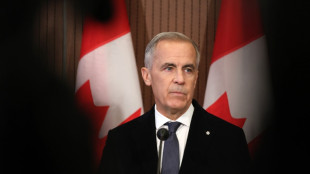 Four soldiers dead, dozens injured in fire at Canada military base
-
Second day of street clashes in Milan

UN biodiversity summit opens with nature goals off track
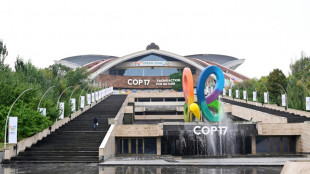
Nearly 200 nations kicked off crucial UN biodiversity talks in Armenia on Monday as governments face pressure to salvage a landmark nature pact whose goals are slipping out of reach.
Most countries joined a historic call four years ago to halt and reverse the destruction of nature by 2030 but governments have been slow to act on these pledges.
Many goals of the so-called "Paris Agreement for Nature" are falling behind, including a centrepiece commitment to protect 30 percent of Earth's land and oceans.
Some of the toughest objectives of the pact, such as cutting subsidies for fossil fuels and other powerful industries, have made little progress.
Armenia's Environment Minister Hambardzum Matevosyan, who is presiding over the political negotiations known as COP17, said nations had "a unique chance to correct the course" in Yerevan.
"Over the next two weeks our task will be to bridge the differences, build consensus and ensure that COP17... deliver results commensurate with the urgency of the challenges before us," he said at the summit's opening session.
UN biodiversity chief Astrid Schomaker said that global progress toward the 2030 nature goals "is not yet occurring at the pace and scale needed" and a reset was needed.
"What happens here in Yerevan matters. Billions of people whose lives are being upended by the impacts of biodiversity loss depend on progress being made here in the next two weeks."
The summit is one the largest international events ever hosted in Armenia, a mountainous country in the Caucasus region.
The hosts expect up to 15,000 attendees at different events during the biodiversity summit, which finishes on October 30.
- Threat to survival -
The summit comes at a difficult time, with public finances under strain and political attention fixed on conflicts, geopolitical tensions and a global energy crisis.
Only a handful of world leaders, including UN chief Antonio Guterres but mostly heads of state from nearby Central Asian nations, turned up for a high-level session on Friday ahead of the formal negotiations.
Matevosyan told AFP on Friday that success at COP17 "will not be measured simply by the number of participants, high-level statements or decisions adopted" but whether nations turn pledges into action.
UN chief Antonio Guterres said the stakes could not be higher, describing an unrelenting "war on nature" that threatened the very livability of the planet for future generations.
"We need more action, more speed and more will... It is time to ask ourselves -- are we doing enough?" he said on Friday.
A major tension at the summit will be money, with the report finding that the effort to close a yawning gap in necessary finance "falls far short" of what is needed.
European and other wealthy nations obligated to provide biodiversity finance have been pushing for large emerging economies like China to contribute also.
But attention is likely to focus more on how private capital, not public finances, might help plug the shortfall.
A key priority will be encouraging corporations to donate a share of profits to a near-empty UN fund to support conservation in developing countries.
Guterres also fixed the spotlight on state incentives for extractive industries, scolding governments for "spending money on the wrong things" despite pledging to reform harmful subsidies.
"Subsidising fossil fuels is subsidising suicide," said Guterres of the coal, oil and gas that are "boiling our planet and are the scourge of biodiversity".
An Lambrechts from Greenpeace said decisions taken at COP17 "will only matter if governments follow through at home".
"They cannot continue promising to protect nature while supporting its destruction through harmful subsidies and incoherent policies. Any more delay is a threat to our survival on the planet," Lambrechts said on Sunday.
O.Bulka--BTB