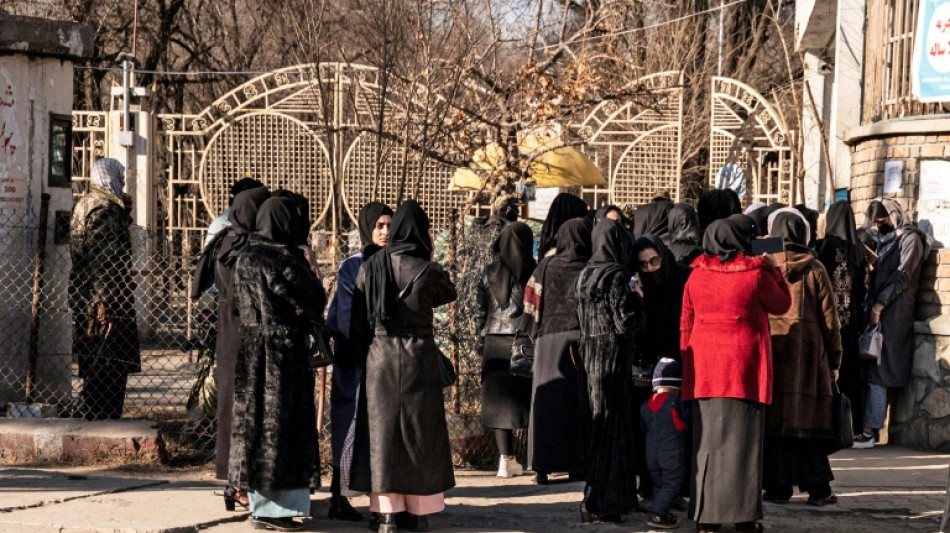
Afghan women stopped from entering universities after Taliban ban / Photo: © AFP

 Niger junta says it is back in control after soldiers' mutiny

 Erasmus calls Rennie barbs over Springbok scrumming 'nonsense'

 Lawrence's fifty leaves Pakistan facing record chase to level England series
 Netanyahu condemns settler attack in flashpoint West Bank village

 Munoz saves Iraola in Liverpool draw, big-spending Spurs lose again

 Newcastle condemn dismal Spurs to second successive defeat

 Five college football games that could shape the 2026 season

 New finds strengthen case for Bethsaida at Sea of Galilee site

 Felony assaults on older New Yorkers rise sharply, police data show

 Rural Tamil Nadu students present 64 technology projects at IIT-M research park

 Tamil Nadu goalball team’s national silver highlights need for wider support

 Tamil Nadu and NUS agree to expand postgraduate and research links

 India and China have not named two new border meeting sites

 About 50 Karnataka travellers return from Nepal as 24 remain missing

 Cyberabad civic body demolishes 19 unauthorised structures

 Chinchpoklicha Chintamani begins 2026 arrival procession in Parel

 Ankle ligament tear ends Neeraj Chopra’s 2026 season

 Thirty-seven Mumbai pilgrims return after Nepal flood disruption

 Baladi Map app turns Lebanon’s local problems into a public record

 James Cleverly leaves shadow cabinet to seek London mayoralty

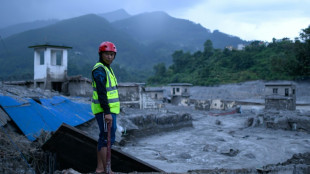 In London, son's agonising wait for news of parents missing in Nepal-Tibet floods

 Ivory Coast captain Kessie snubs Juventus to rejoin Atalanta

 Strasbourg fight back to beat Lens in Ligue 1

 Apple Raises TV Streaming Price to $14.99 a Month

 Ohio State Leads 2026 Preseason College Football Top 25

Hundreds of young women were stopped by armed guards on Wednesday from entering Afghan university campuses, a day after the nation's Taliban rulers banned them from higher education in another assault on human rights.
Despite promising a softer rule when they seized power last year, the hardline Islamists have ratcheted up restrictions on all aspects of women's lives, ignoring international outrage.
A team of AFP journalists saw groups of students gathered outside universities in the capital, Kabul, barred from entering by armed guards and shuttered gates.
Many, dressed in hijabs, were also seen standing in groups on roads leading to the campuses.
"We are doomed. We have lost everything," said one student, who asked not to be identified.
Men students also expressed shock at the latest edict.
"It really expresses their illiteracy and low knowledge of Islam and human rights," said one, also asking not to be named.
"If the situation continues like this the future will be worse. Everyone is scared."
Most private and government universities are closed for a few weeks over winter, although campuses generally remain open to students and staff.
The decision to bar women from universities came late Tuesday in a terse announcement from Neda Mohammad Nadeem, the Minister for Higher Education.
"You all are informed to immediately implement the mentioned order of suspending education of females until further notice," it said.
Washington condemned the decision "in the strongest terms."
"The Taliban cannot expect to be a legitimate member of the international community until they respect the rights of all in Afghanistan. This decision will come with consequences for the Taliban," Secretary of State Antony Blinken said in a statement.
UN Secretary-General Antonio Guterres, meanwhile, was "deeply alarmed", his spokesman said Tuesday.
"The secretary-general reiterates that the denial of education not only violates the equal rights of women and girls, but will have a devastating impact on the country's future," Stephane Dujarric said in a statement.
The ban on higher education comes less than three months after thousands of girls and women were allowed to sit for university entrance exams across the country, with many aspiring to choose teaching and medicine as future careers.
Most teenage girls across the country have already been banned from secondary school, severely limiting university intake anyway.
After the Taliban takeover in August last year, universities were forced to implement new rules including gender-segregated classrooms and entrances, while women were only permitted to be taught by professors of the same sex, or old men.
- 'Serious differences' -
The Taliban adhere to an austere version of Islam, with the movement's supreme leader Hibatullah Akhundzada and his inner circle of clerics against modern education, especially for girls and women.
But they are at odds with many officials in Kabul -- and among their rank and file -- who had hoped girls would be allowed to continue learning following the takeover.
"The latest decision will increase these differences," a Taliban commander based in northwest Pakistan told AFP on condition of anonymity.
In a cruel U-turn, the Taliban in March blocked girls from returning to secondary schools on the morning they were supposed to reopen.
Several Taliban officials maintained the secondary education ban was only temporary, but have wheeled out a litany of excuses for the closure -- from a lack of funds to the time needed to remodel the syllabus along Islamic lines.
Since the ban, many teenage girls have been married off early -- often to much older men of their father's choice.
Several families interviewed by AFP last month said that, coupled with economic pressure, the school ban meant that securing their daughters' future through marriage was better than them sitting idle at home.
- International pressure -
Women have also been pushed out of many government jobs -- or are being paid a pittance of their former salary to stay at home. They are also barred from travelling without a male relative and must cover up outside of the home, ideally with a burqa.
In November, women were prohibited from going to parks, funfairs, gyms and public baths.
The international community has made the right to education for all women a sticking point in negotiations over aid and recognition of the Taliban regime.
Afghanistan's neighbour, Pakistan, said that engagement with the Taliban was still the best path forward.
"I'm disappointed by the decision that was taken today," Foreign Minister Bilawal Bhutto Zardari said Tuesday on a visit to Washington.
But, he added: "I still think the easiest path to our goal -- despite having a lot of setbacks when it comes to women's education and other things -- is through Kabul and through the interim government."
The authorities have also returned to public floggings and executions of men and women in recent weeks as they implement an extreme interpretation of Islamic sharia law.
est-ash-jd-fox/ssy
G.Schulte--BTB