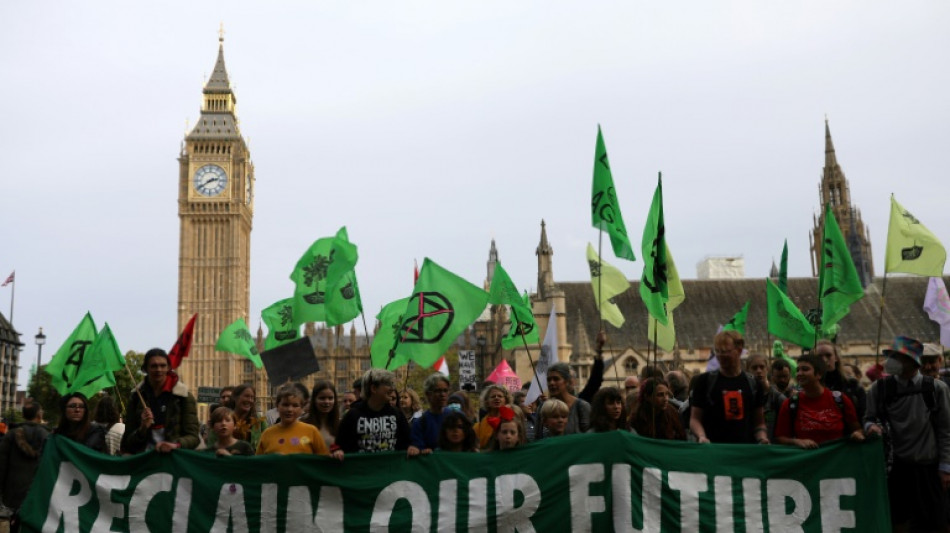
UK's Extinction Rebellion pauses radical tactics to seek wider support / Photo: © AFP

 Vietnamese coffee farmers ride China's durian wave
 Venezuela says retains 'sovereignty' in US oil deal

 NASA's Roman telescope set to launch on cosmic mapping mission

 Data center backlash scrambles US midterm politics

 Emotional Federer inducted into tennis Hall of Fame

 Hovland takes solo lead as McIlroy surges at Tour Championship

 Djokovic 'prepared' for US Open bid for history
 Atletico down Sevilla to go top of La Liga

 US deports right-wing provocateur Milo Yiannopoulos

 Niger junta says it is back in control after soldiers' mutiny

 Erasmus calls Rennie barbs over Springbok scrumming 'nonsense'

 Lawrence's fifty leaves Pakistan facing record chase to level England series
 Netanyahu condemns settler attack in flashpoint West Bank village
 Munoz saves Iraola in Liverpool draw, big-spending Spurs lose again
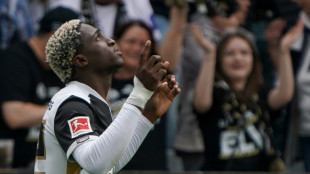
 Newcastle condemn dismal Spurs to second successive defeat

 Five college football games that could shape the 2026 season

 New finds strengthen case for Bethsaida at Sea of Galilee site

 Matt Leinart assesses Arch Manning and the leading names in college football

 Rural Tamil Nadu students present 64 technology projects at IIT-M research park

 Tamil Nadu goalball team’s national silver highlights need for wider support
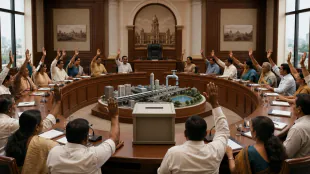
 Tamil Nadu and NUS agree to expand postgraduate and research links

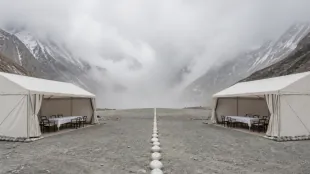 India and China have not named two new border meeting sites

 Dolly Parton’s Imagination Library leaves global children’s reading legacy

 Family searches for Boston engineer missing after Nepal-Tibet floods
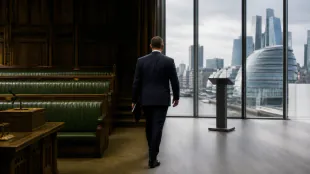
 French campaign sharpens as far right accuses left over civil disobedience calls
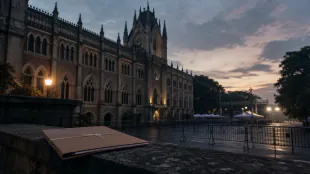
Extinction Rebellion climate campaigners have announced a temporary halt to public disruption in the UK as they seek broader support, even as other activist groups vow to maintain radical tactics.
A loosely linked network that originated in the UK in 2018, Extinction Rebellion has pushed businesses and the government to take action on the climate crisis with eye-catching but non-violent acts of civil disobedience that have led to mass arrests.
XR, as it is also known, has spawned more radical groups such as Insulate Britain and Just Stop Oil, whose recent stunts include throwing soup at the glass covering Van Gogh's "Sunflowers" in London's National Gallery.
But in a surprise twist on New Year's Eve, Extinction Rebellion announced in a post: "We quit".
It said it was trying a different approach and would "temporarily shift away from public disruption as a primary tactic".
Spokeswoman Marijn van de Geer concurred with an interviewer's suggestion on a television chat show that the "tactics have alienated the public".
"We've listened to the public. They say over and over again, 'We support what you stand for but we don't like how you do it'," she said this week.
Other related groups expressed solidarity but vowed to keep up disruptive tactics.
Just Stop Oil, which wants a halt to new oil and gas projects and has blocked busy roads for hours by climbing onto gantries, responded by saying: "We must move from disobedience into civil resistance."
Insulate Britain, which is pushing the government to fix draughty housing, said its supporters "remain committed to civil resistance".
"Public disruption is vital to demand changes that governments are not willing or are too scared to address," it said.
Animal Rebellion, which has freed laboratory test dogs and spilled milk in supermarkets, said it was "committed to continuing its nonviolent actions, whether that involves disruption or not".
Greenpeace UK, which trains activists for direct action, has not reacted publicly and declined to comment.
- 'Brick wall' -
Extinction Rebellion's shift in tactics appears to be "a way of trying to engage more people with less risky but still radical activism", Oscar Berglund, a lecturer at the University of Bristol who researches climate change activism, told AFP.
He said Extinction Rebellion has long sought to direct protests not against the general public but at specific organisations, such as Rupert Murdoch's media empire over its reporting on climate change.
The movement's spokeswoman said this week it would continue to target the "pillars of power".
In recent years, XR activists in the UK have glued themselves to corporations' doors, smashed windows, sprayed graffiti, blocked roads and bridges and chained themselves to the gates of parliament.
"My hunch is that after several years of trying a similar approach... they had seen their tactics hit a brick wall," said James Ozden of the Social Change Lab research organisation.
By positioning themselves as more moderate than groups such as Just Stop Oil "it's very possible they will see increased support, as well as higher mobilisation than (at) recent events", he suggested.
The government has responded to recent protests by toughening legislation to punish activists, although experts said this was unlikely to be the driving factor in Extinction Rebellion's shift.
"There certainly has been increasing government repression towards non-violent protestors but this probably isn't the main cause for this change in strategy," said Ozden.
"Many activists are extremely committed, and willing to bear the legal consequences of their actions."
- 'The Big One' -
Extinction Rebellion is now seeking a turnout of 100,000 for a protest outside parliament starting on April 21, called "The Big One".
"I think XR might be able to use their new less disruptive strategy to mobilise this broad base once again, bringing numbers onto the streets that we haven't seen since 2019," Ozden said, referring to the movement's first mass protests, which saw over 10,000 people turn out.
XR spokeswoman van de Geer told ITV the shift in tactics was because the movement needs more people to demonstrate.
"We need more people. We need the people who perhaps aren't comfortable getting arrested," she said.
Extinction Rebellion "have more of a brand than they have activists", Berglund commented, questioning whether they can achieve such a large turnout by April.
"A mass movement isn't something you can just click your fingers and create. It's often very unpredictable," he said.
At the same time, "these are good organisers with plenty of experience".
"They might pull it off".
J.Bergmann--BTB