In wargame exercise, China fails to take Taiwan: US thinktank / Photo: © Taiwan's Defence Ministry/AFP

 'No' camp seen winning Iceland's EU referendum

 Nepal flood survivors return to ruins to salvage memories
 Killing of Palestinian children and teens by Israel surges in West Bank
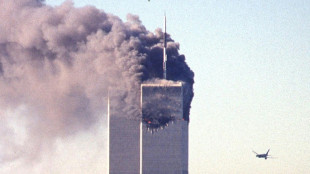 Educators keep 9/11 memory alive for next generation, 25 years on

 Venezuelans view US oil deal with doubt, hope

 Gobena and Jepchirchir power to Sydney Marathon victories

 Iceland in suspense after close EU vote

 Wallabies hold on for victory in Argentina

 Juve notch second straight win, Fiorentina's centenary party falls flat

 Rybakina eases injury fears ahead of US Open
 Djokovic kicks off latest Grand Slam quest under US Open lights

 'Sorry' De Zerbi won't panic after Spurs shambles
 UN, Nepal warn of climate threat after deadly floods
 USTA boss says structure of new player council not yet set

 Tiny Elversberg stun Leverkusen on Bundesliga debut, Dortmund beat Hamburg

 Felony assaults on older New Yorkers rise sharply, police data show

 Editorial questions Letitia James’ record as New York attorney general

 Los Angeles triplets weigh 19.3 pounds in unusually heavy birth

 Three Texas Tech softball players hurt in jet ski collision

 Tambaram civic groups seek action on eight long-pending issues

 Chennai councillors unite across parties to demand ward development funds

 Court orders JIPMER assessment of Durai Dayanidhi before money-laundering trial

 Baladi Map app turns Lebanon’s local problems into a public record

 Thirty-seven Mumbai pilgrims return after Nepal flood disruption

 James Cleverly leaves shadow cabinet to seek London mayoralty

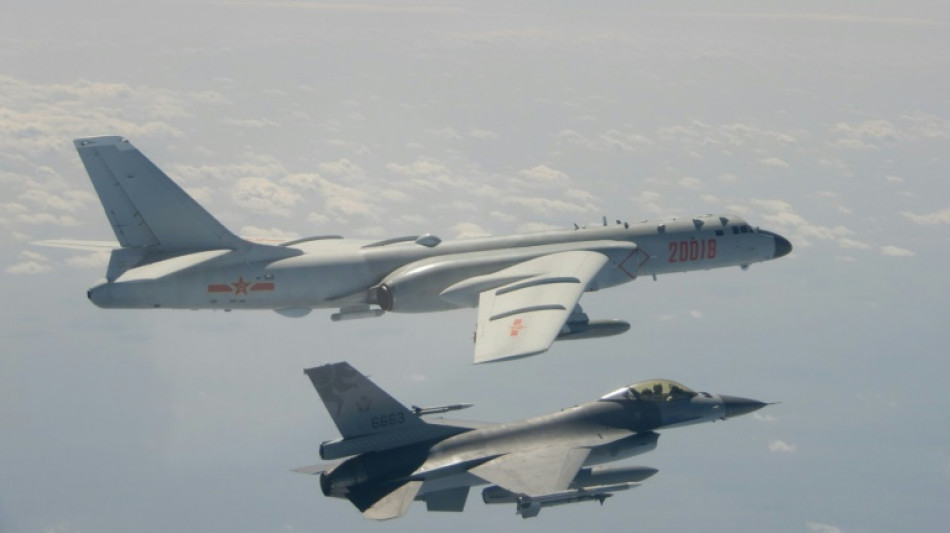
A Chinese invasion of Taiwan would likely fail if the United States helps defend the island -- but at a debilitating cost to the American military itself, according to a US think tank Monday.
Military experts brought together by the Center for Strategic and International Studies to wargame the conflict said every likely direct participant in a war -- the United States, China, Taiwan and Japan -- would experience "enormous" losses.
Chinese missiles would likely destroy US air bases in Japan and as far as Guam, and sink two US aircraft carriers and between 10 and 20 destroyers and cruisers as the invasion opened.
But the Chinese invading force itself would be heavily destroyed before it ever occupied any significant part of Taiwan.
Ultimately it would be prevented from its goal of capturing the island's capital Taipei, according to most scenarios tested.
That, as well as damage incurred on mainland targets from Taiwanese counterattacks, could destabilize Chinese Communist Party rule, the report says.
"We reached two conclusions," said Eric Heginbotham, a security expert at Massachusetts Institute of Technology.
"First, under most circumstances, China is unlikely to succeed in its operational objectives, or to occupy Taipei," he said.
"Second, the cost of war would be high for all involved, certainly to include the United States."
The wargaming tested 24 different scenarios focused on China attempting to seize the island by invasion in 2026.
Crucial was the United States: without America's help, Taiwan would be conquered by the People's Liberation Army in three months or less.
The wargame assumed the invasion would begin with an opening bombardment by China that destroys most of Taiwan's navy and air force in a few hours.
The Chinese navy would encircle Taiwan and begin ferrying a landing force of thousands of PLA soldiers and their equipment across the Taiwan Strait.
In what the wargamers called the most likely scenario, Taiwan's army would bog the invaders down on the coast.
"Meanwhile US submarines, bombers, and fighter/attack aircraft, often reinforced by Japan Self-Defense Forces, rapidly cripple the Chinese amphibious fleet," the report said.
"China's strikes on Japanese bases and US surface ships cannot change the result: Taiwan remains autonomous," it said.
- Pyrrhic victory? -
Matthew Cancian of the US Naval War College said there were crucial variables on which that success depends.
First, he said, Taiwan itself must be determined to fight back.
Secondly, Japan must give its permission for the United States to launch counterattacks from its bases on Japanese territory.
Without that, Cancian said, "then the US intervention would not be enough to continue Taiwan's autonomy."
In such cases the human losses would be high, some 10,000 in the first weeks of the war.
The wargame raised important unknowns, such as whether the United States would risk nuclear war by attacking China directly.
Secondly, it asked if the US and Japanese public would be prepared to accept the losses that came with defending Taiwan.
It said US losses could damage Washington's ability to project global power for a very long time.
"The United States might win a pyrrhic victory, suffering more in the long run than the 'defeated' Chinese," the report said.
The report said both Taiwan and the US military need to build up forces, focusing on the most survivable and effective weapons, to create more deterrence to a Chinese invasion.
"Despite rhetoric about adopting a 'porcupine strategy,' Taiwan still spends most of its defense budget on expensive ships and aircraft that China will quickly destroy," it said.
Y.Bouchard--BTB