
Disinformation fueled rage in Brazil over vote outcome / Photo: © AFP

 'No' camp seen winning Iceland's EU referendum

 Nepal flood survivors return to ruins to salvage memories

 Killing of Palestinian children and teens by Israel surges in West Bank

 Educators keep 9/11 memory alive for next generation, 25 years on

 Venezuelans view US oil deal with doubt, hope

 Gobena and Jepchirchir power to Sydney Marathon victories

 Iceland in suspense after close EU vote

 Wallabies hold on for victory in Argentina

 Juve notch second straight win, Fiorentina's centenary party falls flat

 Rybakina eases injury fears ahead of US Open

 Djokovic kicks off latest Grand Slam quest under US Open lights

 'Sorry' De Zerbi won't panic after Spurs shambles

 UN, Nepal warn of climate threat after deadly floods

 USTA boss says structure of new player council not yet set

 Tiny Elversberg stun Leverkusen on Bundesliga debut, Dortmund beat Hamburg

 Felony assaults on older New Yorkers rise sharply, police data show

 Editorial questions Letitia James’ record as New York attorney general

 Los Angeles triplets weigh 19.3 pounds in unusually heavy birth

 Three Texas Tech softball players hurt in jet ski collision

 Tambaram civic groups seek action on eight long-pending issues

 Chennai councillors unite across parties to demand ward development funds

 Court orders JIPMER assessment of Durai Dayanidhi before money-laundering trial

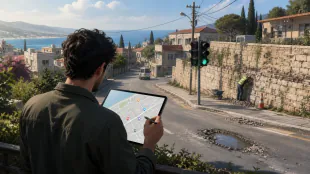 Baladi Map app turns Lebanon’s local problems into a public record

 Thirty-seven Mumbai pilgrims return after Nepal flood disruption

 James Cleverly leaves shadow cabinet to seek London mayoralty

Rioters who ransacked Congress and other buildings in Brasilia were partly mobilized by disinformation alleging a "fraudulent" electronic ballot system cost Jair Bolsonaro his victory in the presidential election.
"We want the source code!" shouted supporters of the far-right ex-president, who demanded that the army step in to prevent the return to power of Luiz Inacio Lula da Silva, who was inaugurated on January 1.
The source code is the set of digital instructions in the computer program that allows electronic ballot boxes to tabulate votes.
Brazil's Superior Electoral Tribunal (TSE) allowed access to the source code to political parties and control bodies as early as October 2021, a year before the election.
But disinformation circulating widely on the internet suggests that it was kept secret to conceal alleged fraud.
"The disinformation played an important role in mobilizing those who needed a justification that could give a semblance of legality" to the invasion in Brasilia, Ivan Paganotti, a PhD in communications at the Methodist University of Sao Paulo, told AFP.
- Selective interpretation -
Beyond the source code, other erroneous information has inflamed supporters of ex-president Jair Bolsonaro, such as what Paganotti called "fanciful readings" of Article 142 of the Constitution, which they assert authorizes the head of the executive to use the army to overthrow the legislative and judicial branches.
Those behind the disinformation campaign skillfully disseminate it to reach the largest possible audience, Paganotti said.
Electronic ballot boxes have been in use in Brazil since 1996 with no reliable reports of irregularities. Yet as president, Bolsonaro led efforts to disparage their use.
He even hinted on several occasions that he would not accept the October election results if the system he used to get elected repeatedly as a lawmaker, and then as president in 2018, were maintained.
In November, three weeks after his narrow defeat by Lula in the runoff vote, his Liberal Party demanded the cancellation of the votes counted by nearly half of the electronic ballot boxes, due to a potential malfunction of the models used.
"A large number of documents attest that no evidence of fraud was identified," Paganotti said, but Bolsonaro's party felt that "this did not mean that it was impossible that fraud had taken place."
"This type of argument is problematic, because everyone ends up choosing the interpretation that suits them, in relation to their political beliefs," Paganotti added.
- 'Slightest tangible evidence' -
The source code for the electronic ballot boxes was open for verification by parties, watchdog agencies, researchers and even the army to ensure no tampering had occurred. The general public did not have access.
"The source code of the ballot boxes is made available and inspected at specific times in controlled circumstances by the TSE. It is not data that can be consulted by the general public," Lucas Lago, a computer engineer and coauthor of two reports on the Brazilian electoral system, told AFP.
While he acknowledged that access to the code was restricted, he said that "it is a lie to say that the code is kept secret."
In 2017, Paulo Matias, a professor at the Department of Computer Science at the University of Sao Carlos, inspected the source code during one of the tests authorized by the TSE.
"I found no evidence of fraud. We just identified some weaknesses, which were promptly corrected by the TSE," he told AFP.
Moreover, other ballot box control mechanisms exist. "So far, there is no tangible evidence" of fraud found by the academic community, Matias said.
H.Seidel--BTB