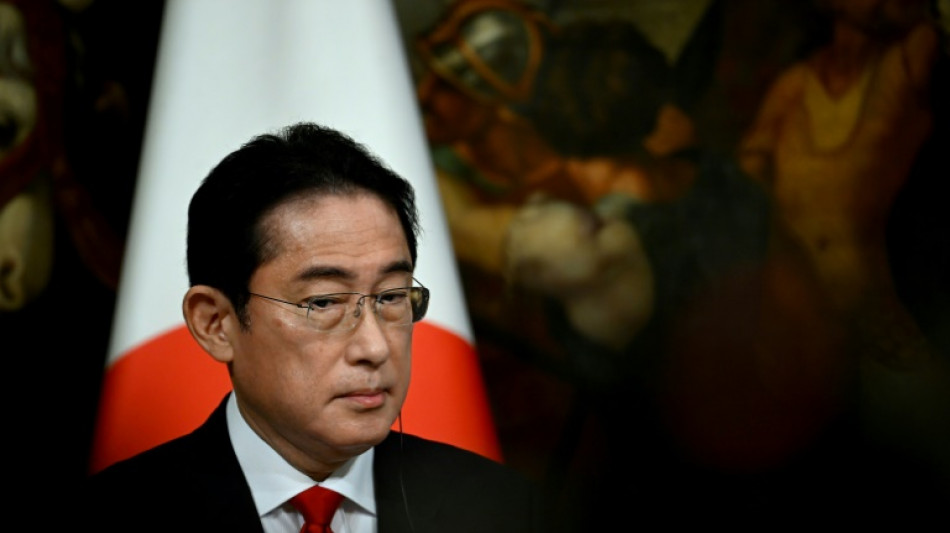
Japan racks up new security deals with eyes on China / Photo: © AFP

 Tadej Pogacar Out of Vuelta a Espana with Broken Collarbone and Concussion

 Iceland votes 'No' to resuming EU talks

 Berlin Literary Guide: Book Launches, Festivals, and Readings Through August

 Nepal rescuers drill through debris towards trapped tunnel workers

 Manhunt in Switzerland after fatal rave shooting

 'No' camp seen winning Iceland's EU referendum

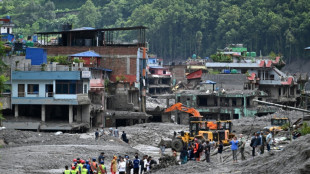 Nepal flood survivors return to ruins to salvage memories
 Killing of Palestinian children and teens by Israel surges in West Bank

 Educators keep 9/11 memory alive for next generation, 25 years on

 Venezuelans view US oil deal with doubt, hope

 Gobena and Jepchirchir power to Sydney Marathon victories

 Iceland in suspense after close EU vote
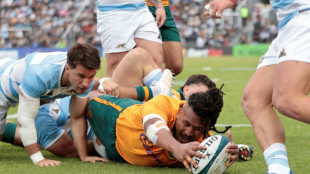 Wallabies hold on for victory in Argentina

 Juve notch second straight win, Fiorentina's centenary party falls flat

 Rybakina eases injury fears ahead of US Open
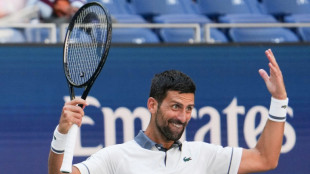 Djokovic kicks off latest Grand Slam quest under US Open lights

 'Sorry' De Zerbi won't panic after Spurs shambles
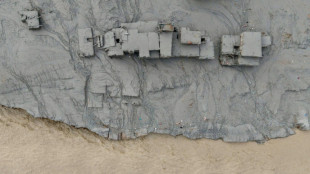 UN, Nepal warn of climate threat after deadly floods

 USTA boss says structure of new player council not yet set

 Tiny Elversberg stun Leverkusen on Bundesliga debut, Dortmund beat Hamburg

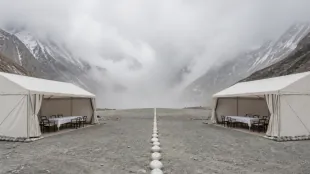 India and China have not named two new border meeting sites

 Tamil Nadu and NUS agree to expand postgraduate and research links
 Tamil Nadu goalball team’s national silver highlights need for wider support

 Rural Tamil Nadu students present 64 technology projects at IIT-M research park

 Baladi Map app turns Lebanon’s local problems into a public record

Space defence, US troop deployments and a "hugely significant" deal with Britain: Japan's Prime Minister Fumio Kishida is collecting more than souvenirs on his whirlwind diplomatic tour.
Defence has dominated his agenda this week in meetings with Group of Seven allies in Europe and North America, as the Japanese leader seeks to draw friends closer in the face of growing pressure from China, analysts say.
Japan wants to normalise its "role as a great power", Amy King, associate professor at the Australian National University's Strategic and Defence Studies Centre, told AFP.
It seeks "the kinds of strategic partnerships and defence relationships that are quite normal for other countries, but which have been largely off-limits to Japan" because of its pacifist post-war constitution.
Kishida's conversations have also touched on everything else from trade to climate issues, showing that he is trying to broaden Tokyo's relationships with its allies.
Japan is "insuring itself against a decline in US capacity, and working to draw other major democratic states into Asia", King said.
The government unveiled a major defence overhaul in December, including doubling spending to two percent of GDP by 2027 and designating China the "greatest strategic challenge ever" to Japan's security.
Kishida's diplomatic efforts "reflect that Japan's national defence cannot be done by Japan alone", said Mitsuru Fukuda, a professor at Nihon University who studies crisis management.
"In the past, Japan was able to separate economy and politics," doing business with countries like China and Russia while enjoying the security protections of its alliance with the United States.
But deepening friction between democratic and authoritarian countries, including over Russia's war in Ukraine, mean "we cannot do that anymore", he said.
Japan is hosting this year's G7 and Kishida is visiting all bloc members except Germany on a trip capped by talks in Washington Friday with US President Joe Biden.
US and Japanese foreign and defence ministers have already agreed to extend the nations' mutual defence treaty to space, and announced the deployment of a more agile US Marine unit on Japanese soil.
- 'Belated adjustment' -
In Britain, Kishida signed a deal creating a legal basis for the two sides to deploy troops on each others' territory.
Japan made a similar agreement with Australia last year and discussions are underway for one with the Philippines.
Last year, Tokyo also agreed to develop a next-generation fighter jet with Britain and Italy, and to increase intelligence-sharing and defence cooperation with Australia.
Beijing has watched the developments with some discomfort, warning Japan last year against "deviating" from bilateral relations.
But analysts say Tokyo is moving carefully to avoid directly challenging its powerful neighbour.
"Expanding its military network is definitely one effective way to counter or try to deter China," said Daisuke Kawai, a research fellow at the Japan Institute of International Affairs.
But since the deals stop short of full alliances with mutual defence commitments, they should remain "acceptable for now" to Beijing, Kawai said.
And while the overhaul of Japan's defence policy and spending has been interpreted by some as a break with the past, others see it as a more subtle shift.
The moves "will at least complicate Chinese calculations on how far it can push the envelope of its activities in the region", said Yee Kuang Heng, a professor of international security at the University of Tokyo's Graduate School of Public Policy.
But they "still do not tip the regional military balance vis-a-vis China significantly".
Japan's post-war constitution prevents it from waging war, and the government's plan to acquire missiles that could strike enemy launch sites has stirred debate about the limits of the legal framework.
But polling suggests Japan's public largely supports the shift, even if opinion on how to pay for it is divided, and some observers consider it long overdue.
"Rather, they represent a belated adjustment to a balance of power that has shifted significantly in favour of these authoritarian challengers to the status quo."
J.Horn--BTB