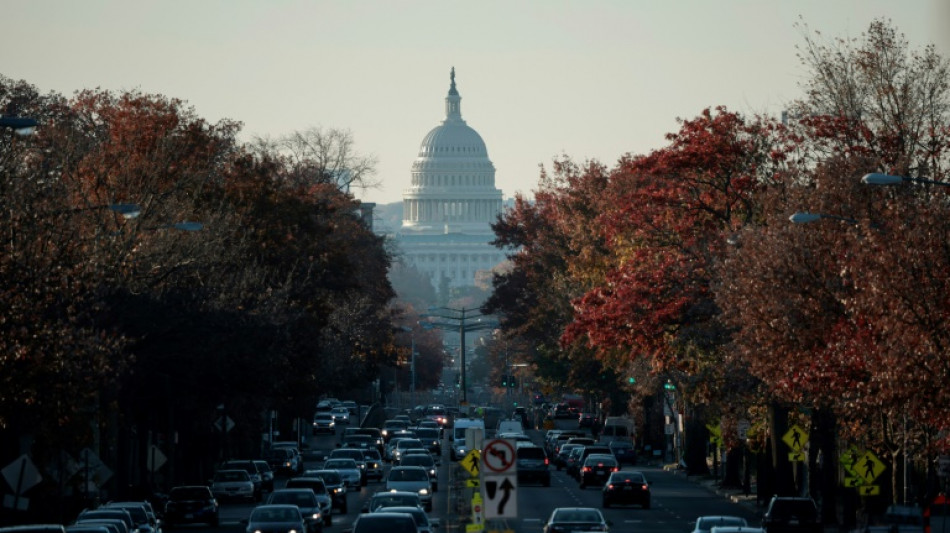
US lawmakers often unite when war looms. Not this time / Photo: ©

 Pant fastest to 100 sixes as India set Sri Lanka 372 to win first Test
 Russia rebukes Japan ambassador over disputed islands row
 Crude extends gains, most stocks drop as Mideast hopes dim

 Rift deepens as Asia football chief hits back at Qatar in Infantino saga

 India extend lead to 294 in first Sri Lanka Test
 Asian allies stress 'critical cooperation' as Trump slashes Korea drills
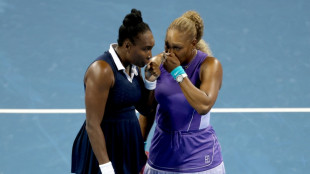 Williams sisters fall at Cincinnati while Zverev advances
 Transylvania's fortified churches face fragile future

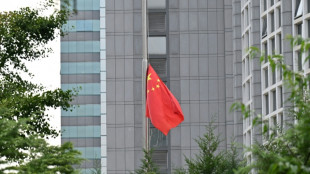 China mourns former premier Zhu Rongji with flags lowered, funeral

 Philippine student killed in rare school shooting
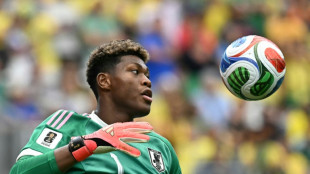
 Arsenal primed for Premier League title defence as rivals face questions
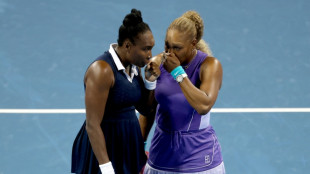 Zverev advances at Cincinnati while Williams sisters fall

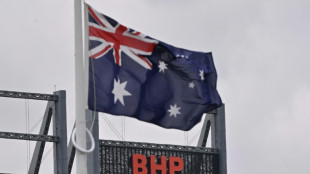 Copper powers profit rise at mining giant BHP

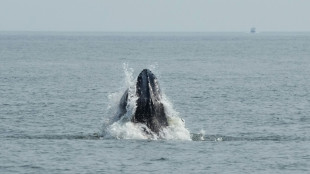 Whales spark joy in New York but face threats from boat traffic

 Premier League's new bosses brace for battle

 Zambia's Hichilema: 'cattle boy' and two-time president

 Elderly far more at risk from rising heat than thought: study

 LiberNovo Previews Support Week 2026, Putting Better Ergonomic Support Within Reach

 Paramount demands $1.9 billion surety over states' merger lawsuit

 Latest developments in US-Iran war
 NBA has no evidence of Clippers salary cap cheating: report
 Boehly and Walter consider selling Chelsea stake to Clearlake Capital

 OpenAI to lease massive new AI data center in US, backed by Nvidia

 US stocks fall on spiking bond yields, higher oil prices

 LIV Golf cancels Michigan event, to decide team title at Indy
There is a longstanding custom in US politics that, whatever squabbles are dominating the domestic agenda, Democrats and Republicans rally around the flag when crisis looms overseas.
But the threat of war in Ukraine is severely testing Congress's traditional role as a foreign policy partner to the White House as lawmakers, hobbled by bitter factionalism, struggle to speak with unity.
This week Republicans in the House of Representatives attempted to humiliate Democratic President Joe Biden by tweeting a picture of him walking away from the podium after he announced sanctions against Russia.
The photo caption read: "This is what weakness on the world stage looks like."
The message underlined that the aphorism "politics stops at the water's edge" has become a relic of a less-divided America from before engagements in Afghanistan, Iraq, Libya and elsewhere.
Underlining the lack of consensus, senators have just spent a month in a fruitless bid to agree on legislation that would hit Russia's economy and free up cash for Ukraine's defenses.
In the House and Senate, politicians of both stripes have been urging President Joe Biden to push back forcefully on Russian leader Vladimir Putin's aggression towards US ally Ukraine.
But many Republicans have attempted to thread the needle, hammering Biden for being "weak" on the crisis while simultaneously suggesting that the United States should not get involved.
- 'Makes us looks weak' -
"Congress is no longer putting aside domestic rivalries in the interest of providing a strong united front externally, and this is a very bad trend," top Democratic pollster Carly Cooperman told AFP.
"It makes us look weak, emboldens Putin and hurts our democracy."
Cooperman and co-author Douglas Schoen raised the issue of domestic factionalism undermining US foreign policy in their recent book "America: Unite or Die."
"It's correct to say that many members of Congress have given up their traditional foreign policy roles," Schoen, a campaign consultant whose clients have included Michael Bloomberg and Bill Clinton, told AFP.
"It's a shocking, horrible development that is harmful to American democracy and destructive to our national interests."
While Biden has been clear that there will be no US boots on the ground in Ukraine, some Republicans have leveraged worries over a widening European conflict to push former president Donald Trump's "America First" agenda.
Trump himself -- still the de facto Republican leader -- even praised Putin's "genius" in recognizing two breakaway regions of Ukraine, a move widely seen as a precursor to invasion.
Mainstream Republicans were projecting a muscular US presence on the global stage at the Munich security conference last weekend, but the "America First" camp was pushing a more isolationist message.
"We should just call ourselves Ukraine and then maybe we can get NATO to engage and protect our border," Arizona congressman Paul Gosar tweeted.
"Hillbilly Elegy" author J.D. Vance, a Trumpist vying for a Senate seat in Ohio, said he isn't interested in what happens to Ukraine.
"I do care about the fact that in my community right now the leading cause of death among 18-45 year olds is Mexican fentanyl that's coming across the southern border," he said in a video statement.
- 'Playing footsie' -
Some of the skepticism has been more circumspect, the criticism more tempered and harder to dismiss.
Senate Minority Leader Mitch McConnell argued that the chaotic withdrawal from Afghanistan had emboldened Putin while Lindsey Graham, a Trump ally but an establishment conservative on foreign policy, accused Biden of "playing footsie" with Putin.
In Washington, foreign policy elites tend to be more supportive of America's active role on the world stage than the public at large.
But 54 percent of Americans support Biden's decision to bolster NATO's eastern fringe, according to a Quinnipiac University poll released last week. By a margin of nearly two to one, those surveyed said Russia posed a military threat to the United States.
On the Democratic side, the criticism of the White House has been restrained and questions over the administration's Ukraine response more moderately worded -- but no less searching.
On Wednesday, House Speaker Nancy Pelosi raised questions she said her members were asking -- including on the role of US forces in Eastern Europe.
"One of the challenges that we face is coming to agreement on... what would the president be allowed to do. What is the scope? What is the geography? What is the timetable of it all?" she said.
"And frequently that has been, shall we say, controversial."
J.Bergmann--BTB