New generation revives Okinawa's once-banned Indigenous body art / Photo: © AFP

 Germany blames Russia for airport drone incident, hits back with sanctions

 Iran president urges return to truce, hails Russian support

 Aster and World Liberty Financial Launch USD1 RWA Boost: Phase 1, Offering 125M $WLFI + 6.25M USD1 in Rewards

 Tronchon sprints to Vuelta stage 10 win, Mas keeps red jersey

 Germany defender Rudiger announces international retirement

 Musk defends AI data centers, slams EU rules at G20

 Activists blame Kenya for Ugandan opposition figure's plight
 Iran president offers US olive branch, hails Russian support

 TrustFinance Community Choice Awards 2026 Opens Global Voting

 Nepal disaster a climate 'warning signal': foreign minister

 France winger Diaby returns to Leverkusen until 2031

 Barcelona confirm Jesus arrival from Arsenal
 EU official says it's not time to 'normalize' Russia at G20 finance talks

 RedHill Announces Transformational Acquisition of Commercialization Rights to Ferring’s Rebyota® and Clenpiq®
 TrendEadvisor Launches Global Multi-Asset Platform Combining Online Investing with Social Trading

 India's top court drops criminal cases against protesters

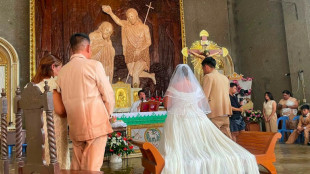 Philippine couple married in hip-deep floodwaters

 Villa sign Senegal winger Mbaye from PSG

 Former Peru minister last-minute contender for UN labour agency helm

 Messi legacy will 'live forever', says Beckham

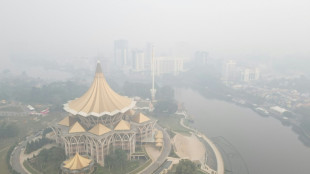 'Literally tasting the smoke': Malaysians suffer as haze worsens

 Kyiv's defences, 'hybrid' threat from Moscow headline EU talks
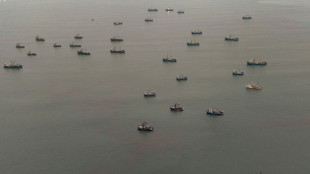
 Oil extends gains, stocks mostly down as Trump issues fresh Iran warning

 ThinkMarkets Expands Weekend Trading Offering, Launches Weekend League Competition

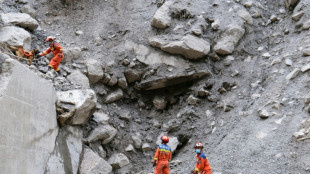 Tibet activists accuse China of downplaying floods
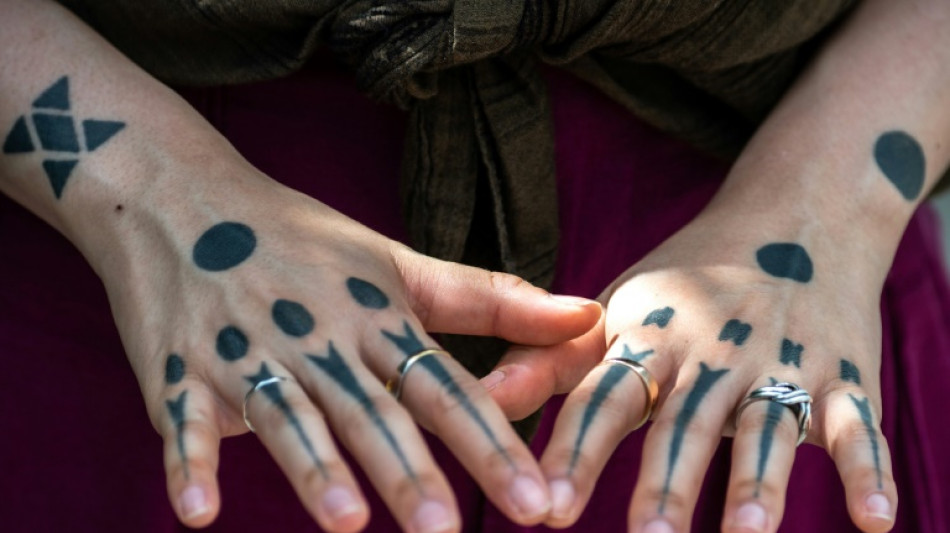
Moeko Heshiki is no ordinary tattoo artist: she is one of the few people keeping the once-banned tradition of hajichi body art alive for the Indigenous Ryukyu people of Japan's Okinawa region.
The traditionally hand-poked markings were once common on women of the Ryukyu, who lived throughout the southern islands of what is now Japan.
The monochrome patterns, ranging from delicate arrow-like symbols to arrays of large dots, marked important moments in a woman's life and, in some cases, were believed to ensure passage to heaven.
When Japan annexed the Okinawa island chain in 1879, however, a process of forced assimilation set the hajichi tradition on the path to extinction.
In mainland Japan, tattoos were associated with illegal behaviour, because criminals were sometimes tattooed by authorities to mark them out.
"Those with hajichi were fined and discriminated against," 30-year-old Heshiki told AFP in Naha, Okinawa's main city.
"(The body art) was degraded as tattoos, rather than understood as hajichi."
A ban on the markings was lifted after World War II, but the practice did not resume, and as women with hajichi passed away, the culture seemed destined to die out.
Heshiki, born to a father from Okinawa and a mother from Japan's main island Honshu, stumbled across hajichi while researching possible tattoos.
"I was dying to have them on me," she said. After a tattooist specialising in tribal work inked her, she felt "more connected to myself, or to Okinawa".
"I felt I had finally become my true self."
She wears hajichi shaped like arrows on the tops of all her fingers, dots and geometric patterns on the backs of her hands and larger versions around her wrists.
Today, she works as a "hajicha", reproducing the traditional designs on clients who connect with her through Instagram.
- 'Different from tattoos' -
While tattoos are still often frowned upon in Japanese society, younger generations are increasingly open to body art.
But Heshiki thinks hajichi should not become just another fad.
She offers traditional patterns to those with roots in Okinawa and takes time to discuss the markings and meanings with clients beforehand, researching designs in books about the art.
Hajichi was traditionally applied with a bamboo stick and ink made from charcoal and the Okinawan liquor awamori. Heshiki hand pokes the designs, but with regular needles and ink.
One of the best-known documenters of hajichi is Hiroaki Yamashiro, who photographed dozens of elderly women with the body art from 1970 onwards.
A native of Okinawa's Miyakojima, the 73-year-old began the project almost by accident as a student, when he spotted an elderly lady as he scouted for subjects.
"She had hajichi, and a very graceful look," he told AFP.
He photographed around 30 women with hajichi until 1990, including a 107-year-old who still remembered the pain of having the markings done.
"She had to put her swollen hands in a bucket of soybean pulp left over from making tofu to cool them."
Yamashiro welcomes the revival of hajichi but believes it should not be watered down to a mere fashion statement.
"This is a culture only practised by Ryukyu women, it's something completely different from tattoos."
He hopes younger generations will be "even more proud" of being Okinawan, and "retain the Okinawan culture, way of thinking and identity".
O.Bulka--BTB