China's zero-Covid structures take on second lives / Photo: © AFP

 Back-to-school in Cuba a grim day with shortages of everything
 Canadian minister says Russia's G20 presence sparked 'discomfort'

 IMF reaches agreement with Senegal on new $2.2 bn loan programme
 Germany blames Russia for airport drone incident, hits back with sanctions
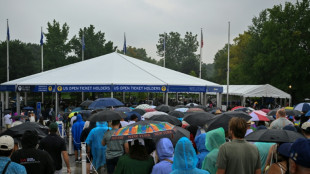
 Iran president urges return to truce, hails Russian support

 Aster and World Liberty Financial Launch USD1 RWA Boost: Phase 1, Offering 125M $WLFI + 6.25M USD1 in Rewards

 Tronchon sprints to Vuelta stage 10 win, Mas keeps red jersey

 Germany defender Rudiger announces international retirement
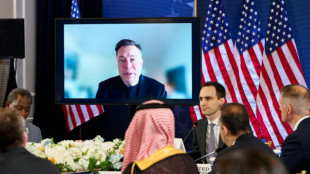 Musk defends AI data centers, slams EU rules at G20
 Activists blame Kenya for Ugandan opposition figure's plight
 Iran president offers US olive branch, hails Russian support

 TrustFinance Community Choice Awards 2026 Opens Global Voting

 Nepal disaster a climate 'warning signal': foreign minister

 France winger Diaby returns to Leverkusen until 2031

 Barcelona confirm Jesus arrival from Arsenal
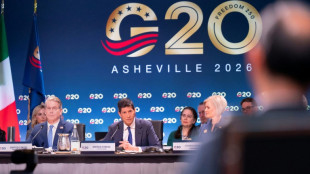 EU official says it's not time to 'normalize' Russia at G20 finance talks

 RedHill Announces Transformational Acquisition of Commercialization Rights to Ferring’s Rebyota® and Clenpiq®
 TrendEadvisor Launches Global Multi-Asset Platform Combining Online Investing with Social Trading

 India's top court drops criminal cases against protesters

 Philippine couple married in hip-deep floodwaters

 Villa sign Senegal winger Mbaye from PSG

 Former Peru minister last-minute contender for UN labour agency helm

 Messi legacy will 'live forever', says Beckham
 'Literally tasting the smoke': Malaysians suffer as haze worsens

 Kyiv's defences, 'hybrid' threat from Moscow headline EU talks
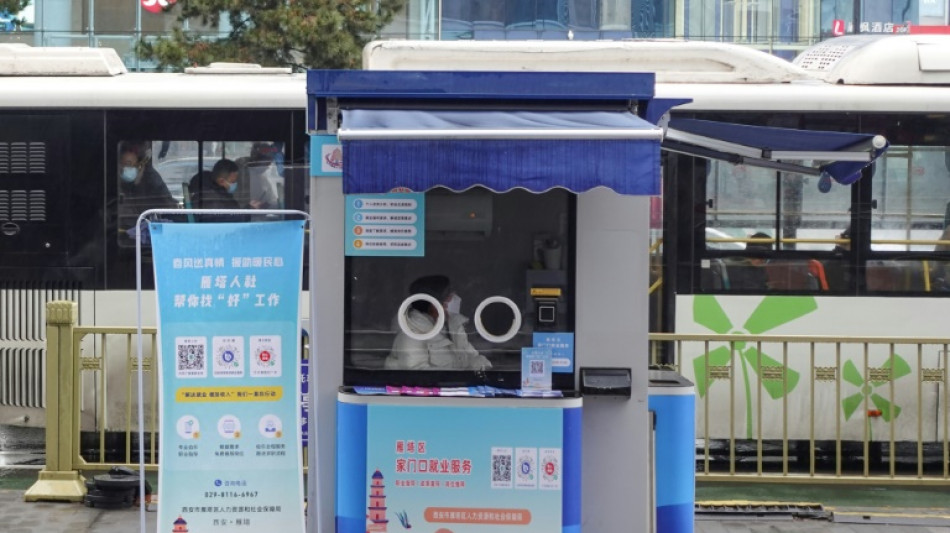
With China's dropping of its "zero-Covid" policy, makeshift quarantine centres and testing booths are being repurposed as mini-libraries, information points or even housing.
Since Beijing suddenly abandoned its hardline virus control measures in December after almost three years, cities across China have been left with tens of thousands of the temporary structures.
Some of the metal or plastic testing booths that were once ubiquitous symbols of the "zero-Covid" policy have found a new life as mini-pharmacies, shelters or information stations.
"Rather than leaving them empty, we're trying to use them in other ways, suiting the time and place," a city official from Suzhou, near Shanghai, told AFP.
Some booths near the train station have been transformed into information points for new arrivals, offering them job opportunities or legal advice concerning work disputes.
Elsewhere in the city, booths have been repurposed by local janitorial staff to store odds and ends.
"When we came to work here this booth wasn't here yet. So our superiors bought it for us," Xu, a river cleaner, told AFP.
"Since we don't do Covid testing anymore... they could bring it over," she said.
"After work, we use it to put our gloves and our tools in it," she added.
"And when it rains, we come to shelter there."
Local governments in China spent about 200 billion yuan ($29 billion) on the testing programme needed to keep zero-Covid going, according to banking giant Goldman Sachs, as quoted by Bloomberg.
Now they are keen to put the redundant facilities to good use.
During the Covid surge in December and January, some were converted into medical consultation stations or medicine distribution points to reduce the pressure on hospitals which were inundated with patients.
Others have since been transformed into mini-libraries where residents can exchange books.
- 'Sustainable use' -
In Jinan, the capital of eastern Shandong province, some cabins have become "heartwarming huts" where passers-by can shelter from the cold, charge their phones or even benefit from free hot water.
Others have been converted into Red Cross service points, resting areas for delivery drivers or waste-sorting stations.
But many former testing booths remain unused -- so much so that some people are trying to sell them on the internet.
On Xianyu, China's main app for selling second-hand goods, they are up for sale from between 100 and 8,000 yuan ($15 and $1,200), depending on their condition.
"Ours comes from a company that no longer wanted it," one seller told AFP.
The fate of the former quarantine centres and makeshift hospitals where Covid-positive or sick people were once sent is more complex because of their size and cost.
Some remain empty, but others have been converted into backup hospitals with additional equipment and staff, to relieve the pressure on the healthcare system.
Elsewhere in Jinan, a former makeshift quarantine centre has been converted into housing for employees of nearby companies.
A total of 650 basic rooms with a bed, closet, desk, television and air conditioning are available.
"It's good, it allows a more sustainable use of resources," said one Weibo user.
But others are not so convinced.
"What about wifi, thermal insulation and soundproofing?" wrote another.
"How cost-effective is the project? Wouldn't dismantling it have been cheaper?"
J.Fankhauser--BTB