A year after the Ukraine invasion, oil market much changed / Photo: © AFP

 Taliban govt defends ban on protest, citing Islamic law

 10 missing as Turkish cargo ship sinks after collision off Istanbul

 easyMarkets Expands Commodity Offering with 24/7 Gold, Silver and Oil Trading

 Australia defends Pacific climate meeting despite doubts on attendance
 Iran attacks US sites after American strikes, wedding deaths

 Stocks drop, yields at three-decade highs on Mideast flare-up
 EU summons Russian envoy, eyes sanctions after Germany drone 'attack'

 Stocks drop as yields and oil prices spike on Mideast flare-up
 Cricketers to get best rooms at Asian Games, says Japan chief

 Zverev out-lasts Sonego in wild five-setter to advance at US Open

 Amid war, Ukrainian soldiers celebrate love at ritual wedding

 Venice to roll out red carpet for Clooney on opening night
 Hong Kong democracy activist Wong pleads guilty to foreign collusion: AFP
 Stocks sink, yields at multi-decade highs and oil spikes on Mideast flare-up
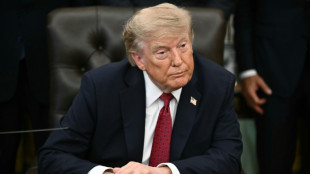 US defends Trump Venezuela oil deal as energy secretary lands in Caracas

 Jubilant Monfils celebrates birthday with US Open win

 The Japanese idealist behind the last deradicalisation NGO in Somalia

 Rybakina, Gauff advance as Zverev launches US Open campaign
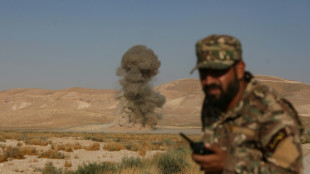
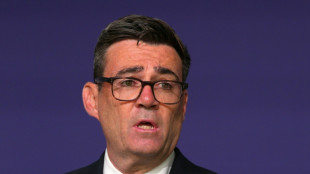 Macron in Britain to help unveil tapestry, hold Burnham talks
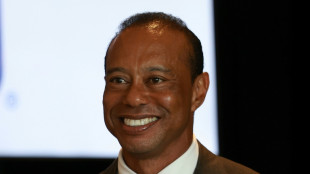
 China's Xi to hold talks with Sisi in rare visit to Egypt
 Confident Gauff reaches US Open 2nd round with straight-set win

 US postal whistleblower warns ballot system could disrupt midterms

 John Ternus takes over as Apple enters era of AI, foldable phones

 Second-ranked Rybakina eases into US Open 2nd round

 Man City sign Fernandez, Ndiaye as Premier League clubs set new spending record

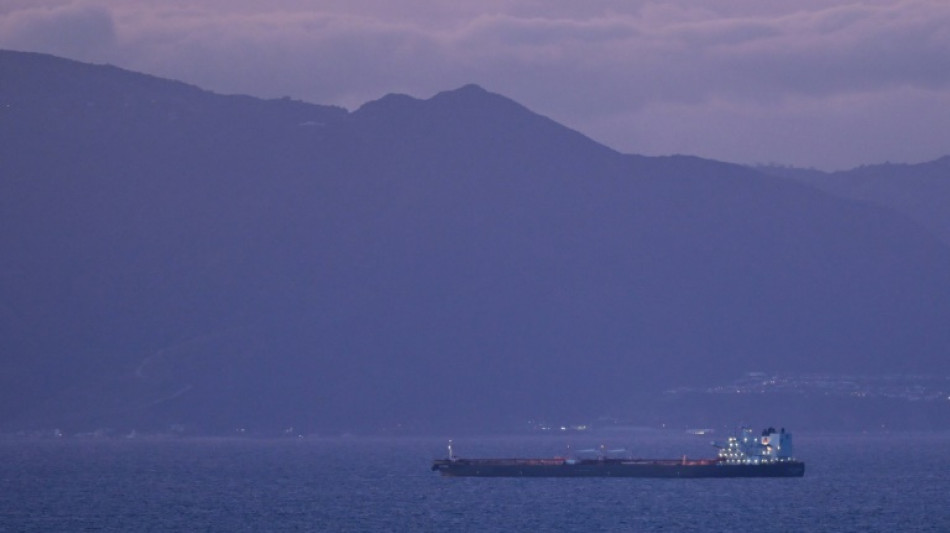
A year after Russia's invasion of Ukraine, the oil market has become more fragmented and uncertain, a dynamic expected to boost crude prices over the long term.
Condemnation of Russia by Western governments has essentially severed Europe from Russian supplies, leaving it more reliant on the Middle East and the United States.
That shift means cheaper Russian energy imports for China and India, while countries that refuse to buy Russian crude must pay a premium to import from other suppliers.
The oil market "is radically different in some ways than it was before the invasion of Ukraine," said Jim Burkhard, head of research for oil markets, energy and mobility at S&P Global Commodity Insights.
A "true global market" with open competition "doesn't exist anymore," said Burkhard, who calls the current state of the market "partitioned."
With the addition of Russia to the list of sanctioned countries alongside crude exporters Iran and Venezuela, almost 20 percent of global supply is cut off from major markets, including the United States.
"Oil is priced based on its origin, as opposed to its quality," Burkhard said.
The balkanization of the market also affects crude tanker routes. The ban on Russian oil by Europe forces Moscow's exports to travel further to reach buyers.
"That means more miles traveling in the water," Torbjorn Tornqvist, co-founder of the Gunvor Group, a trading company, said at the CERAWeek energy conference in Houston. "Ship rates have been very elevated and have stayed elevated."
Since the invasion, "we have seen a fundamental shift that is unlikely to revert anytime soon," said Jose Fernandez, undersecretary for economic growth, energy and the environment at the State Department.
Many expect lasting changes.
"What I think will last very long is the fundamental distrust and the fundamental decision to not depend on Russian energy for a very long time in Europe," said Eirik Waerness, chief economist at Equinor. "That will have long-term implications."
- A 'tight' market -
The flux in the wake of the Russian invasion has also strengthened the position of the Organization of the Petroleum Exporting Countries.
Burkhard said Saudi Arabia's spare capacity continues to give the exporters group unique clout.
But the situation has changed significantly compared with late 2016 when the Vienna-based cartel began coordinating policy with Russia.
"Russia today cannot really manage its production because it faces sanctions," leading to production below Russia's quota under the "OPEC+" policy, Burkhard said.
"OPEC is still very important, but OPEC+ right now is not what it was before the war," he said.
The United States' role on international markets has also been reinforced.
The world's biggest oil producer, the United States last week set a new record for crude exports of 5.6 million barrels per day, almost twice the level in 2021.
Still, US production has not returned to its pre-pandemic level. Key factors that have weighed on output include the strategy of US shale producers to use excess cash to bolster balance sheets rather than increase capital spending; and shortages of key oilfield materials and personnel.
"The volumes continue to increase, but they could probably have increased even more," Waerness said of the United States.
Globally, markets continue to feel the effects of the decision by OPEC in October to trim production by two million barrels per day.
"The fundamentals are relatively tight," Waerness said. "The extra capacity to deliver new supplies into markets, whether we're talking about gas or oil, is very low."
Waerness said there are also questions about the sustainability of Russian production given the exodus of Western oilfield suppliers and service companies.
"We don't know how long Russia can continue to produce 11 million barrel and 12 million barrels a day," Waerness said. "Will they be able to replace that type of competence?"
The situation is further complicated by the focus on the energy transition, which experts believe exacerbates under-investment in conventional petroleum.
The upshot, according to Burkhard, is a higher baseline for crude prices.
"We will have cycles, but the center of gravity for oil prices we think will be around $70 or $80," he said. "That's higher than what we've typically seen over the last 20-30 years."
W.Lapointe--BTB