Russia attack conjures up fears of new Europe 'iron curtain' / Photo: ©

 Pakistan court orders ex-PM Khan moved from jail to hospital
 'Lonely place': Black UK academics slam racism after Arday's death
 UK PM says not embarrassed by hoax messages with fake Trump aide
 West Bank siege exposes Israel army inaction on settler violence
 Four-time champion Roglic to ride Vuelta after training crash
 Ukrainian convicted in Germany over Russian sabotage plot

 Beleaguered FIFA chief Infantino rids himself of critic Lamour

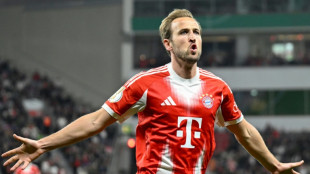 Kane confirms Bayern extension talks set to start
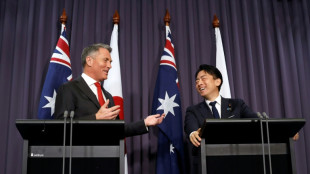 Asian allies stress 'critical' US cooperation as Trump slashes Korea drills
 Pakistan Supreme Court orders ex-PM Khan moved from jail to hospital
 Firefighters push to 'encircle' Belgian wildfire
 ISS to host first spacewalk by Frenchwoman
 Philippine student killed in livestreamed school shooting
 More Trump-Kim 'love'? What we know about North Korea
 Major Meta trial begins as lawyers spar over witnesses, damages
 Trump threatens to bomb Oman if it gets in way of Iran deal
 Australian cricketer Warner ordered to use breathalyser vehicle lock
 A Viking longship in 'The Odyssey'? It's a case of history meets Hollywood
 Racist abuse spurred Suzuki as Japan goalkeeper set for Premier League
 Japan lights torch as countdown begins to Asian Games
 Make it rain: Indonesia chases clouds to stem El Nino fires
 All aboard as Asian Games preparations enter 'final stages'
 Lights out, crowds gone: Havana waits for what comes next
 How families in Milei's Argentina sank deep into debt
 Zambia's Hichilema wins re-election with 60% of vote
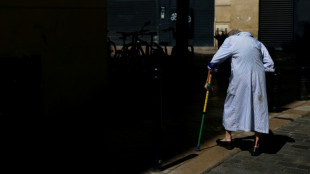
Russia's attack on Ukraine could herald a Cold War revival in Europe with two blocs armed to the teeth pointing nuclear weapons at each other across an iron curtain, politicians and experts say.
Ukrainian President Volodymyr Zelensky's statement that Moscow's assault on his country was "the sound of a new iron curtain lowering" has resonated in Western halls of power where many had assumed that Europe's post-war division into hostile camps led by the US and Russia was consigned to the history books.
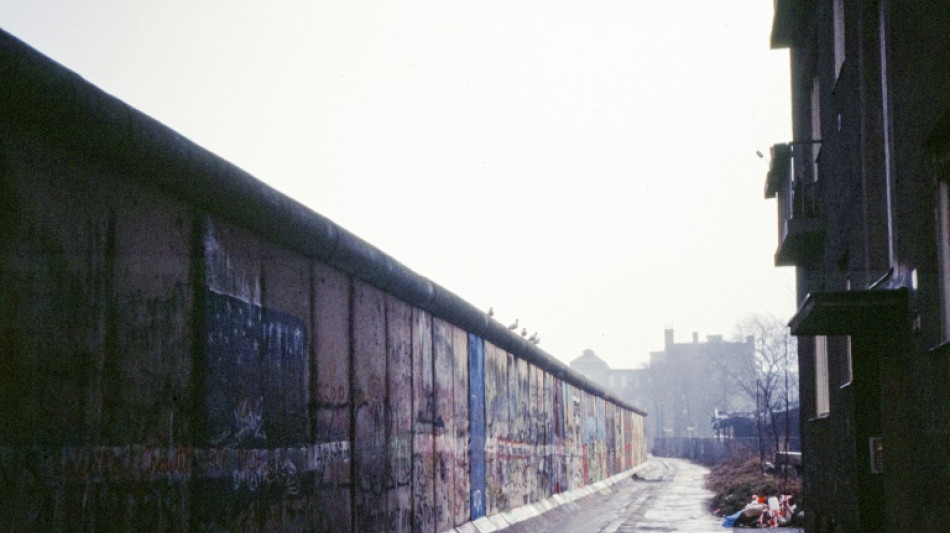
From Hitler's defeat in 1945 to the fall of the Berlin Wall in 1989, Europe was divided into two camps with the dividing line running through Germany.
The so-called iron curtain, a term coined by British wartime leader Winston Churchill, separated the western liberal, capitalist democracies from the communist countries in the east, each part of zones of influence that were mostly accepted by the other side.
- 'Shift borders' -
But after the collapse of the Soviet Union in 1991, many of Moscow's former satellites turned to the West, joining NATO and the European Union if they could -- like Poland and Romania -- or at least liberalising their economies and political systems, like Ukraine.
Former German chancellor Angela Merkel, who grew up in communist east Germany, warned that Russian President Vladimir Putin is on a quest to roll back that trend and re-establish Moscow's sphere of influence.
"Russia's war of aggression marks a profound turning point in European history after the end of the Cold War," Merkel said Friday.
Her successor, Olaf Scholz, echoed such concerns when he called the invasion of Ukraine "an attempt to forcibly shift borders within Europe".
US Secretary of State Antony Blinken accused Putin point-blank of wanting to "reconstitute the Soviet empire" or at least "reassert a sphere of influence".
French President Emmanuel Macron also seemed to be looking at the Russian offensive's long-term impact when he described the war as a "turning point in the history of Europe and our country" with "deep and lasting consequences for our lives".
Russia taking "Ukraine off the map of nations", as French Foreign Minister Jean-Yves Le Drian fears it will, would dramatically lengthen the border NATO countries share with Russia, with a big rise in potential flashpoints -- and fewer buffers.
Already the United States and other NATO members are sending reinforcements to the alliance's frontline.
Once Washington stations the promised 7,000 extra soldiers, the US will have 90,000 troops in total deployed in Europe.
Among European nations promising more efforts, France has said it would accelerate its troop deployment in Romania, while Italy is to send 3,400 soldiers to its most exposed NATO allies.
- 'All kinds of repercussions' -
Western experts have little doubt that victory in Ukraine would see Putin tighten his grip not just on Kyiv, but also on neighbouring Belarus, which has already served as a launch pad for Russia's attack.
"The war in Ukraine will have all kinds of repercussions on the line that runs from Baltic to the Black Sea," said Jean-Sylvestre Mongrenier at the Thomas More institute think tank.
Belarus would "become a satellite again", he told AFP, and Russian pressure would grow on the Baltic countries and Poland.
Scholz called on Germany's allies to prevent the conflict from spilling over into other countries "with everything at our disposal" and warned Putin not to underestimate NATO's determination to defend its members.
France meanwhile expressed concerns that Russian tanks may also roll into Moldova and Georgia, two other former Soviet republics where separatists declared unrecognised statelets.
As tensions rise, the nuclear arms threat -- a key ingredient of post-war Europe's Cold War order -- is also making a return.
Le Drian has reminded Putin that "the Atlantic alliance is also a nuclear alliance", while the Russian leader threatened retaliation "like you have never seen in history" for anyone interfering with the war in Ukraine -- which many understand to mean nuclear reprisal.
Both Russia and the US have thousands of nuclear warheads at their disposal, with France and Britain adding to the West's atomic capabilities.
Ukraine, which emerged from the Cold War with sizeable Soviet-era nuclear weapons stocks of its own, gave up its arsenal in the 1990s.
R.Adler--BTB