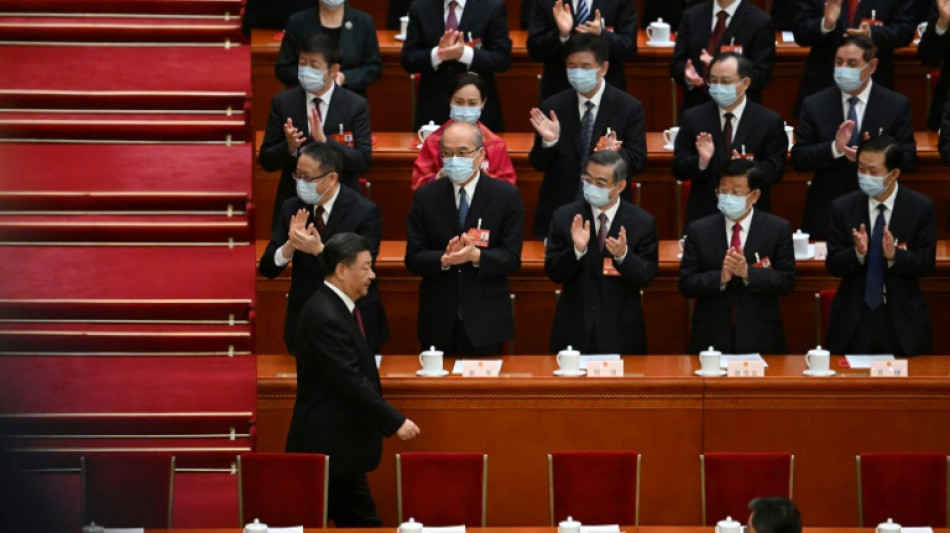
What to expect from Xi's next five years as Chinese president / Photo: © AFP

 Taliban govt defends ban on protest, citing Islamic law

 10 missing as Turkish cargo ship sinks after collision off Istanbul

 easyMarkets Expands Commodity Offering with 24/7 Gold, Silver and Oil Trading
 Australia defends Pacific climate meeting despite doubts on attendance
 Iran attacks US sites after American strikes, wedding deaths

 Stocks drop, yields at three-decade highs on Mideast flare-up

 EU summons Russian envoy, eyes sanctions after Germany drone 'attack'
 Stocks drop as yields and oil prices spike on Mideast flare-up
 Cricketers to get best rooms at Asian Games, says Japan chief

 Zverev out-lasts Sonego in wild five-setter to advance at US Open

 Amid war, Ukrainian soldiers celebrate love at ritual wedding

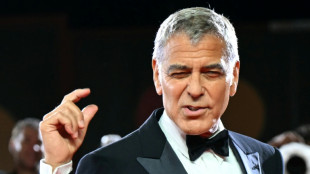 Venice to roll out red carpet for Clooney on opening night
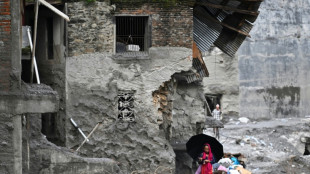
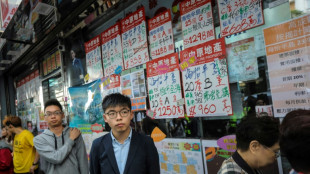 Hong Kong democracy activist Wong pleads guilty to foreign collusion: AFP

 Stocks sink, yields at multi-decade highs and oil spikes on Mideast flare-up

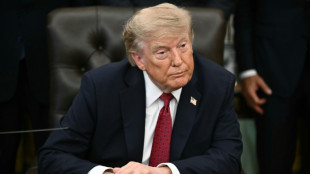 US defends Trump Venezuela oil deal as energy secretary lands in Caracas
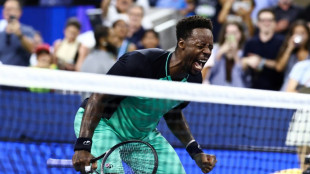 Jubilant Monfils celebrates birthday with US Open win
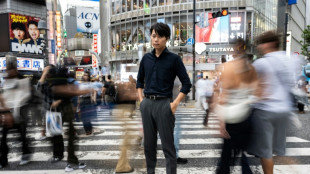 The Japanese idealist behind the last deradicalisation NGO in Somalia

 Rybakina, Gauff advance as Zverev launches US Open campaign
 Macron in Britain to help unveil tapestry, hold Burnham talks
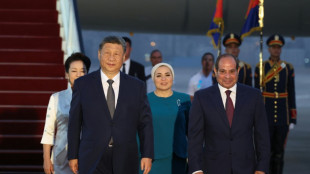 China's Xi to hold talks with Sisi in rare visit to Egypt
 Confident Gauff reaches US Open 2nd round with straight-set win
 US postal whistleblower warns ballot system could disrupt midterms

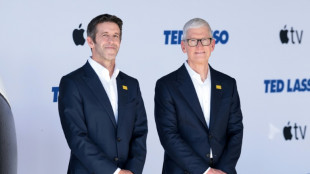 John Ternus takes over as Apple enters era of AI, foldable phones

 Second-ranked Rybakina eases into US Open 2nd round

 Man City sign Fernandez, Ndiaye as Premier League clubs set new spending record

Xi Jinping on Friday sealed a historic third term as China's president.
AFP examines how he is expected to handle the key issues facing the country:
- Slowing economy -
China's slowing economy will likely dominate Xi's next five years but his decision to pack the Communist Party's top leadership with loyalists has stoked concerns about him prioritising ideology at the expense of growth.
The world's second-largest economy expanded just three percent last year, widely missing its target of around 5.5 percent in the face of strict Covid curbs and a simmering property crisis.
Beijing has set a growth target of "around five percent" for 2023, one of the lowest in decades.
And Xi's picks for top government jobs suggest the days of liberal reformers steering the economy have come to an end, while his track record of propping up heavy industry and cracking down on big tech suggests a more state-led approach is here to stay.
While he has thrown his weight behind the development of a more consumption-driven economy -- a policy known as "dual circulation" -- his calls for addressing China's yawning wealth gap under the banner of "common prosperity" have gone quiet in recent months after giving investors the jitters.
With the United States promising to prioritise maintaining "an enduring competitive edge" against China as they battle for dominance over technology, Beijing may find itself under growing pressure internationally as growth slows at home.
- Tensions with the US -
Relations between Beijing and Washington have been on a steady decline in recent years, with the two sides butting heads over a number of issues including trade, human rights and the origins of Covid-19.
A planned visit by US Secretary of State Antony Blinken last month was cancelled at the last minute after the United States shot down a Chinese balloon it said was conducting surveillance over US territory -- a claim strenuously denied by Beijing.
Since then, Chinese diplomats have kept up a steady drumbeat of anti-US criticism, with Foreign Minister Qin Gang this week warning of "conflict and confrontation" with potentially "catastrophic consequences" if Washington does not change tack.
Xi himself also made a rare direct rebuke of Washington this week, accusing "Western countries led by the United States" of trying to thwart China's rise.
The countries in question "have implemented all-round containment, encirclement and suppression of China, which has brought unprecedented severe challenges to our country's development", Xi said, according to state news agency Xinhua.
- Taiwan threats -
After ratcheting up tensions with Taiwan, an emboldened Xi could decide the time is right to fulfil Beijing's longstanding ambition of seizing the self-ruled democratic island.
China's sabre-rattling towards Taiwan has become more pronounced in recent years.
A visit by the then US House Speaker Nancy Pelosi last year prompted a furious Beijing to hold its biggest military drills around the island in years.
The Communist Party for the first time enshrined its opposition to Taiwanese independence in its constitution in October.
Any move to invade Taiwan would wreak havoc with global supply chains given the island is a major supplier of semiconductors -- an essential component of nearly all modern electronics.
It would also provoke outrage from the West, deepen China's isolation, bring Beijing and Washington closer than ever to direct military confrontation and snuff out Taiwan's hard-earned democratic freedoms.
China on Sunday said its military budget would rise at the fastest rate for four years, as outgoing Premier Li Keqiang warned of "escalating" threats from abroad.
Drew Thompson, a visiting senior research fellow at the National University of Singapore's Lee Kuan Yew School of Public Policy, said the "sustained, year-on-year" spending increases made Beijing's claim that its military modernisation does not threaten its neighbours "ring hollow".
China's concurrent lack of openness is "destabilising" and "fuelling a cycle of worrisome deterrence signalling that China is quick to blame on other parties, without acknowledging its own explicit actions and policies", he told AFP.
- Human rights -
China under Xi has seen the almost-total eradication of civil society -- scores of activists have fled the country and opposition to the government has been all but snuffed out.
In the far-western region of Xinjiang, rights groups say more than a million Uyghurs and other Muslim minorities are detained in what the United States and lawmakers in some Western countries have said amounts to genocide.
The situation looks unlikely to improve in the next five years as Xi's power grows increasingly impossible to challenge and the leadership digs in its heels against international pressure.
H.Seidel--BTB