Saudi-Iran breakthrough adds new twist to Israel's Arab outreach / Photo: © AFP/File

 Melting glaciers an 'immediate' climate risk: author of UN report

 Folarin Balogun's move to Everton collapses

 Pacific islands to face food shortages over global warming: scientists

 Venice jury head Maggie Gyllenhaal questions lack of women directors
 Stocks drop, bond yields rally on Mideast flare-up

 China expands Egypt investments in first Xi visit in a decade
 Messi departure leaves Argentina facing rebuild after golden era
 Ourbit SuperCEX Launches "Cosmic Wheel Season 3. Oracle Realm" on September 2 with 3M USDT Prize Pool

 Ebola death toll passes 3,000 in DR Congo: official data
 Hong Kong democracy activist Wong pleads guilty to foreign collusion

 World record prize winner Romantic Warrior retires from horse racing

 5,000 US sailors arrive in Thailand after months at sea
 Joshua Wong, Hong Kong's pro-democracy poster child

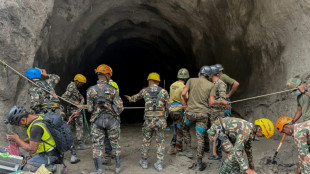 Nepal tunnel rescuers seek trapped workers but hit dead ends
 Zverev wins wild five-setter, Rybakina and Gauff ease through at US Open

 US energy secretary arrives in Venezuela to discuss oil deal

 Meloni government becomes Italy's longest-lasting
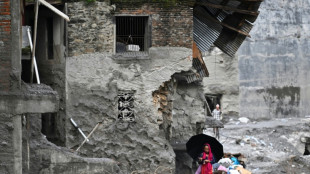 Funerals in Nepal for missing, a week after deadly floods

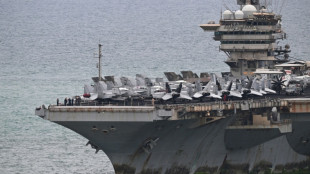 US aircraft carrier arrives in Thailand after months at sea

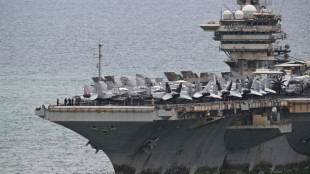 US aircraft carrier approaches Thai port after months at sea
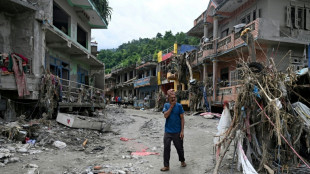 Nepal's young PM faces gravest test after flood catastrophe
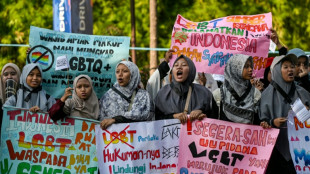 What rainbow? LGBTQ Indonesians on edge as hostility mounts

 O'Connor eyes Wallabies World Cup swansong after Force return

 Syria UXO causing death, injury every six hours: charity
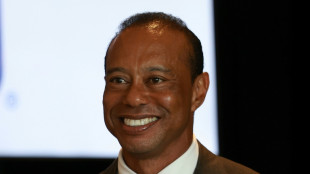 Tiger Woods set to change not guilty plea in DUI case: court documents
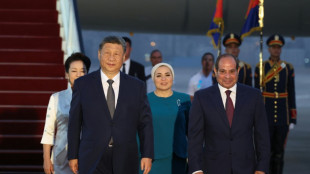
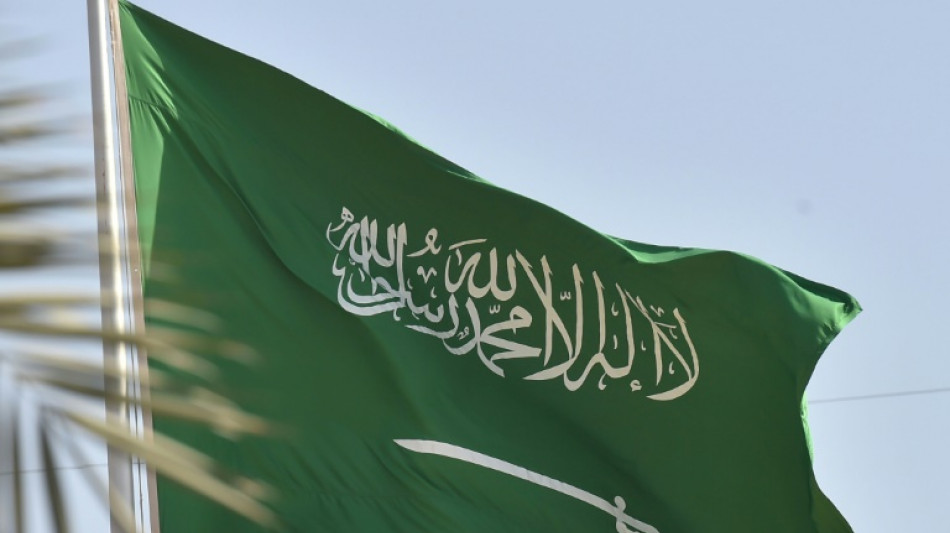
Saudi Arabia's surprise move to restore ties with Iran adds a new, complicated layer to its delicate diplomatic dance with Israel, which craves a breakthrough normalisation deal of its own, analysts said.
Riyadh and Tehran announced on Friday that after seven years of severed ties they would reopen embassies and missions within two months and implement security and economic cooperation agreements signed more than 20 years ago.
The China-brokered deal provoked sharp criticism within Israel of Prime Minister Benjamin Netanyahu, who has made clear his focus on bringing Saudi Arabia on board as part of a regional alliance against Iran.
Israeli opposition leader Yair Lapid said it represented "a total and dangerous foreign policy failure of the Israeli government".
Yet regional observers cautioned that the actual implications of the deal are far from clear –- both in terms of future Saudi-Iran cooperation and Israel's relationship with Riyadh.
The notion that Saudi Arabia was exclusively interested in Israel as part of a potential front against Iran was always "superficial", said Saudi analyst Aziz Alghashian.
"This idea of 'the enemy of my enemy is my friend' -– Saudi has seldom operated in that way, especially not strategically," he said.
With Friday's news, "you clearly see that Saudi Arabia has prioritised a rapprochement with Iran over an overt rapprochement with Israel", he added.
But "this doesn't mean very quiet relations with Israel are going to cease... Now the relationship with Iran is a variable that is part of the calculation".
- A widening gap? -
Saudi Arabia, home to Islam's holiest sites in Mecca and Medina, has long said its recognition of Israel hinges on a two-state solution with the Palestinians.
It did not join the 2020 US-brokered Abraham Accords that saw the Jewish state establish ties with two of the kingdom's neighbours, the United Arab Emirates and Bahrain.
Yet there have been subtler signs of potential cooperation.
Several Israeli journalists who hold foreign passports were able to visit Saudi Arabia both before and during US President Joe Biden's tour of the Middle East last year.
The Saudi civil aviation authority announced during that trip that it was lifting overflight restrictions on "all carriers", paving the way for Israeli planes to use Saudi airspace.
And in October the Arab-Israeli head of an Israeli bank appeared at a Saudi investor forum, hailing the "amazing" opportunities in the kingdom.
This week, the Wall Street Journal and the New York Times reported that Riyadh has been privately lobbying for security guarantees from the United States and assistance with a civilian nuclear programme in exchange for a deal with Israel.
But surging Israeli-Palestinian violence this year has made public progress unlikely in the short term, said Umar Karim, an expert on Saudi politics at the University of Birmingham.
"The Saudis have no incentive right now to quickly normalise with Israel," he said.
And the new Saudi-Iran deal "could lead to a wider gap between Israel and Saudi Arabia if this yields a wider diplomatic opening between the kingdom and Iran", said Brian Katulis of the Middle East Institute in Washington.
"Israel is sceptical of any diplomacy with the regime in Tehran."
- Mixed signals -
That makes the Saudi-Iran deal "a clear diplomatic victory for Iran" and "a blow" to Netanyahu, said Nicholas Heras of the New Lines Institute of Strategy and Policy.
"Saudi Arabia, which is being heavily courted by Israel, just sent a big signal to the current Israeli government that the Israelis cannot count on Riyadh to support Israeli military action against Iran, anywhere in the region," he said.
Not everyone thinks the ramifications are so obvious, however.
"The Iran/Saudi deal is a relatively narrow one, focusing on specific issues such as the reopening of embassies and the resumption of trade relations as well as security from attacks," said Fatima Abo Alasrar, non-resident scholar at the Middle East Institute.
"While these steps are essential for improving economic ties and reducing tensions between the two countries, they do not address the broader ideological and political differences that have driven their long-standing rivalry."
Saudi Arabia's openness to re-engaging with Iran can also be seen as part of a bigger diplomatic push that has involved mending rifts with Qatar and Turkey.
The trend could ultimately benefit Israel, even if the current policies of Netanyahu's hard-right government work against that, said Saudi researcher Eyad Alrefai.
"It creates a momentum that can assist the region in moving towards a future of mutual understanding, respect and cooperation between nations," Alrefai said.
"In such an environment, regional players, mainly Israel in this case, can capitalise."
L.Dubois--BTB