In rural America, big solar projects often get a frosty welcome / Photo: © AFP

 EU lawmakers demand Brussels force Meta to 'protect' European children
 Clooney turns AFP photographer in jokey red carpet switch
 Retirement Income Planning Florida Launches No-Cost 'Income Gap Analysis' Program for Pre-Retirees
 Iraola hails Barcola mentality after blockbuster Liverpool move
 Michelsen shocks Nakashima in US Open clash of rising Americans
 US govt sides with OpenAI in New York Times copyright lawsuit
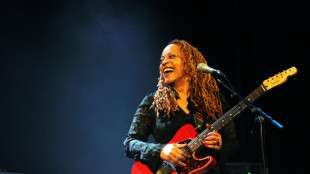
 Grammy-Winning Jazz Vocalist Cassandra Wilson Dies at 70
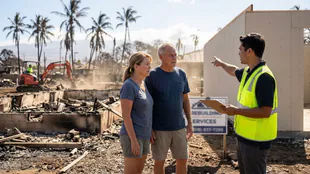
 Maui Wildfire Survivors Report Major Losses to Troubled Rebuilding Contractors
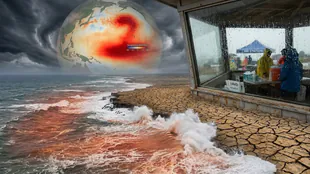
 WMO Says Powerful El Niño Is Likely to Persist Into February 2027
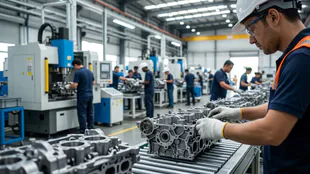
 Honda Presses Suppliers for Deep Cost Cuts in $9.4 Billion Savings Drive
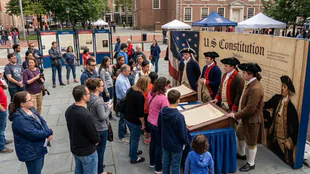
 Philadelphia Festival Revisits the Signing and Legacy of the U.S. Constitution

 Russia to close branches of Germany's Goethe Institute
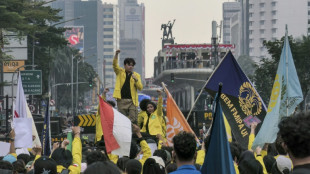
 Spacecraft bound for Mercury faces 'tricky' arrival
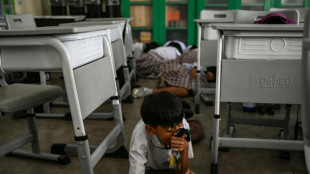 Philippines holds drills to safeguard students from armed intruders
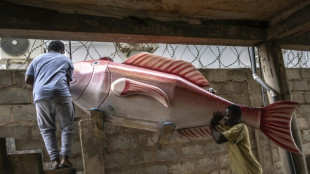 In Ghana, larger-than-life coffins tell the stories of the dead
 Menoncello, Reece headline Top 14 new-season signings

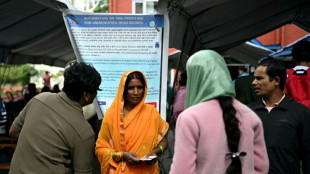 Families descend on Nepal in search of missing tourists

 Far-right AfD eyes huge win in east German state vote

 Brazil-Japan to play World Cup rematch at Singapore tournament

 Defence chiefs back boosting US military presence in Australia

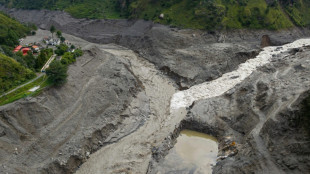 Nepal seeks climate justice after Himalayan disaster

 Stocks rise, yields ease as oil slips on Trump hint at short bombing campaign

 Brussels Diamond League finals Day 1 - five events to watch

 Thailand's 'Jurassic Park' shines light on dinosaur evolution
 'Role model' Stokes set to open for Adelaide Strikers
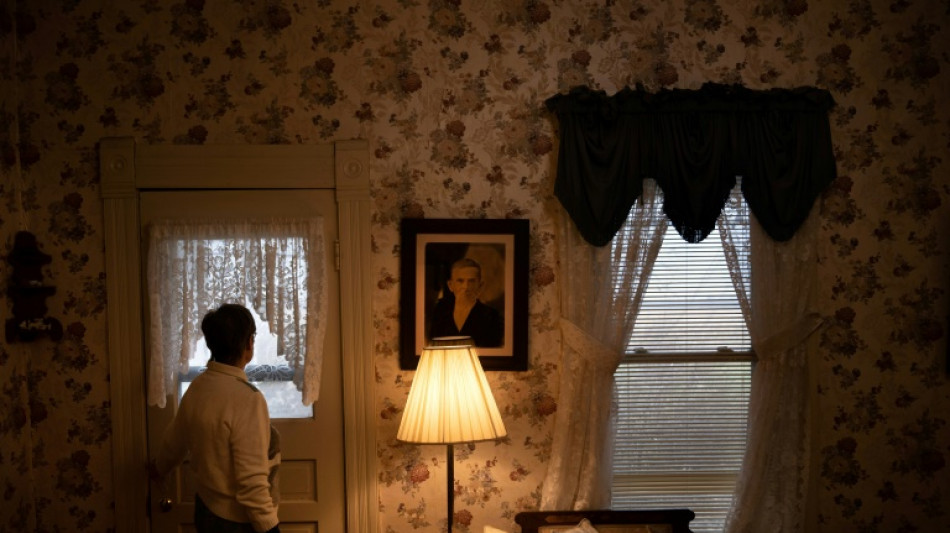
From her century-old home, Susan Burns has watched the sun set over her cousin's field every day for 75 years. Now her cousin has agreed to have solar panels installed on the field, and an unhappy Burns finds herself in a fight.
Huge solar farms are being planned in this corner of Missouri, and as in other rural areas of the United States, residents sometimes are yanking the welcome mat.
Foreseeing vast expanses of solar farms replacing cropland, Burns began raising the issue with other community members at the Baptist church across the road.
She fears much may be at stake: "(I) lose my view. I lose my health. I lose my safety."
A group has formed around Fulton to fight the solar installations, as has happened in rural areas across the country. And this emerging grassroots movement is slowing the transition to low-carbon electricity in the world's largest economy.
- Land registry -
"I want to live and take care of my farmland. And the idea that my cousin, who lives across the road, would be turning his farmland into an industrial area was very disturbing to me," Burns told AFP from her country home.
With a dozen other volunteers, Burns organized a public meeting to sound an alarm. As people walked in, a petition awaited their signatures, and activists invited the curious to study a land registry map with three areas highlighted showing proposed solar farms.
"If we unite, we can stop this," said Joe Burns, Susan Burns's son, before a crowd of about 100 in Fulton, the county seat.
- Threat to identity -
The US electricity grid generates 60 percent of its power from fossil fuels. The administration of President Joe Biden is trying to turn the tide toward renewable energy.
But grassroots protests against solar projects "will significantly delay America's commitment toward getting to net zero," said Jungwoo Chun, a lecturer on climate and sustainability at the Massachusetts Institute of Technology.
Like other academics interviewed by AFP, Chun insisted that it would be an oversimplification to see the opposition as a simple matter of the NIMBY -- or "not in my backyard" -- dynamic.
"Farmers have a particular identity," said Doug Bessette, an assistant professor at Michigan State University and co-author of several studies on the matter.
"It's hard work, it's dirt under your fingernails. And now if that land is... just basically laying fallow with solar panels on it for 20 years, that's a disruption to identity."
Differing visions have pitted farmer against farmer, and even divided families.
In the southern part of Callaway County, two neighbors nearly came to blows, said one, whose house may end up surrounded by solar panels.
- Do the math -
Leaning on his tractor, cattle farmer Mike Webb pointed to one of his parcels.
"That piece of ground just across the road here," he said, "I may make 250 to 300 bucks an acre on a good year.
"And then when someone comes around and asks me, 'Hey, we're willing to give you $1,000 an acre (per year) for solar panels, and give you a 2 percent increase per year for a 40-year contract,' it gets your interest," Webb said.
So he signed on.
"It should be my right to do what I want to do with my place," he said.
At a crossroads, with grain silos looming in the distance, a sign calls for a fight against solar projects.
"It drives me crazy," Webb blurted out as he walked past, denouncing the resistance of a "minority" of the population.
Here in northern Callaway County, word is that the first shovels for one of the three solar farms could come as early as this summer, although that is not confirmed by the Ranger Power renewable energy company.
The developer of the 250-megawatt project (enough to power nearly 43,000 homes) told AFP that its $300 million investment would, among other things, allow local homeowners "to sustain existing family farms."
"It's free money," said Webb, who is thinking about his retirement and about the day when some of his four children will take over the farm.
"Whether they like it or not, it's going to be an income for them. And you know, that's what matters to them."
S.Keller--BTB