'Liveable future' at risk, UN climate report warns / Photo: ©

 Bezos consortium bought nearly 40 percent of Liverpool: report

 Trump says no Iran talks planned, claims Hormuz 'new US territory'
 Canada seeks to avert new US tariffs as deadline looms

 US primaries test Democrat comeback hopes in Trump stronghold
 Scientists discover how narwhals grow nature's only straight tusk

 DR Congo Ebola outbreak 'far from being under control': WHO chief

 Firefighters in 'decisive' push to encircle Belgian wildfire

 Tribal Partners with ServiceNow to Empower Enterprise Teams to Build and Deploy Apps & Agents

 Fusion Markets Extends Negative Balance Protection to Clients Globally

 India close on victory in first Test against Sri Lanka
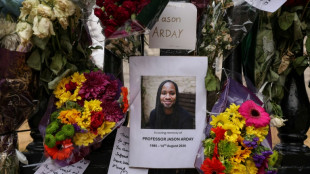
 Three lightly injured as new quake hits Spain's Granada

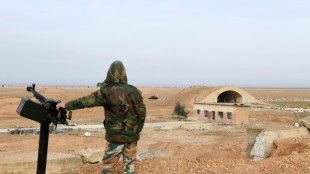 Syria, US say Israel struck military air base in Idlib province

 France probes Russian disinfo campaign against centrist candidates

 Stocks mostly drop as Mideast hopes dim, interest rates rise

 Bayern's Musiala returns to training after on-field collapse
 China's Baidu, betting on AI, posts fifth straight quarterly revenue drop

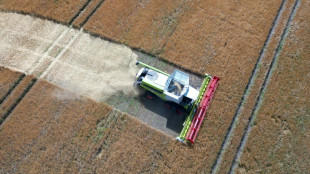 German farmers warn of drought toll on grain harvest

 Pant fastest to 100 sixes as India set Sri Lanka 372 to win first Test

 Russia rebukes Japan ambassador over disputed islands row
 Crude extends gains, most stocks drop as Mideast hopes dim
 Rift deepens as Asia football chief hits back at Qatar in Infantino saga

 India extend lead to 294 in first Sri Lanka Test

 Asian allies stress 'critical cooperation' as Trump slashes Korea drills

 Williams sisters fall at Cincinnati while Zverev advances

 Transylvania's fortified churches face fragile future

A landmark UN report warned Monday that time had nearly run out to ensure a "liveable future" for all, detailing a horrifying "atlas of human suffering" and warning that far worse was to come.
Species extinction, ecosystem collapse, insect-borne disease, deadly heatwaves and megastorms, water shortages, reduced crop yields -- all are measurably worse due to rising temperatures, the Intergovernmental Panel on Climate Change (IPCC) said.
In the last year alone, the world has seen a cascade of unprecedented floods, heatwaves and wildfires across four continents.
Such events will accelerate in coming decades even if the fossil fuel pollution driving climate change is rapidly brought to heel, the 195-nation IPCC warned.
As nations struggle to bend the curve of carbon dioxide emissions downward, they must also prepare for a climate onslaught that in some cases can no longer be avoided, the report made clear.
For UN chief Antonio Guterres, it stands as a "damning indictment" of failed leadership that he described as nothing short of "criminal".
"The world's biggest polluters are guilty of arson of our only home," he said.
Even Russia's invasion of Ukraine cannot distract from the truths laid bare in the 3,600-page report and its summary for policymakers, said US Secretary of State Antony Blinken.
"The international community must urgently continue to pursue ambitious climate action, even as we face other pressing global challenges," he said in a written statement.
Svitlana Krakovska, who headed Ukraine's delegation, spoke passionately at the conference's final virtual plenary about the link between conflict and global warming.
- 'Root' of war and warming -
"Human-induced climate change and the war on Ukraine have the same roots -- fossil fuels -- and our dependence on them," she said.
Among the report's key takeaways was the intertwined fates of human and natural systems.
It stressed that climate change cannot be tamed unless degraded forests and oceans that stock carbon are restored and protected; and the ecosystems on which life forms depend for clean water, air and soil will not survive intact in a world of runaway warming.
The report made clear that a viable future rests on a knife's edge.
Some dire impacts are already irreversible, such as the likely demise of nearly all shallow water corals.
Others points-of-no-return lie just beyond the Paris Agreement's aspirational target of capping global warming at 1.5 degrees Celsius above preindustrial levels, the report warned.
The 2015 treaty enjoins nations to hold the increase in temperatures to "well below" 2C, but recent science has left no doubt that a 1.5C threshold is far safer.
Even in optimistic scenarios of rapid reductions in carbon pollution, projections of climate impacts are sobering.
Up to 14 percent of land species face a "very high" risk of extinction with only 1.5C of warming, the IPCC said, bolstering calls for conservation of 30 to 50 percent of the world's land and ocean territory.
The threat grows with every fraction of a degree.
- Adaptation -
By 2050 there will be more than a billion people in coastal areas highly vulnerable to storm surges amplified by rising seas by 2050. Per usual, the poorest will often be the hardest hit.
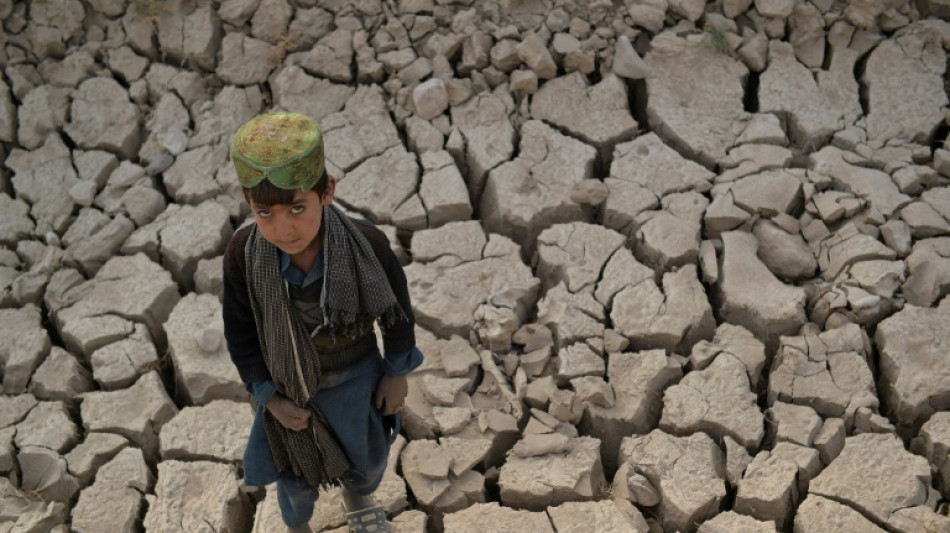
An additional 410 million people will be exposed to water scarcity from severe drought at 2C of warming, and up to 80 million will be at risk of hunger by mid-century.
By 2100, around $10 trillion of assets will be in flood-prone coastal areas in a moderate greenhouse gas emissions scenario, according to the report.
The IPCC assessment -- the sixth since 1990 -- highlights the need to cope with unavoidable climate impacts on almost every page.
Overall, the IPCC warns, global warming is outpacing our preparations for a climate-addled world.
"For people in Africa living on the front line of climate change, it is adapt or die," said Peter Verkooijen, CEO of the Rotterdam-based Global Centre on Adaptation.
The report also spotlights irreversible and potentially catastrophic changes in the climate system known as tipping points, triggered at different thresholds of global heating.
These include the melting of ice sheets atop Greenland and the West Antarctic that could lift oceans 13 metres (43 feet); the morphing of the Amazon basin from tropical forest to savannah; and the disruption of ocean currents that distribute heat across the globe.
"The cumulative scientific evidence is unequivocal: Climate change is a threat to human wellbeing and planetary health," the report concluded.
Further delays in cutting carbon pollution and preparing for impacts already in the pipeline "will miss a brief and rapidly closing window of opportunity to secure a liveable and sustainable future for all."
O.Bulka--BTB