Germany to switch off last remaining nuclear plants / Photo: © AFP

 Pierre Cardin museum brings designer's futurist style to Venice

 Slovenian rookie Omrzel triumphs as Mas extends Vuelta lead

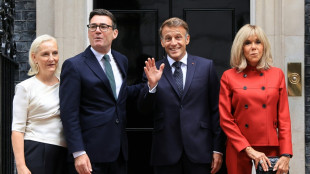
 British, French leaders talk migrants, EU relations

 Heading for Ferrari's home race, Leclerc still dreams of world title
 Cafe at centre of Israel culture clash agrees to shut on Sabbath
 Spacecraft bound for Mercury begins 'tricky' arrival
 Initial expert report blames tanker for collision off Istanbul

 'Everyone a winner' with Barcola transfer, says PSG coach Luis Enrique

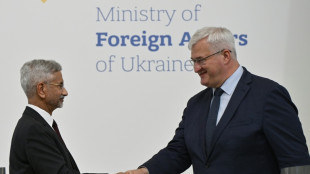 Ukraine, India discuss Black Sea, food security on FM's 'historic' Kyiv visit

 Europe bids to be robot superpower like US, China

 US Fed official joins growing group open to rate hike if inflation rises

 Hugh Jackman in talks to buy stake in Norwich football club

 Yen surges on new intervention talk, oil prices climb
 US feminist icon Gloria Steinem dies aged 92
 France recorded 'hottest summer ever': environment minister

 'No plans to retire', says 'acting god' Malkovich

 Nigerian opposition lobbyist tapped for White House-linked role, firm says

 China emissions fell in Q2 as Iran war pared oil use: analysis

 France sells bonds at highest rate since 2008 amid deficit worries
 Vast aid challenge after 'Himalayan tsunami' devastates Nepal

 Bosnia captain Dzeko to retire from international football
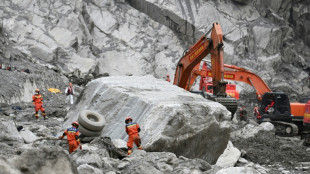 Grief on Chinese internet as wait for Tibet flood news drags on

 Heavy rain puts a dampener on Taiwan 'extreme heat' drill

 Juve's Khephren Thuram out until 2027 with knee injury

 Delivering aid to Nepal flood survivors 'very, very difficult': UN

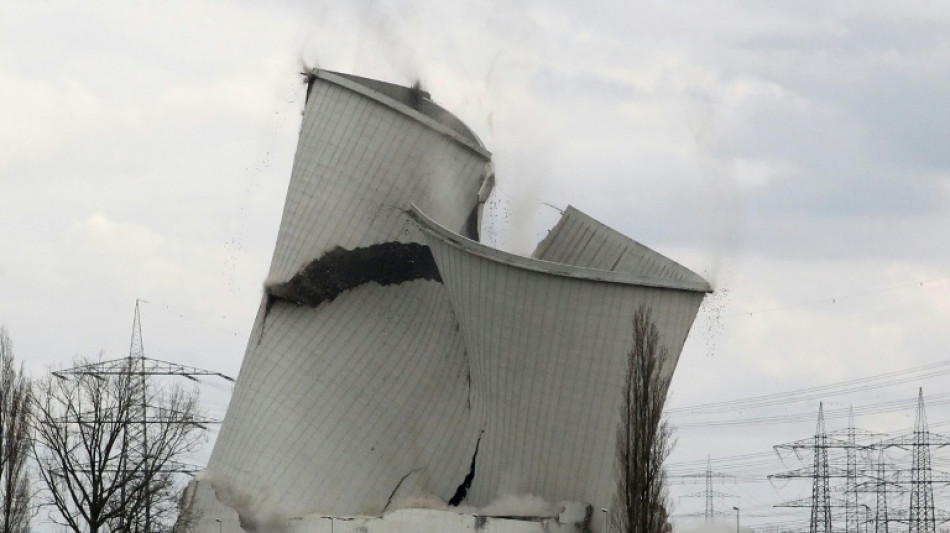
Germany will shut down its three remaining nuclear plants on Saturday, betting that it can fulfil its green ambitions without atomic power despite the energy crisis caused by the Ukraine war.
The cloud of white steam that has risen since 1989 over the river in Neckarwestheim, near Stuttgart, will soon be a distant memory, as will the Isar 2 complex in Bavaria and the Emsland plant in the north.
At a time when many Western countries are ramping up nuclear power in their transition to greener energy sources, Europe's biggest economy is resolutely sticking to its plans -- though not everyone is in agreement.
Germany has been looking to phase out nuclear power since 2002, but the decision was accelerated by former chancellor Angela Merkel in 2011 after the Fukushima disaster in Japan.
Fukushima showed that "even in a high-tech country like Japan, the risks of nuclear energy cannot be safely controlled", Merkel said at the time.
The exit decision was popular in a country with a powerful anti-nuclear movement fuelled by fears of Cold War conflict and disasters such as Chernobyl.
But Russia's invasion of Ukraine in February 2022 threatened to upend the plans, putting an end to cheap Russian gas and throwing the country into an unprecedented energy crisis.
- 'Turned too far' -
Just a few months before Germany's last three remaining plants were due to be turned off on December 31, 2022, the tide of public opinion began to turn.
"With high energy prices and the hot topic of climate change, there have of course been calls to extend the power plants," said Jochen Winkler, the mayor of Neckarwestheim.
The government of Chancellor Olaf Scholz, which includes the fiercely anti-nuclear Greens, agreed to extend the life of the plants to April 15.
"There might have been a new discussion if the winter had been more difficult, if there had been power cuts and gas shortages. But we had a winter without too many problems" thanks to accelerated liquefied natural gas (LNG) imports, Winkler said.
Neckarwestheim has around 4,000 inhabitants, more than 150 of whom work at the plant -- but Winkler is philosophical about the decision.
"The wheel has already been turned too far" and there is no point "going backwards" and reversing the process, he said.
Sixteen reactors have been closed in Germany since 2003.
The three final plants provided six percent of Germany's energy last year, compared with 30.8 percent from all nuclear plants in 1997.
Meanwhile, Germany produced 46 percent of its energy from renewables in 2022, up from less than 25 percent a decade ago.
- Ambitious energy targets -
But the current rate of progress on renewables will not be enough for Germany to meet its own targets, much to the ire of environmental campaigners.
These targets "are already ambitious without the nuclear phase-out -- and every time we deprive ourselves of a technological option, we make things more difficult," said Georg Zachmann, an energy specialist at the Brussels-based Bruegel think tank.
The equation is even more complex given the goal of shutting down all coal-fired power plants in the country by 2038, with a first wave of closures in 2030.
Coal still accounts for a third of German electricity production, with an eight percent increase last year to compensate for the loss of Russian gas after Moscow cut supplies in response to Western sanctions over its Ukraine invasion.
The country would need to install "four to five wind turbines a day" over the next few years to meet its needs, Scholz has warned -- a tall order given that just 551 were installed last year.
Germany also needs to more than double the rate at which it is installing photovoltaic equipment, according to the Agora Energiewende think tank.
A series of regulatory relaxations have been adopted in recent months in a bid to help speed up planning processes.
Planning and approval for a wind power project currently takes an average of four to five years, according to industry association BWE.
Even shortening this by one or two years would be "a considerable step forward", it said.
N.Fournier--BTB