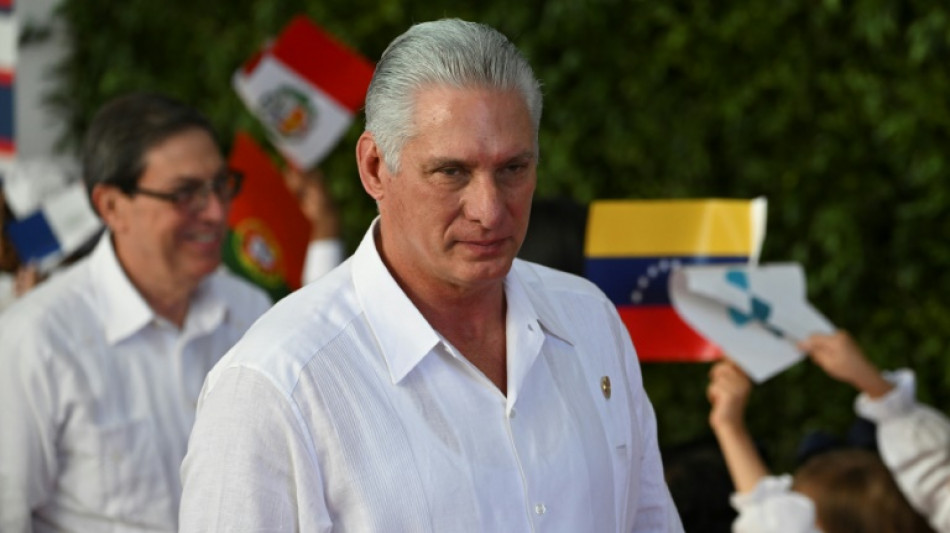
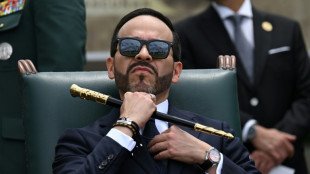
Cuba's Diaz-Canel, 'man of the system' or reformer? / Photo: © AFP/File

 Kyrgios gets month ban for cocaine, enters treatment programme
 Colombian judge bans strikes on guerrillas if minors are present
 Khachanov shocks ailing Auger-Aliassime, Swiatek and Osaka advance at US Open
 Lone juror blocking verdict in US mother's child murder trial: defense
 'Kinda chic' - Williams sisters set to launch US Open doubles bid
 Volkswagen says cutting 100,000 jobs by end of decade
 Russia slaps curfew on charity director over army criticism
 Ailing Auger-Aliassime upset by Khachanov at US Open
 Richarlison omitted from Tottenham's Premier League squad
 How El Nino is choking the Panama Canal
 Hamilton drives his Ferrari dream at Monza
 Senegal has an IMF loan, now what?

 Auger-Aliassime upset by Khachanov at US Open
 Hugging Face, the French start-up that became AI's warehouse
 World Cup winner Llorente retires from Spain team at 31
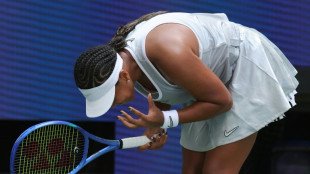 Osaka squeezes into US Open third round
 Apple faces £2 bn lawsuit in UK over app privacy feature
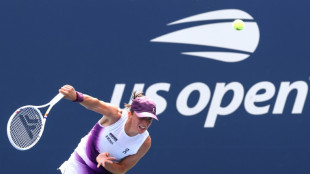 Former champ Swiatek eases into US Open third round
 DR Congo latest to promise moving Israel embassy to Jerusalem
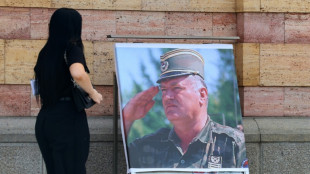 War criminal Mladic's body returns to Serbia with military honours
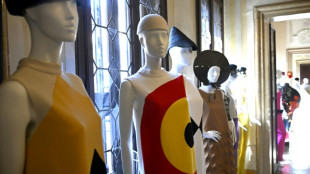 Pierre Cardin museum brings designer's futurist style to Venice
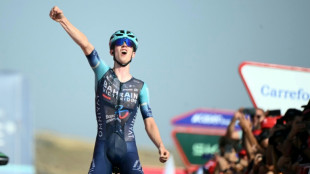 Slovenian rookie Omrzel triumphs as Mas extends Vuelta lead
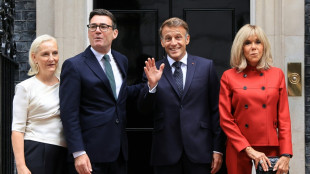 British, French leaders talk migrants, EU relations
 Heading for Ferrari's home race, Leclerc still dreams of world title

 Cafe at centre of Israel culture clash agrees to shut on Sabbath
When he became Cuba's first civilian president in decades in 2018, Miguel Diaz-Canel was portrayed as the moderate face of a younger, modern generation.
But while he has taken unprecedented steps towards economic liberalization on the communist island, Diaz-Canel has largely represented an ideological continuation of the revolutionary Castro brothers from whom he took the reins.
His suit and tie made for a radical shift from the military fatigues favored by Fidel and Raul Castro, but the Beatles-loving, social media savvy Diaz-Canel nevertheless remains a staunch party disciple.
He was the first leader to be born after the Castro-led revolution that unseated dictator Fulgencio Batista in 1959.
Now 62, he has proven to be just as intolerant of dissent as his predecessors, overseeing an iron-fisted clampdown on historic anti-government protests in 2021 for which hundreds are still in jail.
Diaz-Canel "was never a closet Liberal Democrat limited by the power of Fidel and Raul Castro," political analyst Arturo Lopez-Levy, of the Autonomous University of Madrid, told AFP.
"He is a man of the system."
Diaz-Canel was reappointed Wednesday by parliament to a second term, five years after he vowed in his first speech as president to "continue the Cuban revolution" in the one-party state.
"He has proclaimed himself a president of continuity when what the country is asking for, and even the agenda of the Communist Party itself, is an agenda of continuous change," added Lopez-Levy.
- Bicycle and jeans -
An electronic engineering graduate and university professor from the central province of Villa Clara, Diaz-Canel started a three-decade ascent in the Communist Party of Cuba (PCC) in the 1980s when he joined the Union of Young Communists, later becoming its leader.
He rose through the ranks to serve as leader of the party in two different provinces, at a time when Cuba was going through a deep crisis after the fall in 1991 of the Soviet Union, a crucial ally.
Much was made at the time of Diaz-Canel's preference for bicycle travel amid widespread fuel shortages, and his penchant for jeans, seen as portraying a simplicity uncommon among Cuban leaders.
In the 1990s he joined the PCC's Central Committee and in 2003 the 15-member politburo.
In 2013 he was appointed vice-president after having served four years as higher education minister.
Five years later, Diaz-Canel took over as president when Raul Castro, then 86, finally retired in a transfer of power orchestrated by the PCC.
In 2021, he also took over Castro's role as party first secretary -- the country's most senior position.
- 'Order to fight' -
Unlike his revolution-hardened predecessors, Diaz-Canel's military experience was limited to compulsory service that included a brief international mission in Nicaragua.
The father of two is also more open about his private life than the Castros, creating a public first lady role for his second wife, Lis Cuesta, who accompanies him on official duties.
The pair frequently tweet loving messages to each other.
Diaz-Canel is a prolific user of social media, but is often accused of using it as an instrument of propaganda rather than communication.
And he remains in firm control of the online public square.
During Diaz-Canel's tenure, mobile internet, which arrived on the island only in 2018, has been disconnected during times of social tension.
This happened in 2021, when Diaz-Canel showed his tough side during historic anti-government protests in the midst of the island's worst economic crisis in decades.
On the day the protests broke out, July 11, Diaz-Canel took to public TV to give an "order to fight," urging "all communists to go out in the streets where these provocations occur... and to face them in a decisive, firm and courageous way."
One person died, dozens were injured and more than 1,300 were arrested -- some 500 of whom are now serving jail sentences of as much as 25 years.
- 'Scars' during his tenure -
There have been small nods to liberalization in Diaz-Canel's first five years, including the opening up of the economy to small businesses in hundreds of sectors previously under exclusive state control.
He also initiated a monetary reform that ended up fueling inflation and sharply devaluing the local currency, worsening the long queues for food, medicine and fuel.
"It has left scars," Lopez-Levy said of Diaz-Canel's economic experiment.
But, "ultimately, the most successful measure of any post-revolutionary Cuban leader is the survival of the government."
R.Adler--BTB